Shoei’s latest top of the range racing helmet: the Shoei X-Fifteen.
Shoei’s X-Fourteen racing helmet has been around since 2016. In that time, it’s been pretty much on the top of the pile with the likes of Mark Marquez and other pro racers wearing it and feeding back into Shoei’s development cycle.
All of that development work looks like it’s now paying off in the form of the new Shoei X-Fifteen (called the X-SPR Pro in Europe) that’ll be a direct replacement for the X-Fourteen and is featuring on MotoGP and other racing grids around the world right now.
Which means, if you’re after a new top of the range lid for your sportsbike or to take onto the track, the Shoei X-Fifteen is going to be very much of interest.
So here’s all the info you’re gonna need if you’re interested in one…
Please click below to visit the Shoei X-Fifteen helmets pages at one of our recommended stores and Amazon. And if you buy from either store, we get a small sum from the sale at no extra cost to you – a massive THANKS! (it’s how we finance the site).
The Shoei X-Fifteen uses a shell made from Shoei’s AIM+ composite fiber construction. AIM+ is essentially a technique for layering up 5 layers of fiberglass with other ‘organic fibers’ to produce a tough shell that’s effective at absorbing shocks while maintaining the shell’s integrity. It’s the same helmet construction that was used on the outgoing X-Fourteen and RF-SR helmets – and both of those were Snell approved.
Top view of the matt black X-Fifteen showing 3 top vent sliders.
Also, because it’s a racing helmet that’s going to be used by oodles of pro racers, it now has to be approved by the FIM and needs to have their homologation label slapped on it. All helmet sizes (XS-XXL) have now been FIM approved which means they’ve been thoroughly tested by the FIM’s testing labs.
And of course, in the US the X-15 has to comply with DOT testing standards – in the EU that’ll the the latest European ECE 22.06 standards. And the good news here is that the DOT X-Fifteen has been tested and 2020R certified by Snell (the R certification is Snell’s move towards ECE 22.06 standards) and it’s only the second helmet to achieve that certification.
All of which means, the Shoei X-Fifteen is gonna give you excellent protection. End of.
Of course, there’s more to helmet safety than just the shell and impact protection. And again, the Shoei X-Fifteen should pretty well offer most of what you need.
The faceshield has a couple of locks to stop it coming off during an impact (see shield section below) and it comes with a Pinlock’s finest antifog insert in the box.
The helmet’s held on to your head using a tried and tested double-d ring strap which are safe as houses if you do them up right. And there’s an EQRS quick release interior to make it easier to get your helmet off after an accident.
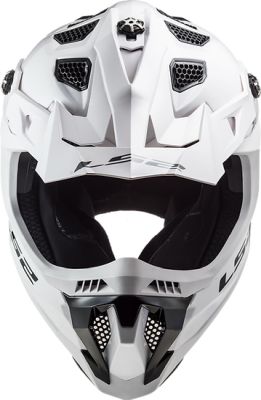
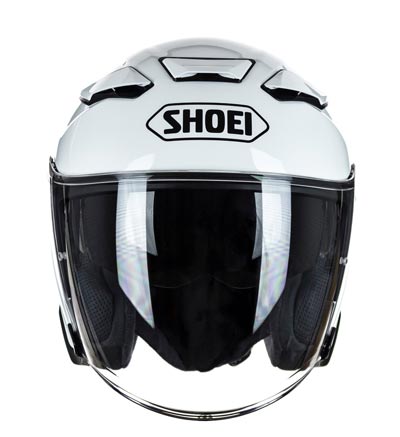
Plain gloss white Shoei X-Fifteen
And finally, the Shoei X-Fifteen is made in four shell sizes. That’s a good number and it means you’re not going to be wearing a helmet shell that’s miles too big or too small and means the helmet you buy will be optimized for you in terms of fit, comfort and safety.
Of course, for this considerable outlay and from a brand like Shoei, you’d totally expect an optimized helmet – that’s a given. But you’re also getting heaps of Shoei helmet know-how along with a racing helmet that’s been developed and honed for over a decade on the track.
All of which means, you can expect it to give you the right levels of protection whether on a circuit or on the roads.
Track helmets aren’t really known for being quiet – and the word is that the Shoei X-Fifteen is no different.
The issue is that racers are atheletes and they don’t half work up a sweat when they’re racing. So ventilation is paramount. And where there’s a ton of ventilation holes and wind getting inside the helmet – like there is on the Shoei X-Fifteen – there’s also going to be a load of noise getting in.
Of course, we all experience noise differently and some owners might find it’s a nice quiet lid whereas others won’t. Though if you bung in some good quality ear plugs you’re pretty well guaranteed to find the X-Fifteen absolutely fine in terms of noise levels when you’re riding.
But if noise is one of your most important buying criteria, you might want to give the Shoei X-Fifteen a miss and check out one of these quietest helmets.
Because it’s a racing helmet, Shoei has designed-in a stack of air vents for the Shoei X-Fifteen. That’s four forehead vents, operated by 3 independent sliders, and a pair of chin bar vents operated by a couple more sliders.
Shoei’s ventilation diagram
Up top, the vents are pretty conventional in that air’s channelled through the forehead vents, through holes in the helmet shell and into air channels inside the multidensity polystyrene liner.
In the chin bar, the top slider opens up to take air onto the back of the shield for demisting while the bottom slider directs air to each side of the chin bar to take air through holes in the cheek pads and ventilate the sides of your face.
That seems like it should all do the trick and let plenty of air into the helmet to keep you cool on track.
And while having several independent ventilation sliders can be a bit of a pain to adjust, it does mean you can tailor the ventilation to your exact needs, as well as shut them all off when it’s cold or rainy.
Like all racing helmets, the Shoei X-Fifteen has a 2D shield. That’s a shield that’s essentially made from a flat sheet of polycarbonate to make it suitable to fit tear offs.
But it also makes for good optics and is a perfect surface to make a nice tight watertight seal against the elements as well as an excellent surface to bond with the included Pinlock 120 (called a Pinlock Evo for Shoei helmets for some reason).
The shield works on a ratchet with 5 positions and it’s a quick release shield too, allowing for simple and quick shield swaps.
It also comes with a plethora of different shield lock options.
First up is the regular shield lock; close the shield and it snaps locked so you have to push the central button below the shield to open it up again.
Only gloss black, gloss white and matt black are available at time of launch
But there’s also a sliding shield lock next to that for when you really really want to make sure that shield isn’t gonna come unlocked (it also doubles as a way to stop the shield totally closing if you want a bit of extra ventilation up front).
That secondary lock is more for racing – as are the twin locks by the shield hinges. See those small red switches? They’re there to lock the shield quick release mechanism in place which, together with the other shield locks, should go a long way to stopping the shield springing off if you have an accident.
The Shoei X-Fifteen is made in four different helmet shell sizes with fitment sizes from XS-XXL (XS-S, M, L, XL-XXL). That’s a good number of different shell sizes – good because it means each shell is a slightly different size and wil contain optimized EPS liner and comfort liner inside to make the helmet look the right size for your body size as well as having a more optimum fit.
Shoei advertises the internals of the X-Fifteen as being an adjustable modular interior with a ‘pocket system’ for individual adjustment.
In essence, this means the comfort liner can be adjusted in several ways so you can make it a more customized/comfortable fit. All the parts of the comfort liner are also replaceable and can be removed for washing.
Rear vierw showing aero and spoiler details. Red tabs on the bottom signify EQRS is fitted.
The cheek pads also have a couple of mounting positions – both standard and racing position – to make the helmet sit further up on your face for when you’re in a more extreme tuck position.
And the ‘Pocket’ part of the system means that most parts of the liner have pockets in them so you can slot in extra foam to pad them out more and tailor the fit.
All in all, not only is the comfort liner high quality and comfortable to the touch (like all Shoeis) but it really allows you to tailor the fit to make sure you get it bang on.
It’s also got emergency quick release cheek pads (EQRS) – a must in a trackable helmet. And it’s designed to accommodate a hydration pack tube near your mouth for when your track days get REALLY serious!
And, OK it’s a track helmet, but we all like to stick bluetooth kit into our lids these days, right? The good news is that Shoei has added nice large speaker pockets in the X-Fifteen. To access them, there’s a removable foam bung on either side that you pull out.
Looks & Graphics
The design of the Shoei X-Fifteen doesn’t look a million miles away from the old X-Fourteen. Which I guess isn’t too surprising as its design is very much a matter of form over function; meaning that the form of these track helmets is derived from the aero and racing needs it’s designed to fulfil.
On its launch in the US, the X-Fifteen was available in plain black, plain white and matte black. There were also the inevitable Marquez replicas as well as the Proxy and Escalate graphics.
To check these out and any other graphics that have recently been released, please click to through to the X-15 pages on our partner stores using the links below.
Best places to buy a Shoei X-15?
Please click below to visit the Shoei X-Fifteen helmets pages at one of our recommended stores and Amazon. And if you buy from either store, we get a small sum from the sale at no extra cost to you – a massive THANKS! (it’s how we finance the site).
Shoei X-Fifteen Video
Here’s a quick 3m vid looking around a white X-Fifteen (called the X-SPR Pro in the UK) from the guys at Bike Stop.
Other stuff – weight, chin curtain, warranty
Surprisingly, the X-Fifteen ain’t that light, weighing in at a distinctly average 3.2lbs (1.45Kg). There’s plenty of lighter weight sportsbike helmets out there if you’re wanting a really featherweight lid.
To find them, drop onto our Smartish Filters page (it lets you choose the features that really matter to you) – choose track helmets and lightweight. Or Click Here instead 🙂
The Shoei X-Fifteen does pack in a full set of breath guard and choice between a more aerodynamic chin spoiler or regular chin curtain too – which is nice. They’re all removable.
And it’s got Shoei’s excellent 5 year warranty (or 7 years from manufacturing date).
Overall/Summary
Shoei has a long history of making high performing, high quality track helmets, and the Shoei X-Fifteen looks set to continue the tradition.
It’s FIM approved for track racing as well so it should offer outstanding protection. And Shoei have worked alongside pro racers – including Marc Marquez – to make a helmet that really works on a sportsbike, in a racing position and with amazing aero.
It should work well on the road too and with useful features such as speaker pockets and Pinlock antifog, it should be easy to live with.
All in all, it’s a premium helmet at a premium price. But if you want a high performing helmet and outstanding protection, then the Shoei X-Fifteen offers it in abundance.
[xyz-ihs snippet=”Link-to-guides-page”]
Good Alternatives to the Shoei X-Fifteen?
Shoei X-Fourteen
I guess the best alternative to the X-Fifteen is going to be Shoei’s own X-Fourteen which is a fantastic Snell and FIM certified track helmet that’ll be discounted pretty quickly once the X-Fifteen’s out.
The other top contender for a premium racing helmet is the Arai Corsair-X which is a premium composite fiber racing helmet that’s Snell certified and comes with a 5 year warranty.
Please click below to visit the Shoei X-Fifteen helmets pages at one of our recommended stores and Amazon. And if you buy from either store, we get a small sum from the sale at no extra cost to you – a massive THANKS! (it’s how we finance the site).
It’s got a fiberglass shell – chosen to improve strength (see safety section) and slightly reduce weight over their usual polycarbonate shelled helmets. It’s also been given a slightly wider, Pinlock ready shield, (unfortunately no Pinlock included in the US), along with a drop down sun visor.
Plain gloss white HJC F70
Unusually though, HJC has forgone the usual quick release shield and replaced it with an old style visor held on by a screw each side.
But on the plus side, not only is it a great looking helmet, but they’ve also added bluetooth integration in there in the form of HJC’s own Smart Intercom systems (developed by Sena).
So, the HJC F70 looks to be a mixed bag of the old and the new.
If you’re interested in finding out more, we’ve pulled together every possible nugget of information from around the web to help you make your most informed decision when buying your next helmet.
And we’ve added a few recommended alternatives at the bottom of the page too.
Please click below to visit the HJC F70 helmets pages at our recommended stores – all checked for great online ratings. And if you buy from any store, we get a small sum from the sale at no extra cost to you – a massive THANKS! (it’s how we finance the site).
In terms of safety features, the HJC F70 looks to be reasonably basic.
If you dig deeply enough into HJC’s blurb – and scour the web enough – it turns out there’s a slightly wider shield on the F70 to help with improved all-round vision and awareness.
And they’ve also used a tried-and-tested double-d ring strap to keep it safely fastened. They’re strong and safe fasteners – a bit more fiddly than micrometric straps if you’re new to helmet buying – but they do the job well and have been around for decades.
Rear view of a gloss black F70
But that’s about it – other than the all-important helmet shell.
It’s a fiberglass shell – or Advanced Fiberglass Composite as HJC call it. If you know anything about helmets, you’ll know fiberglass has been used for aeons to construct strong and reasonably light weight helmets.
HJC makes the shell of the F70 in just two shell sizes (the smaller shell for sizes XS-M and lager shell covering L-XXL) – which is a bit poor these days.
For a mid-priced helmet like the F70, you’d expect three or more shells to be produced as they help optimize fit, looks and safety a little better (read about helmet shell sizes).
And weighing in around 3.4lbs (1.55Kg) it’s a smidge heavier than the average fiberglass helmet.
Courtesy of sharp.dft.gov.uk HJC F70 8.5 m/s Impact test results (ECE helmet)
That shouldn’t cause any weight problems when you’re wearing it. Just that lighter helmets have an edge in managing energy during an impact.
OK, onto safety stats.
Unfortunately, the F70 hasn’t been independently safety tested by Snell.
Over in the UK, the independent helmet testing bods at SHARP have tested 8 ECE rated fiberglass HJC helmets. All of those helmets scored either 3 or 4 stars (out of 5) for safety (average score of 3.25).
This one’s the HJC F70 in Feron graphics
They’re OK scores overall – but not amazing.
The good news is that when SHARP tested the F70 at the end of 2021, it scored a solid four stars for safety (out of five), meaning we reckon you can put a good amount of faith in the F70’s protection levels.
But don’t forget, these scores were for ECE certfied helmets so they may differ from the DOT versions (we just don’t know).
Of course, if you’re buying an F70 in the US, it’ll be designed to meet the DOT safety standards so it should give a good base level of protection.
But it’s always nice to be wearing a helmet that’s independently shown to offer outstanding protection.
If you want to see a range of helmets that are either Snell certified or scored four or five stars in SHARP tests – take a look at our Safest motorcycle helmets pages.
It’s always difficult to advise whether a helmet is noisy or quiet. That’s because it’s always dependent on a multitude of factors: how fast you ride, how good your hearing is, whether you’re behind a screen, how quiet your last helmet was – the list goes on and on.
We do sometimes come across helmets that are universally praised as quiet – and you’ll find these on our quietest helmets pages.
But with the HJC F70, we really did find opinions across the board – all the way from whisper quiet to noisy as hell.
So, it’s really going to be a question of sucking and seeing if you buy an F70. And fingers crossed you’ll be pleasantly surprised.
For ventilation, the F70 uses what HJC calls ACS or its Advanced Channeling system.
Essentially, that’s similar to systems you’ll find in most other helmet brands – where air is taken in through the helmet shell and directed towards the head using venting channels moulded into the EPS (expanded polystyrene) shock absorbing liner.
F70 in Mago black/fluo yellow showing top vents
In the case of the F70, that involves a couple of crown vents – both covered by sliders – which direct the air through the shell and into a pair of front-back channels inside.
They then route air through to the rear exhaust vents located in that fancy moulding to the rear of the shell.
In the chin bar, there’s actually a pair of separate vents in there too.
The bottom vent is a slider and directs air around the chin and around the side of the jaw. The upper vent is opened/closed using a tipping panel to direct air onto the rear of the shield to help with demisting.
From our research, we’ve found quite a few owners commenting that venting’s good on the F70, with practically no one complaining about it except in terms of the occasional shield fogging. But that can happen with every helmet in poor conditions of course – and fitting a Pinlock should stop most of that.
Unusually, HJC has opted to make the F70 without a quick-release, toolless face shield. Instead, you need a cross head screwdriver to remove a single screw either side to pull off the shield.
It’s no great hardship to remove, just a bit fiddly and means you have to go hunting for a screwdriver if you want to swap the shield out which might be a pain if you’re on the road.
It’s more baffling than anything, because it’s the first time in years we’ve seen a road helmet launched without a quick-change shield.
On the plus side though, the F70’s delivered with a Pinlock-ready shield though unfortunately, if you do want the Pinlock insert, you’ll have to pay around $30 extra as it’s not included with the helmet.
Also, it has an opening tab on the bottom of the shield at either side which is good, meaning you can easily open the shield with either hand. That’s something most helmet makers don’t bother adding but can come in really handy on the road.
The shield itself works on a (soft) ratchet and HJC quote that it protects from 95% of UV rays.
That’s nice to know – though because shields are made from polycarbonate, it’s an inherent property of all shields on all helmets.
Finally, HJC has widened the shield and sun visor on the F70 for improved peripheral vision. That’s always worth having on a helmet as it’s better for safety and makes for a slightly more involved ride.
And it’s an improvement many F70 owners appreciate as we found several owners commenting that it’s got an excellent and wide field of view.
Like the main shield, the sun shield is also slightly wider than normal. And HJC quotes 99% UV protection.
If you’ve been reading any marketing blurb on the F70, you’ll have read that HJC has a patented One Touch sun visor mechanism that makes dropping and raising the sun visor super easy.
Turns out that when you drop the sun visor using the slider on the bottom left edge of the helmet, that One Touch system is just a slight detent on the slider mechanism. So when you pull the slider back to drop the sun visor down, there’s a slight bit of resistance you have to overcome – before the sun visor easily slides down.
Same for returning the sun visor back up – with that slider resistance ensuring the sun visor doesn’t drop down on its own.
And it seems to work well, because like the great field of view of the main shield, from the number of positive comments we came across, the sun visor seems to be one of the best liked features of the HJC F70.
Note: the F70 comes with a really large removable breath guard built in. The sun visor drops down to meet the breath guard so, if you remove it, you’re going to have a large area of bright light coming underneath the sun visor. That’s something quite a few riders find a real pain.
The HJC F70 has a medium oval internal fit. In general that means it should be suitable for most riders’ head shape.
Another Mago F70, this time in black and red
It uses HJC’s Multicool interior which is a nice liner that’s very comfortable and pretty good for wicking sweat away. It’s antibac too and it’s fully removable and washable.
A few owners have commented that the cheek pads in the F70 can be pretty tight when you first get the helmet. This is something you’ll find in many HJC helmets. If you buy an HJC and it squeezes your cheeks lots, don’t be alarmed: they do tend to wear in quickly and get comfortable.
And if they do stay too tight, you can buy thinner replacement cheek pads from HJC to tailor the fit better.
Inside the helmet, there’s a pair of deep speaker pockets (with cutouts to take the wiring) and there’s also a couple of glasses grooves in each side too, so it should be comfortable wearing the helmet with glasses.
Finally, the fastening strap has plenty of padding on it and there’s a popper to secure the end and stop if flapping around when you’re riding.
Looks & Graphics
The HJC F70 is definitely a nicely designed helmet and with its streamlined fighter pilot inspired looks, I reckon it looks pretty cool.
Having said that, one or two owners also said that it was a bit bulkier than they expected in the flesh – I guess it looks a little more compact in pictures than it might do when you pull it out of the box?
Plain stone grey F70. This one shows up the sun visor slider on the bottom edge
HJC seems to agree as the range of graphics are fairly minimal, letting the form of the helmet speak for itself rather than smothering it in decals.
As well as the usual gloss/matt blacks, pearl white and stone grey solid colors, at the time of writing there’s just the Feron and Mago graphics around – each in a number of different colorways.
There is also to be a nice matt blue and new graphic called the Samos on the way though. When they’re available, you should be able to find those and any others that have been recently launched by clicking through to our recommended retailers below.
Best places to buy an HJC F70?
Please click below to visit the HJC F70 helmets pages at our recommended stores – all checked for great online ratings. And if you buy from any store, we get a small sum from the sale at no extra cost to you – a massive THANKS! (it’s how we finance the site).
HJC F70 Video
Here’s a detailed 11m look around the F70 from Chapmoto.
Other stuff – audio, chin curtain, warranty
The HJC F70 will fit most 3rd party bluetooth headsets. It has been designed to integrate with HJC’s own Smart Intercom system – either the 10B or 20B (developed in conjunction with Sena).
In fact, on paper it looks to be one of the best integrations yet with internal pockets for speakers, microphone and hollowed out sections for the wiring to snap into place.
The F70 comes with both a chin curtain and breath guard. That rubber breath guard is one of the biggest we’ve seen and should really help with shield demisting. It’s easily removable too.
Finally, the F70 comes with a decent 3 year guarantee (or 5 years from date of manufacture – whichever’s soonest).
It’s got most of the features you’re probably looking for in a touring helmet – namely nice wide Pinlock-ready shield, a drop down sun visor and good bluetooth headset integration.
There’s inevitably a slight question mark over whether it’ll provide class-leading impact protection simply because it’s not been independently tested yet by Snell – though the ECE version of the helmet was tested by SHARP where it scored an excellent 4 stars out of 5 for safety.
With its tried and tested venting system and comfort liner, a useful (and well liked) drop down sun visor and its attractive price point (like most HJCs) the F70 should be a trustworthy helmet that’s a comfortable and a great value buy.
[xyz-ihs snippet=”Link-to-guides-page”]
Good Alternatives to the HJC F70?
There’s a stack of full face helmets out there that have been reviewed, highly rated and safety tested. Here’s a small selection we reckon you should look at – though you might also want to check out our top 10 full face helmets list too.
Shoei RF-SR in blue
First up, the Shoei RF-SR. It’s a Snell certified full face with EQRS that’s comfy, has great build quality and ventilation.
ST1400 Antrim
Or how about Scorpion Exo’s top flight sports touring helmet, the ST1400. It might be their top helmet but it’s only a smidge more expensive than the F70 and it’s got a sun visor and EQRS.
Frost black Arai Signet-X
If you’ve got a bit more cash and want a top brand, Arai’s Signet-X is a Snell certified (and SHARP 5 star) sports touring helmet with Pinlock that’s ideal for slightly longer oval head shapes. It’s more money than the F70 though.
Shark Skwal Sticking
For slightly less than the HJC, you can have the SHARP 4 star rated (ECE version) Shark Skwal 2. Pinlock included, sun visor, 5 year warranty – and it’s got fancy built-in LEDs if that sort of thing floats your boat.
Please click below to visit the HJC F70 helmets pages at our recommended stores – all checked for great online ratings. And if you buy from any store, we get a small sum from the sale at no extra cost to you – a massive THANKS! (it’s how we finance the site).
LS2 Subverter off road dirt motorcycle helmet review.
The LS2 Subrverter Evo is LS2’s top-line dirt/motocross helmet. Which is not to say it’s an expensive helmet, because it’s not. LS2 are known for their affordable helmets and the Suberter’s no exception.
Rear view of the Subverter Evo Cargo helmet
That means it’s got a thermoplastic shell and it’s maybe built to a lower budget than some other dirt helmets.
So, it’s lower priced but is it still worth the money? I mean a bucket’s lower priced too, but you wouldn’t want to put it on your head and ride!
Read on to find what the LS2 Subverter offers and what owners think of their helmet – great things and not so great things alike.
Please click below to visit the LS2 Subverter Evo helmets pages at two of our recommended stores and Amazon – both checked for great online ratings. And if you buy from any store, we get a small sum from the sale at no extra cost to you – a massive THANKS! (it’s how we finance the site).
US v European Subverter Evo
OK the first thing to say about the LS2 Subverter is that it’s very much a different helmet depending on where you live. The US Subverter Evo is heavier, has crumple zones, AREM internals and comes with a 5 year warranty. The Eu version, well, doesn’t.
So, if you live in Europe, check out the review on our UK site because that’ll be much more relevant to you.
Or read on to hear more about the US Subverter Evo.
Overall/Summary
If you’re looking for a no nonsense motocross helmet that vents properly well and can be bought for around a couple hundred dollars, then you’ve probably found it.
From the top – the LS2 Subverter Evo in 76 graphics
While some LS2s have been Snell certified, the Subverter Series isn’t. Still, with its multidensity, EQRS, AREM liner with crumple zones, safety’s looking promising on the Subverter Evo.
It’s got a useful and well designed peak too – and with that wide goggles hole, it seems to fit more or less every model of goggle on the market.
It’s known for being comfortable as well, and it’s reasonably light weight – though with all those vent holes it’s noisy too.
But if you’re after a great value and very well venting motocross helmet, then definitely take a look at the LS2 Subverter Evo.
The LS2 Subverter is a thermoplastic shelled helmet. LS2 calls their plastic shells KPA or Kinetic Polymer Alloy which sounds more like marketing speak to me, tho it’s hard to tell.
The 76 graphic LS2 Subeverter EVO from the back.
Having said that, there’s nothing wrong with a plastic shelled helmets as there are several that have been Snell certified or scored 5 stars in the SHARP helmet safety tests. So we know they can be great, protective helmets – just that LS2 doesn’t seem to give much info away to prove their helmets protect.
It’s good to see that they make their Subverter Evo helmet in 3 shell sizes though – that’s great for optimizing safety, fit, looks and comfort. And 3 shell sizes is a good number for what is a pretty cheap helmet.
And it comes with EQRS quick release cheek pads (essential in a dirt helmet we’d argue) and there’s a multidensity shock absorbing liner in there too – that’s great to see as well.
They use a good old fashioned double-d ring fastener to keep it on your head, which is fine if a bit fiddly.
And if you’re worried about riding in a helmet with a peak – because they look like they could cause trouble if you hit the deck – well that peak is hyper flexible so it should ‘give’ and snap if you take a spill rather than dig in and cause problems.
Solid white Subverter Evo.
Other than that, we know it’s both DOT and ECE certified. But that’s about it… other than to look at past SHARP test data for testing on ECE helmets.
On that front, LS2 has a mixed bag of ratings for their plastic helmets.
They can score as high as four stars (out of five) but they also score as low as two stars. And over time, their average star rating for all their thermoplastic and polycarbonate helmets is just over 3 star rating.
So i guess that’s around the level of protection we’d expect the Subverter Evo to offer if SHARP were to test it (if they ever do, we’ll add the results here).
However, there’s more to the US LS2 Subverter helmet than meets the eye.
The older version used to pack a MIPS liner in there. With the Subverter Evo, LS2’s included their own version (I guess with MIPS they have to pay a licensing cost, right?). LS2’s version is called Advanced Rotational Energy Management or AREM.
It’s one of those systems that are designed to give the helmet a degree of independent movement to try and limit rotational forces being passed through to the rider’s head under impact.
They seem to be a great move for safety – though, interestingly, we’ve yet to see independent test data to support the fact that they will in fact improve protection and limit injuries.
This one’s the Cargo graphics Subverter Evo
Still, it’s good that LS2’s commiting to try and make their helmets better protecting. And if you’re a believer, then it’s great to see this sort of feature built in to a lower priced lid.
LS2 also say that the Subverter has ‘crumple zones’ in the EPS liner too. I could be entirely wrong, but that ‘feature’ has more than a whiff of some bright spark in marketing thinking ‘hey, we’ve got ventilation channels cut in the liner, let’s call them crumple zones too’.
Still, you’d hope that LS2’s seen that they do act as crumple zones when they’re testing on their own rigs and, who knows, they might make a difference?
All in all though, it does look like LS2 has made a major effort to make the Subverter a well protecting helmet, with some features you’d be looking at paying double for with other brands.
I guess a large proportion of motocross riders either wear ear plugs in their helmets or don’t really give a s**t about noise suppression because – hey, you’re on a noisy dirt bike, what does noise matter?
But if you are bothered about your motocross helmet being quiet you should probably look elsewhere because from all the views we found on the subject, it seems the LS2 Subverter Evo is widely regarded as a noisy helmet.
Which is kinda obvious because there’s so many damn holes in there to let air in – and guess what? It lets a ton of noise in too.
One thing serious motocross riders do need is a good venting helmet. Standing up is tiring at the best of times (personally, I try and avoid it as much as I can!), so jumping around on a dirt bike covered in clobber is really going to make you get a sweat on, right?
Gloss white version shows up the masses of ventilation panels nicely.
LS2 obviously knows this (they sponsor Supercross and Dakar riders) so they’ve literally smothered the Subverter Evo in vent holes.
So, not only have you got that gaping big hole that you’ll probably fill with goggles and face, but there’s plenty of venting in the chin bar as well as vent holes running over the crown and around the back of the helmet.
Those vents are married to holes in the shell to let air through. And even though there’s not really equivalently massive holes in the comfort liner to let that air through, according to Subverter Evo owners, the venting’s excellent.
Even riding in the heat of summer, you can really feel that cooling air flowing around the helmet – so much so that more than a couple of owners who use their Subverters on dusty tracks reckon you can get quite a bit of that dust onto your hair.
So, if you’re after a well venting motocross helmet, then you’ve certainly found it.
Peak and goggles
That’s a massive space for goggles. LS2 Subverter in Gammax graphics.
The peak on the Subverter Evo seems to be pretty well designed. It’s adjustable and there’s notches in the adjustment to ensure it stays put.
Like most motocross helmets these days, LS2’s put some thought into the aero of that peak too and put some holes in there to reduce lifting. That seems to work OK but a couple of riders reckoned it does compromise its ability to block out the sun quite a bit.
What’s universally liked is the space for goggles in the Subverter. It’s a massive space. And we found quite a few riders commenting on a whole range of Scott, Oakley, 100% and Leatt goggles that fit in there without a problem.
In the US, the LS2 Subverter’s advertised as a medium oval fitment helmet though lots of owners reckon it’s definitely longer than your typical medium oval helmet and probably more of a long oval fit.
And there’s quite a few owners reckoning that it sizes a bit small – so if you’re between sizes or unsure, it’s probably worth opting for a size up.
Matt black version. Note exhaust vents around the bottom neck roll too.
The liner inside the Subverter Evo’s removable, washable and hypoallergenic.
And overall, the Subverter’s widely regarded as a very comfortable helmet, so no problems there.
A few owners commented that the chin bar looks huge on the outside, but on the inside it actually fits quite close to your mouth. So, if you’re looking to fit a microphone or have a particularly jutty-out jaw, you might struggle a bit.
Of course, it’s a motocross helmet so if you do some serious offroading, then you’ll probably want to rip out the liner and wash it from time to time. Which is all well and good… except a few owners we found were really moaning about how difficult/impossible it was to get the liner back in afterwards.
So be warned – disassemble carefully, wash gently, and take note of how it goes back in (or maybe just leave it in there and smell a bit!).
Looks & Graphics
As you can probably see from some of the helmets scattered up and down the page, LS2 hasn’t really gone for shy and retiring graphics on the outside. Thankfully they have one the inside (some pre-Evo Subverter helmets were criticised for having light color internals which seemed to be designed to pick up show every bit of muck you rode on!).
LS2 Subverter Evo in Rascal design.
If you’re after a plain color Subverter, you can get a plain white and matt black. If you’re after a graphic, they tend to be around $20 more and there’s Rascal, Stomp, Arched, Astro, Gammax and Cargo graphics to choose from.
And they’re just the designs available at the time of writing. LS2 just can’t help themselves making more and more graphics available, so to see the latest, please click the links below that’ll drop you straight onto their Subverter Evo helmets pages (if we’ve done it right!)
Best places to buy an LS2 Subverter Evo?
Please click below to visit the LS2 Subverter Evo helmets pages at two of our recommended stores and Amazon – both checked for great online ratings. And if you buy from any store, we get a small sum from the sale at no extra cost to you – a massive THANKS! (it’s how we finance the site).
LS2 Suberter Evo Video
Here’s an 8m look around the US sped Subverter Evo.
Other stuff – weight, build quality, warranty
The US spec LS2 Subverter Evo weighs in around 3.5lbs (1.6Kg) which is reasonably weighty for a dirt helmet though certainly a manageable weight.
Rear view of the Subverter Evo.
Onto quality; the subverter’s a lower cost motocross helmet. So, as long as you’re not expecting hand-built levels of quality, it’s pretty well put together, with a few owners commenting that for the price, it’s hard to beat.
Another difference between the US and Eu spec Subverter Evo is that whereas Europe gets a 2 year warranty, the US helmet comes with a 5 year warranty!
[xyz-ihs snippet=”Link-to-guides-page”]
Good Alternatives to the LS2 Subverter Evo?
If you’re looking for a new motocross helmet, please check out our motocross helmet reviews pages. Or maybe take a look at one of these beauties…
Shoei VFX-WR
The Shoei VFX-Evo is a well regarded motocross helmet. It’s got Shoei’s version of rotation protection, it’s got a composite fiber shell and is one of the highest regarded dirt helmets out there. It’s not cheap though.
Bell Moto-9
Bell’s Moto9 comes in non Flex and Flex versions (Flex is Bell’s own rotation protection system). Both helmets are composite fiber helmets and are well rated for ventilation and comfort.
Airoh Twist
For around a similar price to the Subverter is Airoh’s Twist. It’s lighter weight too.
Looking to buy an LS2 Subverter Evo?
Please click below to visit the LS2 Subverter Evo helmets pages at two of our recommended stores and Amazon – both checked for great online ratings. And if you buy from any store, we get a small sum from the sale at no extra cost to you – a massive THANKS! (it’s how we finance the site).
Scorpion has always done a good line in lower priced helmets that perform. The old Scorpion Exo T510 was a great example. Low price, highly rated for safety and owners generally liked it a lot. Except, that is, for how noisy it was. Other than that, it was a cracker and was great value for money.
Front view of the T520 in LeMans graphics.
But all good things must come to an end.
So too with the T510 – now replaced by this helmet, the T520. A bit sleeker, a bit more sculpted and, predictably, a bit more money.
Less predictable though is that they’ve accompanied the Scorpion Exo T520 with a version called the ‘Smart’. That’s the same helmet but with Scorpion’s own comms unit ready plugged in.
Well actually it’s a Uclear-developed comms unit with a Scorpion logo on it. But the point is it’s ready integrated into the T520 and ready to go. Which is handy.
So, if your interest has been piqued by the Scorpion Exo T520 helmet, then read on for tons of information about what it offers – and what owners think of theirs – to find out if it’s worth you buying one.
Please click below to drop straight onto the Scorpion Exo-T520 helmets pages at our recommended store an Amazon. And if you buy from either, we get a small sum from the sale at no extra cost to you – a massive THANKS! (it’s how we finance the site).
Scorpion Exo T520 Exo Com Helmet
The T520 Exo Com is the same helmet as the regular T520 but with Scorpion’s Exo-Com bluetooth communicator ready-fitted. Or at leaset the mic, speakers and wiring’s already fitted, though you’ll have to slot in the controller and the battery pack when you receive the helmet. Other than that, it’s ready to go.
Scorpion Exo-T520 Exo Com helmet. See the small controller unit bottom right. Apart from the comms already fitted, it’s the same helmet as the T520.
The Exo Com bluetooth unit itself is made by Uclear and has a similar spec to their Motion 4 Lite headset.
That’s a bluetooth 5 mesh headset designed to accommodate up to four riders. In the scheme of mesh headsets that’s really not many riders (most mesh headsets have a theoretically unlimited number of connections though most limit it to something like 16).
If you’re only wanting to connect to just a few riders, that should be fine though.
It offers around 15 hours battery runtime and 800m range. It’s IPX5 waterproof and should connect to your phone/mp3/GPS etc. So if you’re after an out of the box bluetooth solution, it could well work for you.
For reference, the Exo Com version of the T520 costs about $170 more than the regular version but if you were to buy the Exo Com seperately you’d pay around $190 at the time of writing, so it’s only a small saving buying it ready fitted – though it does save you the hassle.
And the few owners that we came across reckoned it was a decent system for their needs with good sound quality, intuitive controls and a pretty good app too. Alternatively, you might want to check out other integrated bluetooth helmets we’ve looked at or communicator-ready motorbike helmets.
Overall, Scorpion helmets have a reasonable reputation for producing some well protecting helmets. And the Exo T520 looks like it has the right ingredients too.
Rear view of the Quatararo Replica T520.
It’s made in 3 shell sizes and it’s got a multidensity shock absorbing liner (just like your Arai’s and Shoei’s have).
OK it’s a polycarbonate helmet which basically means it’s got a tough plastic shell. But if you’ve been following our helmet reviews for some time, that doesn’t necessarily mean it’s not going to look after your skull because several polycarb helmets have been Snell certified and their UK helmets have scored maximum ratings when tested by SHARP.
In fact, the outgoing ECE version of the Scorpion Exo 510 scored 4 stars for safety when SHARP tested it a few years back – that’s just dropping one star.
And the fact that a relatively cheap helmet like the T520 is made in 3 shell sizes is good for safety (as well as meaning fitting and looks and weight will be better optimized). Of course, keeping your helmet safely in place and being able to see out of the shield are pretty important too.
Shade graphic Scorpion T520. Note, all helmets supplied with clear face shields.
To that end, Scorpion’s fitted the T520 with a double-d ring fastener (they’re safe) and really gone to town with the visor system too.
That faceshield’s Everclear antifog coated, plus the sun visor’s coated too – so you should have a clear view on all but the coldest, wettest or most humid days.
And finally, Scorpion’s fitted the T520 with quick release cheek pads (EQRS) which make removing the cheekpads that bit easier. Hopefully you’ll never need to put them to the test but if you find yourself upside down and confronted by paramedics, it could make the difference between a neck injury or not.
We don’t know exactly how well the Scorpion Exo T520 will protect you in an accident yet of course. But it is DOT and ECE 22.05 certified and if/when Snell or SHARP tests it in on their test rig and publish the results, we’ll let you know on this page.
Helmet noise was one of the areas that let down the old 510 Air helmet. So surely Scorpion’s got that nailed and made the T520 a nice quiet helmet?
Another LeMans graphic 520 – this time in black/white.
Short answer seems to be probably not.
OK we came across several owners who reckon it’s fine. But we also came across more owners who say it’s not.
Several reckoned it gets really loud above 50mph – which is fine I guess if you’re a scooter rider or slow commuter. But a few owners said it gets properly loud at highway speeds and above.
And if you ride fast, we’ve found reports that the helmet can vibrate too. Never really come across reports of a helmet doing that before.
As to why it can be noisy? Some folks seem to think air and noise is somehow getting in on the left hand side around that sun visor slider.
Of course, if you use some decent ear plugs (as is always advised) you’ll probably be OK. But if you’re looking for a quiet helmet and are a high mileage type, it seems like you’d probably be best avoiding the Scorpion Exo T520.
Scorpion’s made the ventilation on the Exo T520 simple and glove-friendly.
Front view of the matt black T520 showing single top air vent slider.
The chin bar vents are operated by a single central glove-friendly slider that opens a pair of vents letting air into the helmet and onto the rear of the shield.
Same up top, with a single large slider that opens a big top vent (actually 4 small vent holes in the shell underneath that large plastic cover). From there, air passes through the helmet and into ventilation channels cut into the helmet liner, then out of that single always-open rear exhaust vent.
And owners seem to think it’s all pretty effective, passing a reasonable amount of air into the helmet as well as venting well onto the back of the shield to help with demisting.
Of course, air alone won’t vent enough to stop the shield fogging up if the conditions are bad.
Usefully, Scorpion’s now added a ‘cracked open’ position on the shield to let a bit of air in while you’re riding. That’ll help.
But the shield on the T502 is also Everclear antifog coated which should stop it fogging in all but the most humid, cold or wet weather. The shield on the Scorpion T520 is about average size, but it is optically clear so you shouldn’t see any distortion when you ride.
It also has a shield lock on there so you can ride along knowing it won’t pop open when you turn your head. And whereas some shield locks are properly fiddly to unlock and open, the word is that the T520’s lock is pretty easy to find and unlock with one hand.
Fasta graphic Scorpion Exo T520 with tinted pink iridium shield (optional).
The shield mechanism on the T520 is Scorpion’s Ellip-Tec II system which means the shield pivot should pull the visor back against the seal when it’s closed to keep air and water out.
Does it work? Well, we’ve heard from owners who say it’s great as well as owners who say theirs let water in, so I guess it’s a mixed bag. Probably about average for a helmet at this price point.
It’s worth noting that despite most of the photos on this page showing tinted shields, all T520’s are delivered just with a clear shield (smoked shields are extra).
There’s a handy drop down sun visor on the T520 too. The slider’s fitted just behind the left hand main shield pivot which is a reasonably handy place to locate it and means the bottom edge of the helmet’s free to mount a bluetooth controller if you’re looking to add your own.
Sun visor fully lowered on this 520 Factor helmet
The sun visor doesn’t drop down the lowest we’ve seen which might annoy some folks. But it certainly will keep the worst of the sun out if you get caught out, and it does add an extra layer of UV protection when you’re riding.
Usefully, Scorpion’s coated the sun visor with an Everclear antifog coating too which is something not many makers offer.
Inside the helmet, Scorpion’s added pretty well everything you should look out for in a motorcycle helmet.
First up, the basics. It’s a fully removable and washable liner. It’s also moisture-wicking and antibacterial (called their KwikWick II liner – basically, Scorpion likes to name everything!).
They’ve also added EQRS or emergency quick release cheek pads in there, so if you have an accident, the idea is paramedics can pull the red tabs at the bottom of the helmet and slide out the cheekpads without aggravating any injury.
Rear view of the matt black T520
There’s also glasses grooves inside the helmet, designed to let you slide your glasses in there without them digging into your head. And we heard from a few owners who reckoned the T520’s great for glasses, so it seems to work well.
The liner in the T520 and T520 Exo Com are the same, which means there’s speaker pockets inside the standard 520 which should accommodate most speaker systems. So that’s all good.
But the main feature inside the T520 is probably the AirFit system. Essentially, it’s a tried and tested system you’ll find inside all Scorpion’s AirFit helmets where there’s an air bladder located behind both cheekpads. These bladders can be inflated by pressing a small rubber bulb inside the chin bar that inflates and pushes out the cheekpads to tailor the fitting a little and tighten up the inside of the helmet if you find it a bit loose. There’s also a release valve next to it.
It can be helpful if you’re riding fast or the helmet padding loosens over time, in which case you can pump up the airfit to tighten things up and stop the helmet lifting.
Most AirFit helmet owners don’t seem to use it very often but a few owners certainly find it useful and like the system.
It’s also widely regarded as a very comfortable helmet, which is key, meaning it’s good for long hours in the saddle so should work whether you’re commuting or touring.
Overall then, Scorpion’s fitted pretty much everything you can find inside a modern helmet into their mid-price T520 helmet.
Looks & Graphics
Scorpion usually sells their helmets in a ton of different graphics, and the T520’s no exception.
Another T520 in Fasta graphics
If you’re after a graphic version, there’s the Golden State, Factor, Nama Sushi, Fasta, LeMans, Cover, Shade and Laten designs available. And if you’re a MotoGP fan, Fabio Quateraro’s a Scorpion helmets rider and you can get a Quateraro Replica in the T520.
Strangely, if you’re after a solid helmet, there’s only a matte black helmet available – so no black, no white, no other solid/plain colors, just matte black. Weird.
If you’re after the T520 Exo Com, then at the time of writing it’s only availabe in matte black too. If it or the regular helmet comes out in any other colors, you should be able to click the links below to drop straight onto their Scorpion Exo T520 pages to quickly see what’s available and any deals to be had.
Best places to buy a Scorpion Exo-T520?
Please click below to drop straight onto the Scorpion Exo-T520 helmets pages at our recommended store an Amazon. And if you buy from either, we get a small sum from the sale at no extra cost to you – a massive THANKS! (it’s how we finance the site).
Scorpion Exo T520 Video
Here’s a quick 13m look around the Exo T520.
Other stuff – fasteners, bluetooth, weight, warranty
In the US, the Scorpion Exo T520 is fitted with a double d ring fastener. They’re a bit more fiddly than the micrometric fastener used in Europe, but they’re trusty fasteners that shouldn’t let you down – as long as you check it’s done up tightly each ride.
If you’re looking to fit a bluetooth headset to your T520 then you should be fine. Obviously if you’re looking for a quick out-of-the-box solution, then you might want to consider the 520 Smart Air which comes ready to rock with an Exo-com kit (mostly) pre-fitted.
This one’s called the Tina Chameleon.
If you have your own set, then there’s speaker pockets in the helmet and space for a microphone and wiring. There’s also space to attach your controller to the outside of the helmet, so you should be good to go. The Scorpion T520 isn’t the lightest weight helmet out there. In fact it’s pretty heavy for a full face helmet, averaging out around 1.6Kg (3.6lbs). Still, even though it’s a smidge heavier than your average full face, no one we came across found it a problem (it’s still lighter than your average modular helmet). Finally, Scorpion covers all their helmets with an excellent 5 year warranty which is just about as long as you can get.
Overall/Summary
The Scorpion Exo T520 is a great full face helmet at a really good price. Just a shame about it being noisy. It has a ton of features for the money: EQRS, Pinlock, optically correct visor and sun visor to name a few. And lots of owners love their helmet.
T520 Nama Sushi graphic
Plus if you’re looking for a lower cost helmet with bluetooth already fitted, then the 520 Smart Air might well make a lot of sense. The only fly in the ointment is that, like its predecessor the outgoing 510 Air, a few owners found theirs noisy. Not all, but some owners found it noisy, whistly and a few reported it even vibrates at high speed. Which won’t be a problem if you’re a slower rider or looking to use it for steady commuting where it should be a great value, useable helmet. But I guess the main probem here is that you won’t know if it’s going to be a problem for you on your bike until you’ve ridden in it – at which point you can’t return the helmet. Which is a shame because in every other respect, the Scorpion Exo T520 is a great helmet. [xyz-ihs snippet=”Link-to-guides-page”]
Good Alternatives to the Scorpion Exo-T520?
We’ve got lots of other ways you can find your ideal full face helmet. You can check out our Top 10 full-face crash helmets list to see our best rated helmets or head over to our Smartish Filters pages and zoom in on helmets with your ‘must have’ features.
HJC C70 Lianto
You can browse through all our full face crash helmet reviews as well as our safest motorcycle helmets page where you’ll only find helmets that are Snell certified or SHARP four or five star rated – so you’ll know you’re wearing the best protection out there. Finally, check out our helmet gallery to find a lid that takes your fancy.
Scorpion ST1400
If you’re after particular suggestions, you should check out these helmets below – all great helmets with excellent safety ratings.
AGV K6 in Hyphen graphics
The HJC C70 is another polycarb helmet with sun visor. But the HJC’s SHARP 5 star safety rated (ECE helmet) and cheaper than the Scorpion so well worth checking out.
Arai Profile V
If you must have a Scorpion, the ST1400 is a great value sports touring helmet. It’s available in composite and carbon fiber versions so it’s light weight and it has a sun visor and EQRS too and is SHARP 4 star safety rated.
AGV’s equivalent is the AGV K6. It’s a bit more expensive but it’s a carbon/kevlar helmet that’s SHARP 5 star rated (again, that’s for the ECE version).
Finally, if you want to go more premium, the Arai Regent X is a fiberglass full face that’s Snell certified and SHARP 4 star rated. Comes with a Pinlock and it’s designed to be easy to get on and off.
Looking to buy a Scorpion Exo-T520?
Please click below to drop straight onto the Scorpion Exo-T520 helmets pages at our recommended store an Amazon. And if you buy from either, we get a small sum from the sale at no extra cost to you – a massive THANKS! (it’s how we finance the site).
Shoei J-Cruise II review expensive but quality open face helmet.
Shoei’s J-Cruise helmet has been around for a few years now and has built a reputation as being a high quality open face 3/4 helmet, but kind of like an open face that thinks it’s a full face.
Massive shield and triple top vents are just two of the useful features of the J-Cruise II
That’s because Shoei designed it to offer pretty well all the functionality of a full face helmet, just without the chin bar.
The original J-Cruise was very well received with hardly any areas of weakness reported. So now it’s on with that difficult follow up: to try and replace the J-Cruise with a helmet that’s even better than the original.
So, Shoei’s taken that first helmet and tried to make the J-Cruise II that bit better in what seems to be more or less every area. They say it’s slightly lighter, better venting, has improved aero, a better sealing main shield and a slightly deeper sun visor.
But then they all say something along those lines whenever a helmet’s launched. So, here’s what the Shoei J-Cruise II is actually like – taken from the comments and opinions of riders around the web who actually own one.
Please click below to visit the Shoei J-Cruise II helmets pages at two of our recommended stores – both checked for great online ratings. And if you buy from either store, we get a small sum from the sale at no extra cost to you – a massive THANKS! (it’s how we finance the site).
Overall/Summary
If you look at our overall star rating of the Shoei J-Cruise II at the bottom of the page, you’ll find it hasn’t scored amazingly high. That’s probably because one of the factors we rate helmets on is value for money – and by anyone’s measure, the J-Cruise II isn’t the best value around.
And because it’s an open face helmet, it’s going to drop points on the safety rating too.
Side view of the Shoei J-Cruise II Aglero in black with fluo yellow highlights.
Having said that, with it’s AIM shell that usually scores well in SHARP safety tests and a good rating for noise attenuation (for an open face helmet at any rate) it’s still one of the highest scores we’ve given a helmet without a chin bar. Which is saying something.
That’s because, if money’s no object and you want a 3/4 helmet, then the Shoei J-Cruise II is a fabulous helmet. It’s superbly constructed. It uses Shoei’s tried and tested shell tech. And that double visor system’s excellent – although it really should come with a Pinlock antifog included at this price.
And owner after owner that we came across loves their J-Cruise II.
Overall then, if you’re looking for a high quality open face helmet that acts as if it were a full face in terms of comfort, aero and features, then you needn’t look any further than the Shoei J-Cruise. It’s really very good.
As usual when looking at safety with an open face helmet, we’ve gotta start off by saying something along the lines of ‘it won’t be that protective… there’s no chin bar so if you come off, things could get messy.’
There, think that about covers it. It’s an open face helmet so don’t expect it to stop your chin/face/nose taking a battering if you have an off.
If you really need the freedom of an open face helmet but want something that’ll protect you as well, then how about checking out one of these modular helmets from our top 10 flip-front helmets list instead?
Nope? OK, open face it is then.
In that case, the J-Cruise looks to be about as protective as you’re gonna get from an open face helmet. Not only do the sides come down nice and low to give you some protection lower down around your chin, but Shoei’s AIM shell uses the same helmet tech that’s used in some of their full face helmets.
Rear view: another Aglero but this time in white and black. Battery pocket for the integrated optional comms unit hides at the bottom rear.
It’s not their most technologically advanced shell construction – that’s their AIM+ shells. But it is a solid helmet shell material/construction, evidenced by other AIM helmets (admittedly the ECE version of the helmet, not the DOT) scoring pretty well when SHARP tests them (strangely Snell has never certified an AIM Shoei – just their AIM+ helmets).
For example, the ECE Neotech II has an AIM shell and that scored 4 stars out of 5 when tested by SHARP. So, given that every AIM shelled Shoei scored a four star rating (apart from the original GT Air which scored three) we’d have to say that, were SHARP to test the shell of the J-Cruise II (which they won’t because they only test helmets with chin bars so far) then I guess it probably would score 4 stars. Which is a good rating.
Of course, it’s not just the shell that’s at work here. It’s also that shock absorbing liner underneath.
And in the case of the J-Cruise II, it’s multi denisity liner as found on most of their range nowadays. So that should do the job nicely.
It’s also great to see that it’s manufactured in four different shell sizes. That’s just what you want to see with a premium priced helmet like the J-Cruise 2 and means the helmet you buy should be well optimized for fit, size and safety. So that means there’s one shell size each covering fitment sizes XS-S, M, L and XL-XXL.
This one’s the Adagio graphic J-Cruise II
Other than the helmet shell, you get optically correct face shield and sun visor, there to reduce distortion and the sun visor to prevent dazzling on sunny days.
And the main shield’s Pinlock-ready (Pinlock not included unfortunately) so fitting a Pinlock should pretty well prevent fogging (see shield section below).
The J-Cruise II also uses a metal micrometric fastener; which are particularly easy to use – just always ensure the strap adjustor’s tightened up from time to time so your helmet doesn’t have the chance to come loose.
All in all then, the J-Cruise II does a good job of making a protective helmet; just not anywhere near as protective as a full face or the safest modulars.
OK, so the J-Cruise II is an open face that thinks it’s a full face. But open face helmets are always noisy helmets right, what with all that large area to let wind rattle around and noise creep in?
Thing is, that doesn’t seem to be the case with the J-Cruise II.
It’s fair to say that Shoei has made quite a bit of effort with the aero of the J-Cruise II, wind tunnel sculpting it to reduce drag and hence noise. They’ve also pushed some ear pads inside and made the shield fit tighter, slightly re-shaping it to divert the air. All of which should reduce noise when you’re riding.
I also suspect many J-Cruise owners’ expectations are pretty low in terms of noise suppression. I mean, you buy an open face helmet so you’re expecting it to be a bit windy and noisy, right?
Another Adagio graphic in black/white.
But having said that, noise perception is always going to be just that… perception. It’s what you think that matters. And in the case of the J-Cruise II the vast majority of owners we found say they’re more than happy with the noise levels on the move, and that it’s super quiet for an open face helmet.
Of course, you need to ensure you get the fitment right in the first place. With the J-Cruise II that means you need to have a medium oval shaped head – and if you’re between sizes, make sure you buy the size up as we’ve heard from owners who found their helmets to be too tight when they were on the cusp.
But provided you get the size that fits and you’ve the right shaped head, then it seems like the J-Cruise II is one of the quietest open face helmets out there.
In comparison to the quietest helmets overall (including full face helmets), it probably ranks around average. But that’s very quiet for an open face and a great performance by Shoei’s engineers.
Ventilation is one of the key areas Shoei has worked on with the J-Cruise II. You’d have thought that because it’s an open face helmet, you’d get pretty much all the ventilation you need without really trying.
Three top vents venting through to a single rear exhaust. Word is that it’s effective.
Couple that with the fact that the old J-Cruise helmet was highly rated for ventilation anyhow, even with just that single vent up top.
But Shoei hasn’t rested on their laurels. They’ve reworked the helmet shell to make it more compact and with better aero properties and have stuck 3 big vents on the top just to make sure a ton of air gets through.
Shoei reckons everything’s somewhere around 20-30% improved from the old helmet in terms of ventilation. Which is nice.
What’s not quite so great apparently, is that the corresponding rear air vent is actually just a couple of small holes, thereby apparently restricting the air flow a little overall, according to one owner.
Still, most owners agree that the head venting on the J-Cruise II is great and lets plenty of air in and over your head just when you want it. And if things get colder, those three vents are all 3-way adjustable with a half-open and closed position too, all operated with big glove-friendly sliders.
The main shield on the J-Cruise 2 is massive, giving you a great view of the road ahead, your clocks and pretty well all around you, even when the shield’s down.
It’s an optically correct shield too, which is useful with the shield being so large. And it’s quick change too, so you can pull it off quickly simply by opening the shield then pushing a lever either side and pulling it free.
Just like the old J-Cruise helmet, it uses a super low tech peg and hole lock to keep the shield closed. Even though it’s a system that’s as old as the hills (and probably older!), it seems like it works just fine because we didn’t find anyone complaining about it online. Job done.
Surprisingly for an open face helmet, lots of owners reckoned they can have a problem with fogging. I guess that’s what happens when you make such a large and well sealed shield on a helmet – even if it’s an open face.
That shouldn’t be a particular problem on the J-Cruise II as Shoei has made the shield Pinlock ready. Bizarrely, they haven’t included a Pinlock insert free in the box (like AGV has with their $200 AGV K3 for example – ahem) which is taking the piss a little on such an expensive lid.
Large shield’s very well designed and offers a great view of the road a head.
Still, at least there is the option for a Pinlock available I guess.
Making a Pinlock Evo available for the J-Cruise II is arguably tacit admittance that it is prone to some fogging. So too is the addition of a cracked-open city riding position for the shield – usually there to let more air in and help with defogging.
Then again, stick any piece of cold polycarbonate in front of your face on a cold or humid day and it’s probably going to fog up, so it’s good to know Shoei’s taken steps to address it.
What also good to know is that Shoei says their polycarb shield cuts out 99% of UV rays. Polycarbonate’s known for cutting out at least 95% anyway, but it’s always good to see an exact figure.
The same figure’s quoted for the sun visor too – another 99% protection against UV. And Shoei’s apparently got that US ANSI Z80.3-2010 standard which means it should give about as much protection as a pair of shades – and includes a test to ensure it won’t burst into flames. Which is always good to know!
Solid matte blue Shoei J-Cruise with new deeper sun visor fully dropped
Shoei have made the sun visor a bit longer than the old J-Cruise too. That’s often welcome as there’s always a few folks saying their sun visor doesn’t drop down low enough (just like we found with the J-Cruise I).
And while the placing of the sun visor’s slider is slightly unusual (necessitated by the location of the panel for the integrated bluetooth controller) the action’s nice and smooth and, once you get used to where to find it, it works well.
The J-Cruise 2 is available in sizes XS-XXL and comes in four shell sizes.
It uses Shoei’s 3D Max-Dry liner. The 3D refers to the 3D laser cut foam that goes inside, and Max-Dry is Shoei’s regular interior designed to absorb and wick sweat away twice as fast as nylon does (which doesn’t seem much of a bold claim since nylon’s basically plastic!).
Still, Max Dry liners are highly regarded and Shoei does make a nice and comfortable liner.
Matte deep grey J-Cruise II
Like other premium helmet makers, you can also buy different thicknesses of cheekpads to help tailor the fit if you find it’s not quite right or loosens off over time.
And if you wear glasses, there’s also a glasses groove in there so the arms of your glasses won’t press into your head.
Overall, owners reckon that the J-Cruise II is a very comfortable helmet. In fact we didn’t find a single owner saying otherwise.
Obviously, you have to get the sizing right in the first place (check out our fitting guide) and the word is if you find you’re between sizes with the J-Cruise II, you’re best opting for a size up as a size down will be too tight.
Other than that, the quality and overall feel of the comfort liner is spot on.
Looks & Graphics
Shoei’s graphics always tend to be a bit on the conservative and muted side. Having said that, there are a couple of graphic options out there at the time of writing: the Aglero and the Adagio that you’ll find up and down the pages and both available in a few different colors.
If you’re looking for a solid J-Cruise II, then you’ve a matte black, grey or blue to choose from or a gloss black or white.
If you’re interested in buying one, please drop on to the J-Cruise II pages at our recommended retailers using the links below, where you’ll also find any discounts and new graphics that might be around. Cheers.
Best places to buy a Shoei J-Cruise II?
Please click below to visit the Shoei J-Cruise II helmets pages at two of our recommended stores – both checked for great online ratings. And if you buy from either store, we get a small sum from the sale at no extra cost to you – a massive THANKS! (it’s how we finance the site).
J-Cruise II video
Their videos are usually a bit on the starchy side, but there’s some decent information in this video from Champion Helmets in the Netherlands (8m 30s).
If you’re looking to fit a bluetooth headset to your J-Cruise II, it’s designed to work with the SCL 1 or 2 set that’s been developed by Sena and Shoei to integrate with their helmets.
That means there’s a place to stick the controller on the left hand side (there’s a small panel on the bottom edge to remove) and the battery pack slots into a panel at the bottom rear. There’s also plenty of space for speakers and a boom microphone.
Closer view of those 3 top vents, each with 3 way, glove friendly sliders
Shoei managed to reduce the weight of the J-Cruise II over the old helmet by around 100g. It’s not a lot, but it means the J-Cruise II weighs around 3.1lbs (1.4kg), down from the 3.3lbs of the old helmet.
It’s far from being the lightest open face helmet out there but it’s OK – and a few owners reckon the weight adds to its sense of quality too.
If you’re a glasses wearer, then the Shoei J-Cruise II is great for glasses. There’re glasses grooves inside and a several owners said there’s plenty of space to drop down the sun visor and main shield without interfering with your glasses. And because they’re both optically correct, there isn’t much noticeable distortion even though you’re effectively peering through three panes of plastic.
Shoei reckoned they’ve done a good deal of work on the aero of the helmet to reduce lift, drag and buffeting. That might be measurable in the wind tunnel but I’m not sure owners find much difference. Having said that, we didn’t come across any complaints either so it looks like the aero works just fine.
The build quality’s rated as excellent too. Lots of owners say just how fantastic quality the helmet is – the finish, the internals – you name it, they like it. Which is one of the reasons you go for a premium helmet like a Shoei: they take the time to get things right.
And it means they can happily offer a 5 year warranty on the manufacture of all their helmets.
Looking to buy a Shoei J-Cruise II?
Please click below to visit the Shoei J-Cruise II helmets pages at two of our recommended stores – both checked for great online ratings. And if you buy from either store, we get a small sum from the sale at no extra cost to you – a massive THANKS! (it’s how we finance the site).
[xyz-ihs snippet=”Link-to-guides-page”]
Good Alternatives to the Shoei J-Cruise II?
You can check out all our open face helmet reviews here. But if you want an interesting selection that we think you should consider, take a look at these open face lids.
The N40-5 GT with removable chin protector
First up, and in a similar vein to the J-Cruise II – and even more practical – is the Nolan N40-5 GT. It’s a supremely versatile modular helmet that can be converted into a jet by fully removing the chin bar. The best of both worlds!
Sena Savage
Or what about the Sena Savage? It’s a fiberglass open face helmet that comes with a bluetooth communicator pre-installed. OK it’s a reasonably basic bluetooth, but most owners find it’s fine. And it’s a decent wodge cheaper than the J-Cruise II. Mind you, you’d have to make do with a snap on visor.
Shoei JO Waimea
The fiberglass Shoei Jo has one built in tho. It also uses the same AIM shell as the J-Cruise II though the Jo’s much lighter and cheaper. It’s more back to basics too.
Bell Broozer
Finally, what about the Bell Broozer. It really looks the part and it has a fully removable but protective chin bar for when you want to get a lick on. It comes with both a clear and dark visor, weighs about the same as the J-Cruise II but comes in around half the price.
The C5 is the latest modular touring helmet from German helmet brand, Schuberth, replacing the outgoing C4 Pro.
Master graphic Schuberth C5 with chin bar fully raised
Schuberth has a bit of a chequerered history when it comes to modular helmets in that the first version of the old C4 was a bit… how can I put it… pants.
Thankfully, Schuberth recognised this, improved it and released the C4 Pro which was a much better lid. And now, here’s the C5.
Schuberth give it their usual marketing spiel to describe what the C5 offers and reckon more or less everything is better, lighter, quieter, more compact etc. etc. You get the picture.
Looking past the rhetoric, there are one or two features that do look interesting. It’s got Sena 50S based integrated comms for a seamless bluetooth install. It’s also dual homologated to the new ECE 22.06 standards – so it’s designed to be used with the chin bar up or down.
So, if you’re thinking of buying a new modular helmet or a Schuberth C5 flip-up, then here’s all the info we’ve been able to find out about it.
Please click below to visit the Schuberth C5 helmets pages at our recommended store and Amazon. And if you buy from them, we get a small sum from the sale at no extra cost to you – a massive THANKS! (it’s how we finance the site).
The Schuberth C5 is the first modular helmet to be ECE 22.06 certified. Which means it’s been thoroughly tested by the European helmet testing bods – everything from shell to visor to chin strap to chin bar has been thoroughly hammered to make sure it’s up to standard. You can read more about ECE22.06 helmet testing here.
Matt black Schuberth C5
The C5 has also been designed to be usable with the chin bar up or down – so it’s dual homologated – and has been safety tested in both configurations. Inside the shell, there’s a dual density polystyrene liner and it’s made in two different shell sizes.
I have to say, that’s a bit disappointing because it’s common practice these days that most premium helmets are made in more than two shell sizes to optimize looks, fitment and impact protection – and EPS liners with three densities or vari-densities are considered state of the art. So the C5’s behind the curve a little in these respects.
Obviously, there’s more to safety than just numbers though. Shell design comes into play along with shell materials. The Schuberth C5 has a fiberglass shell with a layer of carbon fiber over it for good measure.
Not sure if that layer of carbon is actually going to contribute much – full carbon fiber helmets are on average just 130g lighter than your typical fiberglass lid so a single layer probably ain’t gonna help much with weight reduction. So probably more for marketing purposes than anything?
Another Master graphic Schuberth C5, this time from the rear showing rear exhaust vent and bluetooth battery pocket centre/bottom.
It’s not until the C5’s been independently safety tested that we’ll know quite how well the Schuberth C5 performs in terms of protection. No DOT Schuberths have ever been Snell tested. So, until they have, we’ll have to look back at how well previous ECE Schuberths have done.
To date, none have ever scored the maximum SHARP 5 stars, with just 3 out of 12 tested lids scoring 4 stars and an average score of around 3.1 stars out of 5. So, based on past performance, we’d expect it to be 3 star rated but might manage 4 stars.
Chin bars usually do well on Schuberth helmets with all of their six tested modular helmets scoring an average 97%, meaning you’d only expect their chin bar locks to fail in a very small percentage of impacts.
Fabric of the helmet aside, other safety features of the C5 include a drop down sun visor; useful for when the sun’s low or blinding.
The face shield’s reasonably wide for improved peripheral vision and it comes with a Pinlock Max Vision antifog insert to stop it fogging up when it’s cold or wet.
Schuberth are one of the few manufacturers to enhance the strap on their helmets with what they call AROS or anti roll off system. It’s where each side of the strap is anchored in two points with the idea of stopping it moving about too much under stress – like when you hit the deck in an accident.
Front view, this time of the blue Eclipse C5
To be fair, ECE and DOT testing does include several strap tests to ensure a regular (i.e. non AROS) strap will stop the helmet simply rolling forwards off the head during an impact. So you shouldn’t really need a fancy strap – with the key point being that as long as you always ensure your strap is always fastened up tightly and correctly, it should stay on your head whatever happens.
Still, any innovation to try and keep a helmet securely fastened has to be welcome. It’s thought that helmets come off in somewhere around 6-10% of motorcycle accidents (depending on which study you read) so I guess if it helps with a just a small proportion of cases, it’s a worthy innovation.
The strap’s fastened with a micrometric fastener – which are dead easy to use and safe as houses.
All in all, the Schuberth C5 seems to have most bases covered from a safety perspective. There’s a bit of a question mark about its potential for a good SHARP safety rating, and Schuberth should’ve stuck an EQRS quick release liner in there because… why not? They’re cheap to fit and could help prevent injury so it looks like an unnecessary cost cutting. But other than that, the C5 looks ok.
Schuberth do use windtunnels to help in the design of their helmets and they do make a concerted effort to make quiet helmets.
With the C5, they’ve reworked the neck roll to try and stop more noise getting in through the bottom of the helmet, plus there’s some small turbulators on the top edge of the shield that’re supposed to reduce noise around the shield. No idea if they actually work but Schuberth has stuck with them over the years so I guess they must have some impact.
Another Eclipse graphic C5, this time in black white and red
Modular helmets are generally noisier than full face helmets – so if you want the quietest you should probably go full face (or check out our quiet helmets pages).
But in terms of modular helmet noise, Schuberth did OK in this respect with the C4 Pro, and Schuberth claims the C5 has been proven in the wind tunnel to keep sound down to around 85 dba at 60mph on a naked bike.
That’s quiet.
Helmet bluetooth specialists, Sena’s, own Momentum Inc Pro helmet that has active noise cancelling only gets down to 100db at that speed! And given Schuberth’s record of happily overstating the quietness of pretty well every helmet they’ve launched with gay abandon (at least in terms of customer feedback I’ve researched), you have to be dubious.
I did find one owner who said it was a nice quiet helmet but another who said it was noisy at anything above 50mph on their bike. If you check out the video below, they found that it’s in the ballpark of being the quietest of their recently tested modulars though, so that bodes well.
I guess it’s the usual story of one person’s noisy lid is another person’s whisper quiet helmet. It all depends on your bike, speed, expectations… how knackered your hearing already is… the list goes on. Either way, stick in some quality ear plugs and you should be peachy.
Ideally, you want a breezy helmet when it’s hot outside and a sealed one when it’s freezing.
Dual chin bar vent with chin bar lock in red below
Up top on the Schuberth C5, there’s a single large vent with a nice big slider to open/close it. Given there’s a sun visor tucked away inside the shell around your forehead, the top vent’s mounted quite far back. But it does vent air through the helmet and does try to push it around the channels in the polystyrene liner; though there’s not much distance between that and the exhaust vent tucked away in that tiny blip of a rear spoiler, so don’t expect masses of circulation.
Things are a bit improved in the chin bar. Down there, there’s two vent switches – a toggle panel up top to direct air onto the back of the shield for defogging – and a bottom slider to let air through to your mouth.
Single crown vent up top
Interestingly, there’s also a small removable/washable sponge filter in there to help stop bits of dismembered bugs and the like making it through. First time I’ve seen that outside of an adventure helmet and a welcome touch.
Word on the net is that the chin bar vents work better than the top vents which are about average.
The shield on the C5 pretty well covers all bases.
It’s nice and wide for improved peripheral vision and there’s – unusually – opening tabs on both sides, which is very useful.
It’s also a Pinlock ready shield and comes with a Pinlock Max Vision antifog insert in the box – the 120 version too which is Pinlock’s most effective version. Hurrah… then again it probably should at this price.
Interestingly, the shield has what Schuberth calls a memory function. What that means is if you open the chin bar when, say, your shield’s half open, the helmet remembers its position and if you close the chin bar again, the shield should still be half open.
Stepped sun visor in fully lowered position on this Fluo Yellow plain C5
Opinions differ as to whether that’s worth the bother – some folks find it useful while others don’t.
Either way, it’s another example of how Schuberth has tried to innovate with the C5, which is always great to see.
Usefully, there’s a drop down sun visor on the C5, operated by a slider on the bottom left edge of the helmet.
Whether you use them regularly or not, sun visors are handy to have there in case you find yourself riding into a low sun or if you don’t want to swap out for a tinted shield. The sun visor slider is well placed, though it does mean the bluetooth mount has to be pushed further back and is a little awkward according to a couple of owners.
The chin bar on the Schuberth C5 is ECE dual homologated which means you’re legally allowed to ride with the chin bar fully raised or lowered.
Chin bar in fully raised position
Raising the helmet is pretty straightforward and a one handed job – grab the chin bar, push in the red button and that unlocks it.
The chin bar raises to just above the eyeline where it stays firmly in place – and if you intend to ride with it in that open position, then there’s a small red lock button on the left to lock it in place.
As mentioned above, when opening the chin guard, the chin bar will collect the face shield and push it fully closed before the chin bar reaches its maximum position.
The C5 has a ‘memory’ mechanism that remembers the position the shield was in before you opened the chin bar, so when you close it again, the shield’s position is reinstated. Nice.
Obviously, if you ride in a modular helmet with the chin bar in the closed position, you want to know you can trust the chin bar to be reliable and protective. Thankfully, Schuberth’s flip front helmets generally are.
SHARP notes whether the chin bar became unlocked during their impact testing and marks it down as a percentage. Overall, Schuberth modulars tested across the years score an average of 97% with the lowest score being 93% and highest 100%. That’s a good average score and we’d expect the Schuberth C5 to score similarly well.
Pretty well all helmets go down to at least size XS but few go up to size XXXL like the C5. To find other helmets that go into larger helmet sizes, check out our Extreme Size Helmets page.
Schuberth C5 Master with fluo yellow highlights.
Schuberth have designed the comfort liner on the C5 to be seamless, so you don’t get a pesky uncomfortable seam pressing into your head. That’s not usually a problem on all but the cheapest helmets of course, but it’s still a welcome feature.
They’ve also made the side/back/cheekpads replaceable so you can tailor the fit by adding in thicker or thinner sections. We see that on quite a few other premium helmets too; but unfortunately, with the C5 that’s only an option for sizes M, L or XL for some reason – so if you’re another size, tough!
Word is that the internal fitment on the C5 is medium oval but a tiny bit rounder than the average. It’s a comfortable helmet though, and that liner’s easy to whip out for washing or swapping if you’re so inclined.
Looks & Graphics
Plain gloss white C5
You can spot a Schuberth helmet a mile off – they’re always clean looking with minimal but striking graphics. And the C5 is no different.
There’s a couple of bold graphics in the form of the Eclipse and Master graphics, each available in several color combinations.
If you’re after a plain helmet, there’s a flat white, matt black, mid grey, flat silver and hi viz fluo yellow.
Scroll up and down the page to find photos of most of these.
Best places to buy a Schuberth C5?
Please click below to visit the Schuberth C5 helmets pages at our recommended store and Amazon. And if you buy from them, we get a small sum from the sale at no extra cost to you – a massive THANKS! (it’s how we finance the site).
Schuberth C5 Video
This one’s probably the most comprehensive look around the Schuberth C5. It’s 20m long though so grab a coffee first.
Other stuff – bluetooth, weight, warranty
Potentially very useful on the C5 is the fact that it’s designed to integrate their SC2 bluetooth headset. The SC2 is made by Sena and is equivalent to the Sena 50S in terms of functionality. That’s a Mesh 2.0 headset which is pretty much the latest tech at the time of writing.
Schuberth C5 modular in anthracite and red
All of that means is that there’s a panel at the rear of the helmet to plug the battery pack into, a panel on the side to put the control unit on, and a push-in connector to fit the boom microphone – and you should be good to go.
Integrated bluetooths are potentially a nice clutter free way to add bluetooth comms to your lid. But they’re usually a more expensive way to go too.
Onto weight. Modular helmets are on average 7oz (200g) heavier than full face helmets. The C5 is around 3.5lbs (1.6Kg) if you buy it in a smaller shell size with larger helmets weighing around 4lbs (1.8Kg). That’s about average weight for a modular so you shouldn’t have any problems there.
Schuberth C5s – in fact all Schuberth helmets – come with a 5 year warranty.
Overall/Summary
The Schuberth C5 is a nice looking helmet with some interesting features. In fact Schuberth has obviously worked hard to make a few nice touches around the C5 that’ll make it that bit easier to live with. Things like dual opening tabs on the face shield, separate chin bar vents and the memory shield will all be welcomed by some touring riders.
Schuberth has certainly got the basics about right too. It’s around average weight for a modular – so no problem there – has a decent shield system, comes with a Pinlock and has a nice quick micrometric fastener.
C5 Master in black/white/orange
Venting to your face and shield should be good too and it’s always handy to have a drop down sun visor in there, especially on a touring focused helmet.
It’s only made in two shell sizes and the internal fitting can only be tailored in certain sizes of the helmet (see comfort section above), which seems a bit of a weird thing for what is perceived as a premium helmet at a premium price.
But if you’re searching for a modern looking and well thought out modular helmet with integrated wiring for a decent bluetooth helmet – one that we expect will be on the quieter side of all modulars – then it’s undoubtedly worth considering a Schuberth C5.
Good Alternatives to the Schuberth C5?
AGV Sport Modular
You’ll find plenty of ideas for alternative modulars on our Top 10 modular helmets page. But here’s a few other hand picked great performers…
The AGV SportModular is a four star safety rated carbon fiber modular designed to work particularly well with sportsbikes – though it’s fine for sports tourers too. It can be found for around the same price as the Schuberth C5 and features an optically correct visor, sun visor and comes with a Pinlock in the box. It’s a good bit lighter than the C5 too.
Nolan N100-5
The Nolan N100-5 is another SHARP 4 star rated modular (chin bar 100%) with P/J dual homologation, sun visor, Pinlock pre-installed and ready to rock the Nolan N-Com bluetooth.
AGV Compact ST Mono
For a cheaper option, the AGV Compact ST has been around for a while though it still looks pretty fresh. It’s half the price of the C5 (it has a thermoplastic shell) but it’s still 4 star safety rated, has a micrometric fastener and comes with Pinlock in the box.
Finally, the LS2 Valiant is a great value touring-biased modular helmet where the chin bar flips round to the back of the helmet for a more conventional open face helmet look and feel. The ECE version scored a SHARP 4 star safety rating too.
LS2 Valiant
[xyz-ihs snippet=”mod-helmets”]
Looking to buy a Schuberth C5 ?
Please click below to visit the Schuberth C5 helmets pages at our recommended store and Amazon. And if you buy from them, we get a small sum from the sale at no extra cost to you – a massive THANKS! (it’s how we finance the site).
Earlier this year, Cardo Systems definitely stole a march on Sena by teaming up with speaker gurus, JBL, to offer a range of motorcycle intercoms with fantastic sound.
So now, and in a totally predictable move (and one that’s great for us riders), Sena has done a deal with Harman Kardon to fit their high quality speakers and mics into Sena’s latest range of headsets. Hopefully meaning that their latest range will offer similarly fantastic audio…
Until you ride above 30mph that is, and the wind starts to drown all the nuance out of your hifi quality audio kit – but there’s not much we can do about that part! But I digress…
If you’re not familiar with Harman Kardon, they’re best known for their car stereos. And they make some fantastic kit – including the setup I’ve got in my car actually so I can vouch for the quality of their gear.
So how’s it affecting the Sena range of motorcycle Intercoms?
First up, their 50 range of intercoms; namely the 50S and 50R will have the HK treatment. They’ve also lobbed HK speakers/mic into the 50C, which is their top of the range 50 bluetooth headset with a 4K camera.
And they’ve also included Harman Kardon speakers/mics into their Impulse and Stryker helmets (we’re gonna have to look over those in the not too distant).
Quantum what?
You might see that Sena talk about Quantum series. That’s just a fancy name they’ve decided to call all and any devices they make using Harman Kardon speakers or mics inside – whether just a headset or integrated helmet.
But note – the Quantum series from Sena isn’t out until early 2022 so if you must have the best quality motorbike bluetooth headset going and have it right now – then you might want to check out the Cardo Packtalk series which have fantstic audio (by JBL) already.
Again, the slower you ride and the bigger your fairing, the better quality your auditory experience is gonna be. Meaning if you ride over the ton on a naked bike – just dont expect to be able to perceive the delicacies of its high-end or the detail of its mids until you park up!
Also, when the Quantum series are out and you’re looking to buy one, just make sure you search for the product name and always double check it’s the one with Harman Kardon speakers, in case they’re still trying to shift old stock that doesn’t have the swanky HK speakers fitted.
The Cardo Packtalk Bold or Black are generally regarded as the best motorcycle headsets out there at the moment. They’re more or less the same headset, bar the color. They’re not cheap, they’re rather large but they do have lots of features including Mesh & bluetooth modes along with high quality JBL speakers.
You might also want to check out our pages full of helmets that have been designed from the ground up to accommodate bluetooth headsets – on our Integrated headsets pages.
Slightly less integrated are communicator-ready helmets. These are helmets that we’ve reviewed and are known for working pretty well with 3rd party/universal motorcycle bluetooth kits. They include spaces to mount the main unit on the outside of the helmet along with space inside for speakers.
That means it’s really targeting folks who ride a cross-over style motorbike like a Triumph Tiger or Multistrada (or even a Scrambler), the sort of bike where you ride in a more upright position (which will suit the aero design of the Variant) rather than riding in a tucked down position that sure won’t.
It’s also designed to perfectly accompany the style of adventure bikes too.
In fact the cool looks of the Variant – together with the stunning range of designs and finishes that Icon always offer – seems to be the main reason folk buy the Icon Variant.
It’s been around for a few years now so we’re well placed to find out exactly what it offers and what owners think about their own Icon Variants.
Please click below to jump straight onto the Icon Variant helmet pages at our recommended stores – all checked for great online ratings. And if you buy from any store, we get a small sum from the sale at no extra cost to you – a massive THANKS! (it’s how we finance the site).
The Icon Variant is both DOT and ECE 22.05 certified. Beyond that, we usually look for some other testing – such as SHARP or Snell – to give us an idea of how well it’ll perform during an impact.
Unfortunately, the Variant hasn’t been tested by either safety lab; though we can see from the SHARP testing data that the the only other fibreglass Icon helmet tested to date was the Icon Airframe which scored a very respectable four stars out of five.
However, that wasn’t really the same construction/materials as the carbon/fibreglass/Dyneema Variant so isn’t directly comparable.
So, instead let’s take a look at the rest of the safety features the Variant offers.
That helmet shell construction is pretty exotic and the first time we’ve seem Dyneema used as part of a helmet shell. Or at least, it’s the first time a manufacturer has mentioned the name specifically, though there’s lots of other thermoplastics in use in helmet shells out there.
For those of you who don’t know (and neither did we!), Dyneema is actually an ultra-high strength polyethylene thermoplastic – according to wikipedia it has the highest impact absorption of any thermoplastic and is ultra-slippery too. So all-round a pretty good thing to make a helmet out of we’d have thought.
Combine that with fibreglass and carbon and we’d hope that the Icon Variant will offer excellent impact protection – though until it’s tested, it’s impossible to be sure.
Very cool, very up-to-the-minute – the Variant Deployed camo
Other ‘safety’ stuff that’s on the helmet is fairly sparse – no drop down sun shield or EQRS for the Variant.
Icon says the shield is fog free though (a very important factor for a safe ride – for most of us) – but there’s no word on quite what the anti-fog treatment is. However, a couple of owners said that it works pretty well – and it probably helps that the shield’s a bit of a distance from your face too.
That shield’s also distortion free and very wide – to improve peripheral vision.
The word from owners we’ve come across is that helmet noise control on the Icon Variant is somewhere between good and very good.
The helmet’s been wind-tunnel designed and has decent padding inside, coupled with a narrow fitment. It’s probably not used for a massive amount of high-speed riding either (see below) – which should all contribute to making a helmet that, quite a few owners say, is particularly quiet.
Read our aero section below too for more info on this – but we’d expect that if you rode much distance at high speed in the Variant, that wind noise would get worse. But if you take it slow, then you should be good with the Variant.
There’s six front vents on the Variant to let air in – plus four rear vents to extract stale air.
The chin vents are opened/closed with the small vertical slider front-center on the outside of the chin guard. And if you want to block some of these vents off entirely, there’s another slider on the inside of the chin guard to invisibly block them up.
There’s also a couple of brow vents that direct air over the top of the head (both with open/close sliders) and they’re supplemented by a pair of crown vents right up top in the sun peak.
All this air entering the helmet above the shield pushes air into channels inside the helmet which directs air through the comfort lining and onto the head.
But do they all work?
Well it seems so – because most owners we came across said that it vents well and offers great cooling, even in really hot weather. So all good with the venting.
Icon have made a really big effort with the shield on the Variant.
There’s a lot of 3D moulding going on with that fancy shield – which could easily make for really distorted vision.
Thankfully, Icon has made the shield a distortion-free optically correct shield to compensate – and quite a few owners say it works really well and is very clear and distortion-free. Nice work Icon!
Apart from the Ghost Carbon Black Variant that comes with a yellow shield* all other versions should come with both a clear and tinted shield in the box. That’s another first we’ve come across with the Variant.
It’s also a really wide shield, offering great peripheral vision – though one owner said, looking forward, you can see the sun peak and chin guard sticking out front, which they found a bit distracting.
Another said that the half-opened positions are a bit pointless because you either end up with the bottom of the shield in your line of sight or looking through the shield at an oblique angle which can distort your vision – so it’s only really any good fully open or closed.
But they’re in the minority because most people find the shield system all good.
What does bother a few more people is that the shield’s more a very-slow-change shield than quick-change.
Plain gloss white Variant
In this world of helmets with quick-release shields, most adventure style helmets can be a bit hard work when it comes to removing and swapping shields. And from the comments we’ve found, it seems the Variant’s one of the worst offenders – needing tools to do it and with owners using words like painful/confusing/annoying when it comes to swapping it out.
Shame that, because it’s a well thought out system otherwise.
The Icon Variant is only available in sizes down to XS, but on the larger sizes up to a massive XXXL.
Icon market the Variant as a long/narrow helmet – and we’d recommend you stick with that. Why?
Well there’s lots of people saying it’s a really comfortable helmet and the sizing’s about right.
But there’s also a lot of folks saying the cheek pads squeeze the face a lot – indicating they’re possibly trying on a helmet that’s too narrow for them.
And there’s also a ton of people saying that it’s an easy helmet to get on – but removing the helmet is a bit of a birthing experience and almost pulls your ears off! Eek.
Both of which point to the helmet suiting people with narrower heads – and to the neck roll being particularly tight. You’ve been warned (so if you order one, make sure you buy from a retailer who accepts free returns – like all our recommended retailers).
Inside the Variant is a fully removable and washable internal comfort lining made from Icon’s Hydradry material which is both moisture wicking and breathable. Owners say it’s plush and comfortable too (once you get the right shape and fitting).
Just one of the mad graphic versions of the Variant available – the Icon Variant Cottonmouth
Aero
It’s an adventure helmet with a sun peak and pointy chin guard – so can the aero be any good?
Well, there’s a couple of opinions out there.
First, some folks reckon the Variant is hard work above about 70mph. They that the aero stops working anything above that, meaning you look over your shoulder and the wind grabs the peak and pushes your head around.
Which would mean the Variant is only really good for non-motorway riding.
Others though, say the aero on the Variant is amazing with some folks saying even at 80 you can look around with little air pulling your head around.
I guess that points to it being dependent on the weather on the day and/or the type of bike you’re riding. Either of those factors could easily alter how well the helmet behaves on the road.
So, what I’d say is buy the helmet if you can handle motorway riding at no more than 70mph – and if you find it’s OK at anything above that, it’s a bonus.
Looks & Graphics
Like most Icon helmets, there’s a massive range of graphics available – from the sublime to the (almost) ridiculous.
All helmets feature the same carbon/fibreglass/Dyneema shell, but there’s a range of external (and internal) treatments.
Varant Doublestacks are available in red, blue, green, grey or hi-viz yellow
For example, there’s the Ghost Carbon Black pictured near the top of the page, that’s got a rubberised textured coating, camo interior and comes with a yellow shield!
You can get plain solid gloss black or white Variants – but the rest are a bit more ‘out there’.
We love the Variant Construct’s urban rawness (see video below); the Rubatone’s are always nice and classy and then there’s… well there’s too many cool ones to mention.
We’ve stuck a few photos up and down the page, but to see the full range, click through to our recommended retailers below – at the time of writing there’s a stack of Variants on offer at great prices too.
Best places to buy an Icon Variant?
Please click below to visit the Icon Variant helmet pages at our recommended stores – all checked for great online ratings. And if you buy from any store, we get a small sum from the sale at no extra cost to you – a massive THANKS! (it’s how we finance the site).
Icon Variant Video
Here’s an 11m look around the Icon Variant Pro from Revzilla.
Other stuff – audio, weight, glasses, warranty
The Icon Variant is designed to take your bluetooth system, having large ear pockets for speakers and a decent amount of space for a microphone. But note, make sure your head’s a longer, narrower shape otherwise you may find the speakers digging in.
It’s not a particularly light helmet – weighing in at about 3.5lbs (1.6Kg) it’s on the weightier side of helmets, though no one mentioned finding it heavy in the reports we found.
A couple of people did find it poor for glasses wearers though – there’s no glasses grooves cut into the comfort lining and it’s a struggle to get glasses on, especially if they’re larger than your average glasses.
All Icon helmets come with a minimal 1 year warranty (some helmets come with a 5 year warranty – so come on, up your game Icon!).
Overall/Summary
Most people seem to buy the Icon Variant because they love its looks or because it suits their type of bike. And with the fabulous range of graphics available, that’s a very fair shout indeed.
But it’s more than just a pretty face. That shield system (with two shields in the box) is great and the ventilation is decent too.
We’re not sure how well it’ll perform in an accident because it’s not been SHARP or Snell tested, but it’s got a super high tech composite shell and ECE/DOT certification so should be at least OK.
But if you’ve got a narrower head shape and don’t intend to break speed records in your Variant – and you love the look – then there’s no reason why the Icon Variant shouldn’t be a great companion on all your two wheeled adventures.
[xyz-ihs snippet=”Link-to-guides-page”]
Good Alternatives to the Icon Variant?
Adventure style helmets (sometimes called dual sports helmets) are becoming more and more popular. Which means there’s some great helmets out there to choose from.
If you’re looking towards the top end of the market, there’s the Arai Tour X-4. That is a Snell M2015 certified helmet with a 5 year warranty and EQRS (worth having especially if you’re going to go off road).
Except for the Tourmax (below that’s available in Europe only), the Arai is the only adventure helmet we’ve looked at that’s been safety tested (by Snell in this case) so is the only one we’d out-and-out recommend. But there are a few others that their owners really rate as a usable helmet.
The Bell MX-9 Adventure is a real bargain. For its low price you get a helmet that weighs about the same as the Variant, but comes with a 5 year warranty and has all the features you’ll need if you’re looking to do a little off-roading (removable peak, space for goggles etc.)
Back up the pricing scale, Shoei’s Hornet X2 also has a 5 year warranty, and comes with EQRS, great aero and an excellent shield system.
An interesting one to check out is the fantastic Caberg Tourmax. It’s particularly interesting because it’s one of the few modular adventure helmets (with a flip-front) – but it’s also SHARP 5 star safety rated and available at a great price (but you’ll have to jump onto our UK site to find out where to order one – though it’s not DOT certified for use in mandatory helmet states).
Please click below to jump straight onto the Icon Variant helmet pages at our recommended stores – all checked for great online ratings. And if you buy from any store, we get a small sum from the sale at no extra cost to you – a massive THANKS! (it’s how we finance the site).
Review of AGV’s basic but cool Dakar inspired Retro MX helmet: the AGV X101.
As you might have noticed, there’s quite a move towards retro helmets going on. AGV were towards the vanguard with their Ago-inspired X3000 retro racing lid which gave proper levels of performance as well as really looking the part.
Front view of the mono white X101
And now, they’ve gone all Paris-Dakar on us with the latest of their Legends range of helmets.
Like the X3000, the X101 is thoroughly retro but designed to offer decent protection. And just like the original 70’s helmets, it’s still very much a basic no-nonsense helmet with its old style d-ring fastener, no speaker pockets – and no shield even (but then it is a crosser helmet).
So, if all that back to basics appeals, here’s the lowdown on AGV’s X101.
Please click below to visit the AGV X101 helmets pages at our recommended store – checked for great online ratings – and Amazon. And if you buy from either, we get a small sum from the sale at no extra cost to you – a massive THANKS! (it’s how we finance the site).
Overall/Summary
Looking at the AGV X101 you probably know exactly what you’re gonna get. There’s no hidden bells and whistles with this retro lid, just a good quality, back to basics, Dakar motocross inspired retro lid.
Dust graphic X101. Standard ‘off road’ peak can be swapped with shorty peak or other 3 stud peaks.
Which, if you’re thinking of buying one, probably means you’ve already thought about all the downsides: there’s no shield so you’ll have to stick in some goggles; it’s windy and noisy, there’s no speaker pockets and no fancy stuff like EQRS or integrated comms.
And if that doesn’t put you off, then you should probably go for it. Because the AGV X101 is properly authentic and it does all the basics right. It’s comfortable, well built, has a useful peak, fits pretty well all goggles and owners rate it highly.
That’s your lot. And as long as you’re prepared for getting rain in your face and not looking upwards above 85 (unless you fancy a walk to retrieve your peak from the road) you and your X101 should live (and ride) happily ever after.
Potentially, one of the great things about buying a modern retro helmet is that you can have all the kudos of an old style helmet but one that’s made with modern tech, so you’ll know it’ll stand up to a proper hammering and give all the protection of a modern lid. Potentially.
Matt black AGV X101. Smooth and round without any nasty vents cluttering things up!
The problem with the AGV X101 is that it’s tricky to work out quite how protective it’s going to be.
Of course, it’s DOT certified so it’ll offer at least a regulated minimum level of protection, but beyond that, there’s not much to go on. That’s because when a helmet hasn’t been independently safety tested (the X101 hasn’t) by Shell or SHARP, we usually look back through SHARP testing data to find out how similar helmets have faired (all ECE helmets because SHARP’s based in England).
AGV’s opted to make the shell of the X101 out of good old fiberglass. Using fiberglass on its own is pretty retro these days as mid-priced helmets and up are usually a bit more of a complex composite adding materials like aramid and carbon into the mix.
SHARP don’t often get to test pure fiberglass AGVs very often, so direct comparisons aren’t that straightforward. But having said that, whenever a fiberglass AGV helmet has been SHARP tested in the past, it’s always scored either four or five stars.
And actually, the same goes for every AGV helmet tested ever (bar one very old one which scored 3). Which of course is an AMAZING performance!
Dakar 87 graphic looks like it’ll be one of the most popular.
So while we can’t be 100% sure, we’d expect the AGV X101 to give a similar excellent level of protection – we’d guess at around a SHARP four star rating if they were to test it.
That’s even despite the X101 being a very basic helmet in terms of features. There’s no shield, no quick release interior (EQRS), nowhere to push speakers inside and only an old style double-d ring fastener (though these are as safe as they come).
But should the worst happen and you hit the deck while riding, we’d expect the AGV 101 to do the business and give you decent impact protection.
And whenever Snell or SHARP gets around to testing it – which hopefully they will – we’ll add the test results to this page straight away.
Except for in the chin bar, there aren’t any vents in the actual shell of the X101. Few vents usually equates to few places for air and noise to get in which should help keeping a helmet nice and quiet.
Problem is that massive gaping hole you find in the front of motorcross helmets – a hole that won’t be covered by a shield (unless it’s a dual sport helmet). So, whatever work AGV has done to keep things quiet in the shell will always be undone by that hole for your goggles and there’s really not much you can do about it.
Red Mono X101 comes with white peak as standard (black replacement will be extra)
Basically, it’s never gonna be as quiet as a full face (or even a modular which are broadly less quiet than full faces). So as long as you accept that riding in an X101 is going to get a bit loud, then you should be OK with it.
Of the owners we came across, pretty well all said it’s loud – or rather it’s loud but that’s OK. Because you’ll probably go into buying an X101 knowing it’s as much about style as it is performance, and helmet noise is going to be one of the areas you have to compromise.
And of course, always shove in a good pair of plugs to protect your hearing long term (or protect what hearing you’ve got left medium term!). If you do that, you should find the X101 acceptable. Or do that and ride behind a screen and you should be a happy bunny.
The chin vents are always open, covered by a bit of metal grid to keep the bigger chunks of road dirt out (and nicely dice up blowflies before they hit your mouth!). With that and the front opening, you’re always going to have a pretty drafty face.
So what about the rest of your head? Well, there aren’t any other vents in the helmet, which does help give it a nice, clean, and very retro look.
No shell vents but plenty of air (and noise!)
But AGV expects some air to get into the helmet from the front and they’ve put some very optimistic front-back channels into the internal polystyrene liner to help air circulate. There’s mesh in the comfort liner too so should any air get that far, it’s got a chance of cooling your head down (and pushing the air out of exhausts in the neck roll to the rear).
The word is that, despite there being no shell vents, the X101 does let enough air through to keep your head cool in all but the most extreme weather. And of course your face is going to be kept cool whatever the weather throws at you, whether you want it or not!
Goggles
Just like your typical Dakar helmet from the 70’s (or the 2020’s for that matter!) there’s no shield on the AGV X101 only space for goggles.
Official AGV Legends smoke goggles
The good news is that the space is no compromise, meaning you should be able to get pretty well any pair of full size goggles in there.
You’ll need some goggles that grip though as there’s no rear goggles loop or profiling of the rear of the helmet to keep your goggle strap in place.
Still, riders take the full Dakar course in their stride without either, so your Sunday afternoon jaunt shouldn’t pose a problem if you buy the right pair.
We heard from riders wearing Oakley Airbrakes, Biltwell Moto2s and Barstows without a problem. And of course, AGV also make their own range of Legends goggles to fit their helmets so you can go down that route if you want to be sure when you buy your X101.
Peak
That peak apparently works very well on the road. It’s useful for blocking out sun and those grooves/holes cut into it really work at stopping lift and buffeting.
Slightly bizarre shorty yellow Legends peak
The peak’s a traditional style peak stuck to the helmet using 3 poppers which means it’ll take a range of other 3 button peaks if you want to replace the standard ‘off road’ peak that comes with the helmet.
Again, there’s also a range of official AGV replacement peaks including a shorter one (it doesn’t have to be yellow tho!) and various black or white peaks.
The AGV X101 has been designed to suite medium oval shaped heads – which is most of us (though if your head tends to be a bit longer than average, you can find long-oval helmets here).
It’s available in fitment sizes XS-XXL and, according to several owners, sizing’s about spot on, so follow our fitting guide to measure up and then order the correct size.
Classic matt black AGV X101
The helmet’s made in three shell sizes, which is a good number (here’s why if you’re interested) with the smallest covering fitments XS-S, middle covering M, larger covering L-XXL.
Inside the X101, AGV’s made a good compromise between the old and the new.
Around the viewport and neck roll, you’ll find real leather – what AGV calls Eco Leather because it’s apparently been prepared in a more environmentally friendly way.
But inside is a regular, removable, comfort liner and cheek pads. That liner is moisture wicking and can be washed. AGV also provides you with an extra piece of foam to put at top of the liner to give you a bit of adjustment to how the helmet sits (higher or lower).
And with the average overall weight being around 2.9lbs (1.3 Kg) give or take and depending on your shell size – according to one or two owners it feels nice and light weight while you’re wearing it.
All good here then. Moving on…
Looks & Graphics
While the X101 definitely looks the part, I’m not sure it’s actually based on any specific old time helmet (like the Bell Moto-3 or the AGV X3000) but it’s rather a rendition of the type of helmet found in that era.
Rear of the Dakar 87. Note all Dakar stages in tiny writing.
Still, that won’t put most of us off because the X101 is a seriously cool looking helmet. Especially in the Dakar 87 graphics which seem to be particularly popular – with all the stage names of the 87 event running round the back of the helmet. Nice touch.
At the time of typing, there’s also plain white, black and red as well as a couple of graphic versions – the Dust and Dakar. If AGV release any more, you should be able to click links to our recommended retailers below and find them straightaway. Happy hunting!
Best places to buy an AGV X101 helmet?
Please click below to visit the AGV X101 helmet pages at our recommended store – checked for great online ratings – and Amazon. And if you buy from either, we get a small sum from the sale at no extra cost to you – a massive THANKS! (it’s how we finance the site).
AGV X101 Video
A 5 minute vid looking round an X101 by some dude who’s spent some quality time with his Dakar 87!
Other stuff – bluetooth headset, glasses, build quality, warranty
If you’re after fitting a bluetooth headset onto your X101, you might struggle. In their wisdom, AGV has decided that if you want a retro helmet you also want that retro communication experience of shouting at your fellow riders, just like they did in the 70s. So they’ve not put any speaker pockets in there.
From the rear, plain gloss white X101
That means it’s in the lap of the Gods whether your kit will fit. It should mount onto the outside OK given there’s plenty of space, but whether your speakers will dig into your head is anybody’s guess.
So, I recommend buying from a retailer who’ll accept no-quibble refunds (like all our recommended retailers but not necessarily if you buy through Amazon – check with the vendor) so if it doesn’t fit, there’s nothing lost. Though make sure you don’t damage the helmet trying to fit your bluetooth unit, and keep on all the tags in place otherwise most stores won’t accept the return.
There isn’t much information out there on whether your glasses will fit. There aren’t any specific glasses grooves in there to accommodate the stems though we’ve heard from at least one rider who said they work just fine for him.
Build quality on the X101 is universally praised with owners loving the paints, finishing and overall quality feel of the helmet.
Finally, AGV X101 helmets come with a fairly standard 2 year warranty.
Good Alternatives to the AGV X101?
There’s a good range of retro lids that really look the part and perform these days. If it’s the motocross bit you’re interested in, you can also find all our motocross helmet reviews here. Or if retro’s what you’re after, have a glance over our retro helmet reviews. Otherwise…
Bell Moto-3 Stripes
The Bell Moto 3 is the real deal, being derived from Bell’s original Moto 3 from the 70’s. It’s fiberglass too and it’s a mid price helmet, costing about the same as the X101.
Simpson Ghost Bandit
If you don’t necessarily want a motocross helmet, how about the Simpson Ghost Bandit? It’s got those distinctive semi-retro Simpson looks but it’s a real modern helmet underneath. It comes with a Pinlock shield, it’s light weight, it’s DOT and ECE certified and it’s a good quality helmet.
The Nexx X.G200 in Super Hunky graphics
Finally – and back to the motocross look – how about the Nexx XG200. Composite fiber, medium oval fitment, well made and loads of funky retro graphics. Good price too.
[xyz-ihs snippet=”Coolest-helmets”]
Looking to buy an AGV X101?
Please click below to visit the AGV X101 helmets pages at our recommended store – checked for great online ratings – and Amazon. And if you buy from either, we get a small sum from the sale at no extra cost to you – a massive THANKS! (it’s how we finance the site).
Cardo Packtalk Bold and Black review. The Best Motorcycle Intercoms money can buy?
The Cardo Packtalk Black and the Cardo Packtalk Bold are Cardo’s latest greatest motorcycle bluetooth headsets. I say ‘both’ because apart from the fact that one’s totally black and the other’s black and silver, they’re almost identical units (see below).
They’re designed to work on more or less any type of helmet with decent sized speaker pockets and offer everything that pretty well any rider is going to need, whether riding alone listening to music, taking calls or following a sat nav – or riding in a group of up to 15 riders and chatting.
Cardo Packtalk Bold fitted to my LS2 Arrow Carbon
I recently upgraded to the Packtalk Bold after a lot of online research and quizzing – of Facebook Reddit groups mostly – trying to find out which were the best ones to go for with my (limited) needs.
I really only need an intercom to chat to my bro on another bike and to listen to GPS directions – and that’s pretty much it. My old Ebaytastic V6 cheapy unit would let me do both, just not at the same time. So that’s what I was after – as much range as possible and seamless chat/GPS instructions.
Dead easy, you’d think. Turns out, not so much.
Anyhow, these groups overwhelmingly suggested the Cardo Packtalk Bold as being the one to buy so I duly bought a dual pack. It was a shedload of dosh compared to my old $60 per intercom cheapies but if it does all we need without any fuss, then maybe it’s worth it?
So, here’s the score. Not only based on my own experience of the Packtalk headset but, as usual, I’ve also trawled around lots of online reviews and ramblings to find out what other Packtalk Bold owners think of their headsets – and it’s all included in the review below.
But first up…
Cardo Packtalk Black or Cardo Packtalk Bold? What’s the difference?
To remove the confusion, you’ll find there’s a couple of different Packtalks to choose from. And there’s really not much difference between them.
Here’s the Packtalk Black. Unit’s the same, only black. And it costs more.
The Packtalk Black is, well, black whereas the Bold is black and silver. But the units are exactly the same size and specification. The Black has 45mm wide speakers to the Bold’s 40mm speakers and the Black’s are 1.1mm deeper. Other than that, weirdly the Black comes with a 3 year warranty to the Bold’s 2 year. They’re the only differences.
Cardo Packtalk Main Features:
Max Range (Bluetooth) up to 1 mile (1.6km)
Max Range (DMC/Mesh) up to 5 miles (8km)
Connects 2-15 riders
Phone, Sat Nav, Music, Radio, Intercom
850mah battery, 13 hours talk time
Full charge in 4 hours
Fully IP67 waterproof
JBL speakers
Bluetooth 5.1
Main unit (attached to base unit) w87 x h50 x d34
It’s a big old unit!
4.5/5 Revzilla (US) customer rating
4.5/5 Sportsbike Shop (UK) customer rating
4.5/5 Amazon customer rating
(Scores accurate at time of writing)
Expect to pay $290 (single) or $510 (duo pack)
Looking to buy a Cardo Packtalk Bold?
Please click below to visit the Cardo Packtalk Bold pages at our recommended store and Amazon. And if you buy from either store, we get a small sum from the sale at no extra cost to you – a massive THANKS! (it’s how we finance the site).
Overall/Summary
Overall, the Packtalk Bold is a well liked and highly rated Bluetooth headset. With its DMC mesh mode and support for older-style Bluetooth connections, it’s at the cutting edge of where motorcycle headsets are at the moment.
It’s setup using a PC or Mac as well as a companion App which works well, if a bit fiddly at first. And it offers music/podcast streaming, has a built in FM radio, and supports both Siri and Google voice assistants to give you access to smartphone functionality on the move.
Cardo Packtalk Bold kit – including boom microphone attached, sticky mic not attched and JBL speakers
And of course it comes with JBL speakers – and they give excellent quality sound, even though they’re a bit on the bulky side (so check your helmet can accommodate them – see Installation section below).
It’s also nicely designed with a large jog wheel to easily access some of the more common functions like volume control – and is fully waterproof.
On the road, voice commands work well and the intercom is OK – I just wish it had more range when riding in groups of two, though I guess that’s more a technical limitation than Cardo’s fault? And if you ride in bigger groups, you should have plenty of range in DMC mode.
DMC’s ability to auto reconnect when you’re close is good though and an improvement on older Bluetooth systems.
Overall, I found the Cardo Packtalk Bold works reasonably well (though not as well as most other users seem to rate it – see the excellent user ratings above) but it didn’t fulfil all my needs and for the money (it’s one of the most expensive headsets out there) it probably wasn’t worth the upgrade.
But if you’re looking for all the latest bells and whistles from your next motorcycle headset and money’s not an issue, then I doubt you’ll be disappointed by the Packtalk Bold.
In the Apple-stylee box, you’ll get the Packtalk unit with both a clasp mount or sticky sticker mount (to mount the Packtalk onto the helmet), a boom mic for use with open face or modular helmets, a stick on condenser mic for full faces, and a variety of sticky Velcro pads to help get everything tightly stuck to your helmet.
What’s in the Packtalk Bold box? All this…
We bought the Duo pack since there are two of us gonna be riding, and a nice touch straight away was that they’re already linked together in DMC mode, so once fitted, you can turn them on and you can chat without any more faff.
I say without any more faff tho that’s not entirely the case as you ideally need to connect it to your PC to download the latest firmware update – but more on that below.
In the box, there’s also some very confusing fold-out manuals in multi-languages covering installation and basic use, though you’re best heading over to the Cardo website and grabbing the pdf manual instead (links below).
In a nutshell tho, there’s everything you’ll need to mount your Packtalk onto pretty well any helmet. Job 1 done.
Mounting & Safety
As per usual when installing a 3rd party Bluetooth headset onto a random helmet, you’ve gotta figure out the best way to mount it for yourself.
This is the Packtalk mount fitted to the clamp mount.
That’s usually a choice between physically shoving a mounting bracket up the inside of the helmet that’ll clamp onto the helmet shell, or using what’s essentially a really strong sticker.
With a fair bit of pushing and tugging, I managed to shove the reasonably formidable/chunky plastic bracket between the polystyrene helmet liner and shell of my LS2 Arrow C helmet. It’s a solid mounting clamp which is good for making sure the unit doesn’t come unstuck. But I’m not sure it’s great from a safety perspective.
The clamp is thick plastic, not metal like the printed manual insists. Still, It’s very secure and didn’t budge an inch for me on a 2500 mile high speed romp around Northern Spain.
If you need to go for the sticky mount, you’ll have to pull the mount off the clamp first as it’s pre-fitted in the box. Cardo thoughtfully provide an alcohol rubbing pad to clean your helmet before sticking it on too – though they less than helpfully disclaim any responsibility should the sticker damage the integrity of your helmet.
Which brings me quickly on to safety (and cable routing).
When mounting any 3rd party comms unit, you’re gonna have to tug out the comfort lining and route the cables as best you can around the liner, cheek pads, neck roll etc. Which doesn’t usually cause a problem and you usually can’t feel them when everything’s back together.
With the Packtalk however, the connectors may be an issue.
And when attached to the helmet
Obviously, I bang on about helmet safety an awful lot, and most helmets are carefully crafted so there aren’t any hard plastic bits liable to press into your head in an accident.
Cardo though has made the connectors and assorted mic mounts really hard, large and difficult to hide without them being liable to cause a problem if you bash your head.
The speakers are pretty deep in the first place which could potentially cause issues. But the connector between the Packtalk and mic is an 8mm square of solid plastic and the speaker connector is about 50mm long and about another 8mm wide of plastic and metal.
I don’t want to be a party pooper – I mean you’ve gotta connect the whole thing together somehow – but it really looks like they haven’t tried very hard to keep the physical size of the connections to a minimum and really don’t seem to worry about the whole lot being stuffed into a piece of protective equipment protecting your very delicate and very precious grey matter!
It’s got more than a whiff of ‘that’ll do’ about the whole setup.
And that plastic clamp is very chunky and could well compromise the ability of the shell/polystyrene liner to do their thing.
Some of the connectors are a bit too chunky for my liking…
I don’t suppose we’ll ever find out whether fitting a Packtalk will compromise our safety until that unfortunate time when we test it out on the road, and by that time it could well be too late. And while the new ECE 22.06 regs will test helmets with their first party accessories fitted (including OEM intercom headsets), it won’t cover 3rd party units.
So, from a safety point of view, if you would rather not leave things to chance, you might want to buy a helmet with integrated comms unit instead (though at the time of writing, because most will only be DOT or ECE 22.05 certified, they’re all untested with the comms units fitted too).
Or you’ll have to spend a lot of time fitting the unit so that the bulky plastic bits and pieces stay well out of the way.
Bleat over.
Installation
Other than that, I found installation of the Packtalk Bold no worse than most other units.
That means you pull out the comfort liner, install the speakers, stick on your mic of choice, route all the wires, push the comfort liner back in and bob’s your mother’s brother.
All in all it took me about 10 minutes.
The speakers themselves are high quality JBL audio jobs and as such they’re quite large. Not so much the 40mm width (Bold), but they’re 9.2mm deep (Bold) and they can push into your ears a bit if your speaker pockets aren’t very deep.
And apart from having to find somewhere to tuck in those large connectors – which I’m still not entirely happy with, though they do stay out of the way and hidden most of the time – installation was reasonably straight forward.
Next step, apps and software.
App and Software
Cardo Connect App
There’s a free Cardo Connect app that’s available for both iPhone and Android. That allows you to configure some of the settings of the Cardo unit such as audio settings, language, volume, mic sensitivity, voice control, noise cancellation and so on.
Cardo Connect app’s well laid out with easy access to key functionality
It’ll also let you control phone quick dial numbers, radio presets, music app and intercom paring groups – so it’s a very useful control center for your Packtalk.
Connecting to your phone is the usual Bluetooth pairing process. Set your Packtalk to pairing mode (hold down the phone button till it flashes blue/red) then go into your phone’s Bluetooth settings and choose Packtalk Bold from the menu.
Cardo Connect settings lets you tweak lots of the Packtalk’s settings
They connect first time, leaving you free to twiddle with the settings in the app. It’s all very straightforward if you’re used to similar tech – and every user I came across reckoned it’s all easy to set up and install and works reliably.
Cardo Smartset App
You’ll also find a Cardo Smartset app on the various stores. Don’t bother with that as it doesn’t support either the Packtalk Bold or Black.
Cardo Update
So now you’re good to go. Only, quite a few folk reckon you need to connect the Packtalk unit to your PC/Mac first to make sure the firmware software’s up to date.
Remember the days when you could buy something and it just worked?!
Me too. Unfortunately, those days seem to be long gone – for tech devices at least. So, visit the Cardo site (links below) to download the latest Cardo Update software and install it on your PC or Mac. Then connect your Cardo Packtalk up to your computer using the supplied Micro USB cable (always use the supplied cable – for some reason Bluetooth headsets and GPS units often don’t get on with other Micro USB cables) then follow the software prompts on screen to update your unit.
Cardo Update let me connect and update the Packtalk firmware no problem… but it’s refused to connect ever since!
If you’re outside the US, you especially need to ensure you’re running the latest firmware as it (apparently) makes the voice recognition a bit more accurate to the voice assistant.
Cardo Update worked just fine for me first time and the Packtalk booted up without any problems. But having said that, and having just updated the Cardo Update app itself on my PC, ever since, it’s been steadfastly refusing to recognise that my Cardo’s connected. Grrr.
OK, I bought my Packtalk app as part of a Duo pair and, as I mentioned, both Packtalks come nicely pre-paired in DMC mesh mode. Good one Cardo.
I’ve had cause to re-pair the units several times though, in both DMC and bluetooth modes too, and as long as you follow the manual carefully, they’ve both paired with each other pretty easily.
Pairing with an iPhone was just as easy.
That said, and like every other bluetooth headset, it’s all about pressing the fiddly buttons on the bluetooth in the correct way to get it in the correct mode to make things happen.
Don’t expect anything to be intuitive about any bluetooth intercom unit because they never are. And the Packtalk’s no different. The buttons on the unit are small and fiddly and you have to press combinations of buttons and watch out for different colored lights to understand what’s going on.
Yes, apps and voice recognition commands do help with some of the operations – and indeed some simply wouldn’t be available without them. But don’t expect it all to be anything less than fiddly and needing you to run through the manual several times to set things up correctly before you start to learn which button combos do what.
Again, the vast majority of Packtalk Bold/Black owners reckon all the setup, pairing and other installation shenanegans works very well and gets you to the point of chatting, phoning or music listening very quickly indeed.
Best places to buy a Cardo Packtalk Bold Headset?
Please click below to visit the Cardo Packtalk Bold pages at our recommended store and Amazon. And if you buy from either store, we get a small sum from the sale at no extra cost to you – a massive THANKS! (it’s how we finance the site).
Key Operations
Rider-to-Rider Intercom
Rider to rider comms is the main reason I bought the Packtalk Bold.
As mentioned, this was pre-setup in the dual pack but it wasn’t that much hassle to pair units and get chatting by just following the manual.
Essentially, you have to ensure they’re both in the same mode (blue light means bluetooth, green light means DMC mode) and they connect.
Actually, in DMC mode they connect and reconnect automagically when you’re close enough, which worked very well. Bluetooth needs you to press a button everytime you want to connect when you’re close enough. And again that worked pretty well too though the tiny buttons meant gloves off every time.
Cardo’s expectation of where a typical Packtalk owner rides (actually, Northern Spain wasn’t far off for me!)
Cardo reckon that you get up to a mile range in bluetooth mode and up to 5 miles in DMC mode.
Both of these are theoretical ranges of course. In bluetooth mode, connection worked well but the range wasn’t up to much and seemed less than my previous V6 cheapy headset. My guess was about ¼ mile tops in a reasonably hilly landscape (a couple of other owners online reckoned about the same too) but the signal broke up after going round one bend in the mountains.
For DMC, the quality was good but again, the range was similar. And whereas Cardo quotes a max of 5 miles range, that’ll be when you’ve 15 riders connected to the network and spread over a nice hill-free straight 5 mile stretch of road, allowing the signal to daisychain from one unit to the next.
In practice on 2 bikes, I thought the range was pretty poor, though it did self-heal and reconnect when we got close to each other, which was useful – so we ended up leaving it in DMC mode.
But – and this is at odds from most owners who find the whole chat function very good indeed – we found it was far from perfect. Words and entire sentences could be cut off – and there was no indication when someone could or couldn’t hear which left both of us constantly repeating ourselves – and frustrated.
I suspect adjusting the noise cancellation levels in the partner app might help improve things here – but out of the box it could be hit and miss and left us in frustrated silence some of the time.
Universal Intercom
One useful function of the Packtalk though is if you’re wanting to connect to non-Cardo bluetooth headsets, Cardo reckons you can connect in bluetooth mode to most well know models. So that means your mate doesn’t necessarily have to upgrade too if you buy a Packtalk Bold and you might well be able to connect and chat to them. Potentially very handy feature that – though I guess you’ll only really know by trial and error as I couldn’t find a list of supported headsets.
Side view of the Packtalk Bold. Note there’s a small aerial neatly tucked away on the top of each unit
Thing is, we bought the (expensive) Cardo Packtalk hoping for great quality and excellent range. And while the audio quality was markedly better than cheapy units, range and voice detection wasn’t. And for the sake of not having to press a button to reconnect the units when back in range (compared to a cheapy unit running bluetooth only), I didn’t feel it was worth the outlay.
GPS
The second thing I needed from my Cardo Packtalk Bold was to feed me with audio directions from my GPS unit while chatting to my co-rider.
And while the internet assured me the Packtalk would deliver – it just… didn’t.
In both modes, the Packtalk would cut out conversations entirely to tell me to ‘take the second exit’ leaving both riders chatting on in silence. After a few seconds, chat would cut back in, only to disappear quickly again if the direction instructions came in thick and fast, like you find in the middle of a town. All in all, it was very annoying.
If you’re just wanting to hear directions and listen to some audio, it’ll do that OK and seamlessly. In my experience, just not while chatting to other riders.
Voice Activation
The Cardo Packtalk series has some pretty useful voice activation features to help you control things when you’re on the move without having to let go of the bars.
There’s a list of 18 basic voice commands that start off with the ‘Hey Cardo…’ command to let you control stuff like volume, radio, phone dialling and battery status.
And it’ll also recognise ‘Hey Siri’ and ‘OK Google’ to let you control all the other stuff on your connected smartphone, giving you access to the endless possibilities of your smartphone (along with endless possibilities for distraction!).
But it is a flexible system that works well after a reasonably short period of learning the commands and repeating yourself a few times before you manage to get ‘Hey Cardo…’ to trigger more or less every time.
Music Playback
Music can be played back using the smartphone app or voice commands. I found connecting and commanding Spotify on my smartphone worked very well. The JBL audio tuned speakers give great playback quality too when you’re stationary.
JBL speakers give great quality audio – though you’ll need some generous speaker pockets to accommodate them
Of course, when you’re on the move, wind noise gradually overwhelms everything and with my particular helmet setup, I found listening at anything over 50mph hard work and the music became lost. So that’d be OK for a slow urban ride but anything high speed was a no-no for listening to music for me.
Radio
On my test tour round Spain, I found the Packtalk radio turning on regularly by itself and at very random times. Sitting down for a break at a café, I’d often come back to the radio having turned itself on. And while it just took a ‘Hey Cardo, radio off’ command to shut it up, it was just plain weird.
Maybe it’s just my voice but there was more than one time when I cursed a car (as you do!) to hear Cardo happily pronouncing ‘Radio On!’.
That aside, I can turn the radio on/off very easily and, once you’ve preset the stations you want in the Cardo app, you can change channels by a ‘Hey Cardo, next station’ or ‘previous station’ no problem.
And again, it works up to approaching highway speeds where I found wind noise too intrusive. Though your helmet type or speaker placement might improve things slightly.
Looking to buy a Cardo Packtalk Bold?
Please click below to visit the Cardo Packtalk Bold pages at our recommended store and Amazon. And if you buy from either store, we get a small sum from the sale at no extra cost to you – a massive THANKS! (it’s how we finance the site).
Range
Cardo quotes up to 1.6Km or around 1 mile in perfect conditions when using it rider-to-rider – which of course you’ll never have.
In Mesh (DMC) mode they reckon it can reach up to 5 miles when you’ve up to 15 riders connected. Using mesh, each Packtalk relays speech to the next so you get a daisychain effect stretching across the network.
In theory there’s actually no limit to a Bluetooth mesh network, but I’m not sure anyone’s tested that many riders wearing Packtalks to find out how far you can connect between riders. But most owners I found reckon about ¼ mile range is about the max in the field. Which is Okayish but nowhere near Cardo’s figures.
Volume
Having enough volume on your headset is one of the biggest factors to making a set that’s properly useable on the road.
Thing is, headset volume’s dependent on lots of factors including speaker placement in your helmet (i.e. do your speakers line up perfectly with your ear holes), helmet padding as well as the volume control on your Packtalk and/or phone depending on whether you’re intercomming or streaming music from your phone.
Personally, I found that when you’re riding with ear plugs in and with the Packtalk volume up to the max, volume was adequate for sub-highway speeds. Anything faster than that and wind rush drowned out conversations.
When playing the radio or streaming Spotify, I found anything above 50 made it pointless listening as any subtle features became overwhelmed leaving just a drum beat and the occasional vocal coming through.
Most other owners in my research seem to find something similar – and it became evident that volume perception is also dependent on the wind protection offered by your bike too. One guy one a faired bike reckoned they could listen to music at highway speeds OK, while another reckoned on their naked he struggled to hear it due to wind noise.
Battery/Charging
The battery’s an 850Mah and we didn’t have any problems riding for a long day on either Bluetooth or DMC mode and chatting (intermittently) all day long.
The Packtalk hides a decent sized 850mah battery that’s good for all day riding and chatting
Cardo reckon it’ll charge to full in just a few hours but in the real-world, you leave it on charge overnight and it’s fully ready to rock in the morning.
At one point, my co-rider ran out of juice because he forgot to charge it the day before. Usefully, Cardo say you can charge the Packtalk up as you ride and thankfully, he’d got a portable battery pack in his tank bag so gave it a go. Not quite so usefully, the output of the battery pack didn’t seem to be high enough and the Packtalk Bold would run out again after a few minutes.
I guess if you’ve got an on-bike USB or a higher output battery charger, that’ll probably be enough to do the job.
One of the reasons I chose the Cardo Packtalk Bold over a high end Sena unit was because the Cardo’s IP67 waterproof. IP stands for Ingress Protection with the first number meaning fully protected against sand and dust and the second number meaning waterproof for 30 mins in shallow water.
I heard a few horror stories about Sena units not being rated as well and/or not being waterproof at all (on a motorcycle intercom? Really!?) so obviously waterproofing is a must.
We tested it in the field in a proper cloudburst or two in the Pyrenees and the Packtalk didn’t mind at all, so it certainly seems to work.
Size and Weight
Like most folk, I want a Bluetooth headset that’s as small as possible. My old V6 unit was pretty slimline so I did check out some of the slimmer intercoms on the market first.
Thing is, if you want slimline, it generally means you have a slim controller but also a separate battery pack that you have to secrete somewhere around the helmet. That might be fine if your helmet comes with a battery compartment but mine didn’t, so I had to opt for a unit that contains the controller and battery together – and a big enough battery to last all day.
I think it’s fair to say the Packtalk Bold’s a chunky old unit…
It’s fair to say that the Packtalk Bold (and Black) is a hefty unit. You do get used to its size – and that size makes it more manageable when mounting it and finding buttons/roller dial on the Bluetooth when you’re riding. But it ain’t small.
You have to wonder if it’s a good idea having such a large unit mounted on your protective helmet if you have an off, but the way the Packtalk easily snaps in and out of the clip-on mount probably means it won’t cause too much damage.
I could be wrong but i’d expect it to snap-off if it were to impact during an accident – so I’m reasonably confident it wouldn’t dig in and cause my helmet to rotate.
When the Packtalk’s mounted on the mounting bracket, the whole unit is w87 x h50 x d34. It weighs 58g (that’s less than a satsuma if you’re wondering!) so it’s not heavy at all – and you really don’t notice any weight at all while you’re riding.
Packtalk Bold Issues/Problems
Other than the fact that all Bluetooth headsets can be a bit of a pain to pair and can be a bit fiddly to connect together – and can be less than 100% reliable in lots of little ways (such as conversations that don’t always get through) – I didn’t come across any common issues faced by Packtalk owners.
We had a stick-on microphone that stopped working – though Cardo were happy to replace that – and I took along a spare boom mic just in case so that came in handy and worked just fine.
Cardo Packtalk Bold Video
Here’s a useful 17 min vid from some guy who’s been using a Cardo Packtalk and really likes it.
Best places to buy a Cardo Packtalk Bold Headset?
Please click below to visit the Cardo Packtalk Bold pages at our recommended store and Amazon. And if you buy from either store, we get a small sum from the sale at no extra cost to you – a massive THANKS! (it’s how we finance the site).