BillysGear link
Home Blog

HJC RPHA 91 review: touring modular helmet with integrated bluetooth and adjustable sun visor.

HJC-RPHA 91-featured

HJC RPHA 91 flip front motorcycle helmet review.

Following on from the RPHA 90 modular, the HJC RPHA 91 is HJC’s latest premium modular helmet.

hjc rpha 91 modular motorcycle helmet white chin bar raised
White HJC RPHA 91 with chin bar fully raised and sun visor fully lowered

It’s a composite fiber helmet with most of what you’d expect to find on a modern flip-front sports touring lid – including sun visor, integrated Bluetooth setup, chin bar lock and Pinlock ready main shield.

But it’s also got a few interesting features that nudge things forwards a little in what is a very competitive market. Namely, an adjustable sun visor, dual-control Bluetooth (in the form of HJC’s Smart 50B set – optional) and sliding pivot chin bar – along with HJC designing the RPHA 91 to be particularly quiet which is not usually a strong point with most modular helmets.

Note – if you’re reading outside of North America, the Non-US RPHA91 is a slightly different helmet. Otherwise, if you’re in the US and in the market for a new modular, here’s what you can expect from the DOT HJC RPHA 91.

  • Composite fiber touring modular helmet
  • Adjustable drop down sun visor
  • Pinlock-ready main shield
  • DOT certified only
  • Double-D ring fastener
  • Four shell sizes
  • Supports HJC integrated bluetooth
  • Sizes XS – XXL
  • Expect to pay $550-$650

Looking to buy an HJC RPHA 91?

Please click below to visit the HJC RPHA 91 helmets pages at our recommended store or Amazon. And if you buy from either store, we get a small sum from the sale at no extra cost to you – a massive THANKS! (it’s how we finance the site).

Shop for helmets at Amazon

Overall/Summary

The HJC RPHA 91 is a well designed touring modular helmet.

It has many of the features you’ll be looking for in a modular helmet including sun visor, Pinlock ready main shield, integrated bluetooth and decent ventilation. It’s impossible to say quite how much protection it’ll offer until it’s been independently tested, though the RPHA 91 is of course DOT certified and uses HJC’s latest PIM Evo construction so should be pretty good.

Quite whether it meets HJC’s stated design objectives is debatable. It is reasonably quiet for a modular (which means it’s about average overall), and even though it’s on the heavier side of modular helmets, it’s widely regarded as comfortable, well built and a user friendly touring helmet.

Overall, it’s well worth a look if you’re looking for a new flip-front helmet.

Safety (more about helmet safety)

The actual shell of the RPHA 91 is a complex composite of fiberglass, carbon fiber and aramid – something that HJC likes to call PIM or premium integrated matrix – and in the case of the 91 that’s their latest PIM Evo construction.

hjc rpha 91 modular motorcycle helmet pearl white top view
Top down view showing large crown vent and exhaust

On paper, that sounds fine but it’s only through testing that we can really know how great the protection is. That’s especially true when it comes to a modular helmet where that moving chin bar needs to be really well constructed to give proper full-face helmet levels of protection.

In the US, the RPHA 91 is DOT certified – unfortunately not dual DOT and ECE because HJC often changes the helmet between markets. It also hasn’t been Snell certified at the time of writing.

So there’s not much to go on to suss out whether it’ll offer good protection or not.

If we look at past test data for ECE HJC modulars, we can see the outgoing RPHA 90S (the helmet the 91 is replacing) scored a creditable 4 stars (out of 5) when independently tested by the UK’s SHARP labs. And the last four tested flip-front helmets scored either 3 or 4 stars – with the chin bars staying closed and locked in an average of 90% of impact tests. That’s actually a good average for a modular helmet.

Again, they were tests on ECE certified helmets (not DOT) and whether the RPHA 91 would achieve that sort of score if it was to be tested remains to be seen.

For what it’s worth, in my view and based on past performance (at the time of writing, HJC are currently one of our Top 10 Safest helmet brands), I’d be happy that the RPHA 91 will offer a decent level of protection. And remember, the number one factor when assessing helmet effectiveness is to ensure your helmet is properly comfortable and fits correctly before looking at helmet test data: They’re both vital in allowing any helmet to do its job well.

The RPHA 91 has got a double-d ratchet fastener in the US (micrometric in ECE land) and there’s a drop down sun visor inside to cut the glare – that’s always useful to have in a touring helmet.

And if you like to ride in a 3/4 helmet, just like ECE dual homologated helmets, the DOT RPHA 91 has a chin bar lock so you can open up the chin bar and lock it in place so it won’t slam down while you’re riding. All good.


Take a look at our Best Motorcycle Helmet Top 10s to find your next helmet…

top-10-full-face-motorcycle-helmetstop-10-full-face-motorcycle-helmetstop-10-budget-motorcycle-helmetssportsbike-and-track-motorcycle-helmets-top-10top-10-flipup-modular-helmets-featuredtop-10-safest-motorbike-helmetssafest-motorcycle-helmet-brands-top-10


Helmet Noise

(more about helmet noise)

One of the big features of the HJC RPHA 91 is that HJC say they’ve designed it to cut down noise. Modular helmets do have a tendency to be noisy so that’s always gonna be a welcome design goal.

hjc rpha 91 flip up helmet black rear view
Rear view of a solid black RPHA 91 showing generous neck roll and battery pack location

To do it, they say they’ve improved aero, tailored the internals to deadden noise a bit and fitted a thick neck roll to the bottom of the helmet to cut down noise ingress from below.

Perception of helmet noise is often a bit subjective – depending on your hearing, your motorcycle, your speed and a whole heap of other factors. And true to form, opinions on how quiet the outgoing RPHA 90 was were pretty mixed, though it was broadly seen as reasonably quiet for a modular.

And so too is the HJC RPHA 91 – with the owners we’ve come across so far saying it’s pretty quiet for a modular. Whether you agree if you buy a 91 remains to be seen (just don’t expect it to be quiet if you ride a MotoGP replica flat out with your chin bar up most of the time!).

Ventilation

(more about helmet ventilation)

Lots of ventilation is also something HJC reckon they’ve been working on with the RPHA 91. OK, most of the ventilation system – something HJC likes to abbreviate to AVC for Advanced Channeling Ventilation – is fairly standard. So, that means it has a chin bar vent that takes air onto the back of the shield along with a crown vent that takes air through the shell, around channels in the polystyrene liner and out the exhast vent.

The chin vent is a large tipping panel that’s very gloves-friendly and offers a couple of open positions as well as fully closed.


A couple of useful links…

Best helmets for eyeglasses
Top 10 best flip-up motorcycle helmets


With the RPHA 91, they’ve also added extra brow vents above the main visor too. Those take air directly through onto the forehead area and supplement that top crown vent to keep the top of the head cool.

Overall, owners seem to think ventilation on the RPHA91 is anywhere between about average to very good – and we did find a few owners in warmer US states saying it has lots of airflow. And of course, being a flip-front helmet if things get too hot, you’ve always got the option of opening up that chin bar fully.

Face Shield

(more about shields)
hjc rpha 91 flip front helmet fluo green side view
Fluo yellow RPHA 91. Note sun visor slider and left hand bluetooth controller mount in black on the side

The visor on the RPHA 91 is Pinlock-ready, optically correct and quick-release.

Unfortunately, HJC in the US don’t supply a Pinlock in the box like they do with the ECE version of the helmet – that’s an optional extra.

It is a quick change visor though, so for easy cleaning or to swap the shield out, you simply open it up, pull a tab either side and it’ll pull right off.

To open the visor when riding, the opening tab is on the left hand side so that’s good (though it’d be even better if there was an opening tab either side) and the visor opens with a few detents to let you choose how far it opens. That’s fine, though what’s not so great is that a few owners reported that the detents aren’t very strong so once you get up to highway speeds, it can have a tendency to slam closed.

Sun Visor

(more about sun visors)

The sun visor has everything you’ll look for with a sun visor and is pretty innovative. First up, it’s reasonably dark smoked and it’s operated by a slider on the bottom left hand edge of the helmet. It’s also anti-fog coated which is good to see.

HJC RPHA sun visor mechanism
Adjustable sun visor positioning on RPHA 91

Something we’re starting to see with helmets fitted with sun visors is the ability to modify the drop. That’s good because common complaints with sun visors are that they either don’t drop down low enough or they interfer with your nose.

To try and get around this on the RPHA 91, HJC has added a level of adjustment. You can pop off the panel on the left above the slider (the one that hides the mouting plate for the comms controller) and under there is a switch that lets you set the drop amount.

So, in the highest setting, the sun visor has a fairly normal operation. But set it in the middle and it’ll drop down a tad more and pushes the sun visor away from the face by 5mm. At its maximum setting, the switch lets you drop the sun visor down slightly further and positions it 10mm away from your face.

So hopefully that’s something that’s useful for riders with larger noses or who just like a bit more space in front of their faces.

Chin Guard

(more about chin guards)

The chin bar on the RPHA 91 is operated by a single central button and features both a new elliptical hinge mechanism as well as updated locking mechanism from the old RPHA 90.

 gloss black chin bar raised
Chin bar fully raised on solid black RPHA91

It’s super easy to use (press the button and the chin bar pulls up into its fully opening position) but unlike the old helmet, you can now lock the chin bar in place. That’s a requirement for ECE 22.06 dual homolgation in Europe and means it’s been designed so you can ride with the chin bar up and locked so there’s no chance of it slamming shut while you’re riding.

That elliptical hinge mechanism pulls the whole chin bar a little further backwards to help improve aero and reduce the amount the chin bar sticks out front.

As to whether that chin bar will give you full-face helmet levels of protection when it’s locked down in place, that’s difficult to say. HJC helmets have a good reputation for making chin bars that stay in place during impact testing of around 90% over the last few years (see Safety section above). But given the RPHA 91 has a different locking mechanism and given it hasn’t actually been lab tested by any of the testing labs, it’s impossible to say quite how it’ll perform.

Comfort and Sizing

(more about comfort and sizing)

Internal fitment of the RPHA 91 is medium oval – so should fit most owners (see here if you’re after a longer oval fitment helmet).

hjc rpha 91 modular motorcycle helmet white rear viewIt has a reasonably basic comfort liner and cheekpads – though they are anti-microbial, moisture wicking and fully removable/washable which is what you’d expect on a more premium price helmet.

There are of course speaker pockets inside the helmet and by default they have a small sound-deadening plug/panel in there that you’ll have to remove that to fit speakers. There’s also a removable neck roll at the bottom of the helmet, again designed to cut wind noise getting into the helmet.

The RPHA 91 is available in sizes XS-XXL and word is that fitment is true to size, so use our measuring guide to find out your head size and order the correct size.

Looks & Graphics

At the time of writing, there’s a large range of plain/solid colors and just a couple of graphic options.

For solids, there’s a black, a white and a mid grey, for mattes there’s a black, grey and blue. Graphics come in Combust (white, fluo yellow or red) and a Rafino (black, red, yellow or blue).

You’ll find examples of most of these up and down the page, but to check these out in more detail and find the latest deals/graphics at our recommended and rated stores, please click the links below.

Looking to buy an HJC RPHA 91?

Please click below to visit the HJC RPHA 91 helmets pages at our recommended store or Amazon. And if you buy from either store, we get a small sum from the sale at no extra cost to you – a massive THANKS! (it’s how we finance the site).

Shop for helmets at Amazon

HJC RPHA 91 Video

Here’s a 6m look around the RPHA 91 at Revzilla.

Other stuff – fasteners, bluetooth, weight, glasses, build quality, warranty

Fasteners

hjc rpha 91 flip front helmet matte black side view
Matte black HJC RPHA 91

In the US, the RPHA comes with a traditional double-d ring fastener. If you’re new to motorcycle helmets, they’re pretty basic but have been around on helmets for like 50+ years and are simple and very secure as long as you fasten them up tightly. In Europe, the RPHA 91 comes with a micrometric fastener.

Bluetooth Communicators

The RPHA 91 is an integrated blueooth helmet, which means it comes with all the placements, wiring channels, speaker pockets and controller mounts ready to fit the Sena-developed HJC 50B or 21B bluetooth headsets from HJC. The battery pack sits in a compartment at the rear of the neckroll while if you want to fit the 50B set, there’s a removable panel to mount the volume control panel on the left and the functions controller on the right of the helmet. The 21B only has a single controller panel to mount.

SMART-HJC-50B bluetooth
The HJC Smart 50B – note dual mounted volume and controller panels

Inside the helmet, there’s a couple of removable pads to expose the speaker pockets and there are wiring grooves to neatly embed speaker/microphone wiring.

That’s all well and good, but most of us will be wanting to use our own bluetooth sets rather than buying a new HJC one. That’s a little tricky on the RPHA 91 because you can’t install it on the chin bar as that raises, and you can’t really install it where the removable controller panel or the sun visor slider are. So you’re left having to install it way back on the left side of the helmet that makes it a bit awkward to operate on the move – it’s doable (and some RPHA 91 owners have done it) but it’s not ideal.

Of course, you’ll be able to use the existing speaker pockets and wiring channels – it’s just your controller will have to be mounted way back.

Weight

Weight of the RPHA 91 isn’t ideal either. Modular helmets do tend to be a bit more weighty than other helmets of course, mainly due to the chin bar gubbins mechanism. But the average weight of a typical modular is about 3.7lbs (1.67kg) whereas the RPHA 91 weighs just a smidge under 4lbs (1.8Kg). Ok, that’s just a few ounces heavier than average and it probably shouldn’t be a deal breaker – but one or two owners we came across did comment that it does feel a bit weighty.

Glasses

The RPHA 91 has glasses grooves inside so you should be able to fit most glasses inside without a problem. You may need to remove the speaker pocket covers to get the most comfortable fitment but other than that, it should fit all but the largest glasses (which may push against the top of the visor aperture).

HJC RPHA 91 Combust flip helmet side view
Combust graphic RPHA 91

Build Quality/Warranty

A few owners also commented that build quality is good with nice paint and finishing. That’s all backed by a very decent 5 year warranty – that’s just about as long as you’ll find with any helmet brand.

[xyz-ihs snippet=”Link-to-guides-page”]

Good Alternatives to the HJC RPHA 91?

AGV Tourmodular

There’s a heap of great alternatives to HJC’s RPHA 91 and you can find some of the best by checking out our continually updated Top 10 best rated modular helmets list. Alternatively, here’s a few flip-front helmets we recommend you check out…

First up, the AGV Tourmodular is AGV’s high end touring modular. Made from carbon fiber, it’s ECE 22.06 certified, has a sun visor, comes with a Pinlock and has a super easy micrometric fastener.

shark-evo-one-2-slasher-anthracite-motorcycle-helmet-side-view
Shark Evo-One 2

If you fancy a flip-over helmet where the chin bar rotates to the back of the helmet, Shark’s Evo One 2 is well worth a look. It’s dual ECE and DOT certified, lighter than the RPHA 91 and comes with a Pinlock antifog insert in the box.

Or how about the Nolan N100-5: preinstalled Pinlock, micrometric, SHARP 4 star safety rated, sun visor, large shield aperture, integrated bluetooth setup – it’s even ready to accept an emergency stop light if that floats your boat!

Nolan N100-5HTML quick link to make category page

Looking to buy an HJC RPHA 91?

Please click below to visit the HJC RPHA 91 helmets pages at our recommended store or Amazon. And if you buy from either store, we get a small sum from the sale at no extra cost to you – a massive THANKS! (it’s how we finance the site).

Shop for helmets at Amazon

Star Ratings

AGV Tourmodular: AGV’s Top Touring Motorcycle Helmet: and it’s a good un.

AGV-Tourmodular-featured

AGV Tourmodular motorcycle helmet review.

The Tourmodular is AGV’s high-end, composite fiber touring flip-up helmet, made with AGV’s stated aim of producing a touring lid that’s suitable for all day riding and that’ll provide the highest safety levels.

AGV Tourmodular Balance helmet side view open
Balance graphic Tourmodular with chin bar fully raised

And if you look at the spec of the helmet, it all looks very promising.

It’s DOT certified in the US – along with the latest ECE 22.06 safety certification, dual homolgated chin bar (meaning you can ride with the chin bar up), integrated bluetooth comms unit (unit extra) and a Pinlock antifog visor are all included.

In fact, there’s an awful lot in the spec sheet that makes you think AGV has really done their homework on the Tourmodular. But does it live up to its promise and is it any good in the real world?

  • Touring-orientated modular helmet
  • Carbon/aramid/fiberglass shell
  • ECE 22.06 certified
  • Sun visor
  • Pinlock 120 included
  • Optically correct main visor
  • Integrated Cardo bluetooth (extra $300ish)
  • Micrometric fastener
  • Expect to pay around $650-$770

Looking to buy an AGV Tourmodular?

Please click below to visit the AGV Tourmodular helmets pages at two of our recommended stores and Amazon. And if you buy from any store, we get a small sum from the sale at no extra cost to you – a massive THANKS! (it’s how we finance the site).

Shop for helmets at AmazonJPCycles

Overall/Summary

Owners seem well happy with their Tourmodulars.

They’re pretty expensive helmets of course being AGV’s top of the range touring modular helmet, but for that you get a tri-composite shell with 5 density EPS and AGV’s excellent reputation for producing helmets that protect well.

AGV Tourmodular helmet in matt blue front view
Matt blue AGV Tourmodular

The visor system seems to be great – with a large visor aperture, optically correct visor with Pinlock 120 included (that’s Pinlock’s most effective antifog insert) and backed by a drop down sun visor. Ventilation’s good as are comfort levels. And if you’re looking for an integrated bluetooth helmet – or just want to slap your old bluetooth kit into a new helmet – you should be sorted in both cases.

Yes, it’s hard to fault the AGV Tourmodular. It could be lighter perhaps. It could be backed with a slighly longer warranty. It could be cheaper I guess (but then it is AGV’s top of the line modular).

Overall though, if you’re after a high quality touring modular helmet, then the AGV Tourmodular should be well towards the top of your list because it’s a great helmet.

Safety

(more about helmet safety)

AGV modulars are usually very good in terms of protection.

The Tourmodular has a composite fiber shell made up of carbon/aramid (Kevlar)/fiberglass backed with a 5 density polystyrene liner. And it has a collarbone-friendly bottom profile, designed to try and stop the bottom of the helmet impacting and breaking your collarbone during an accident.

Which all sounds good – and of course overall AGV has a great reputation for safety.

agv tourmodular Frequency helmet white side view
Tourmodular Frequency in white in full face mode. Note collar bone friendly contouring.

But if we’re looking for actual data, all we have to go on in terms of testing data for the Tourmodular is that it’s been ECE 22.06 certified, meaning it’s undergone (and passed) the very thorough latest European certification test that ensures all helmets offer a solid, minimum level of protection.

Which is obviously great to see; though we always really like to see a Snell test pass or a good SHARP test score too as the SHARP test is a thoroughly independent test helmets and allows us to see relative protection levels between helmets.

Unfortunately, the Tourmodular hasn’t been tested by SHARP yet, so all we can really do is look back at how well previous AGV modulars and AGV composite helmets have faired.

In recent years, AGV modulars have all scored 4 stars for safety (out of 5) which is very good going. Their chin bars have also stayed locked and closed in all but one instance – and again that’s a fantastic performance and generally means you can put your faith in the chin guards of AGV modulars.

Note: SHARP data is only relevant to ECE certified helmets, so where a helmet is DOT only, it’s possible that it’s a slightly different helmet from the ECE version.

[xyz-ihs snippet=”Top-10s-with-header-and-horiz-lines”]

Next, if you look back across all their tested composite fiber helmets (where AGV has called a helmet a composite helmet rather than fiberglass or carbon) then the last four tested helmets scored an average of 4.5/5.

So, it’s probably not unreasonable to assume that the Tourmodular is going to score well for protection if it was to be tested by SHARP today. Maybe a 4 star safety rating with a very secure chin bar wouldn’t be unfair?

That’s all related to whether you actually put that helmet shell to the test by falling off your bike. Thankfully, there’s quite a bit to the Tourmodular that’ll help keep you upright in the first place.

The visor’s got a nice large field of view with good peripheral width and it comes with Pinlock’s 120 Pinlock (their top Pinlock) in the box which will help you keep the visor fog free.

AGV Tourmodular Balance modular helmet rear view
Rear view of the Tourmax Balance graphic

The fastener is a micrometric, which should keep things nice and secure, and AGV has also added an anti roll-off mechanism to keep it firmly in place. Anti roll-off is part of the ECE 22.06 test and AGV’s obviously felt the need to up their game in this area to ensure the Tourmodular passes the test.

There’s a sun visor too which can be particularly useful if you’re caught out in a lowering sun as many a rider has been dazzled, causing them to crash (including my buddy who was in hospital for four months because of it!).

The only safety feature that’s really missing from the Tourmodular is EQRS quick release cheek pads, but other than that, it seems to have most of the safety features you should look for in a modern helmet.

Helmet Noise

(more about helmet noise)

On the whole, modular helmets do tend to be noisier than full face helmets. There’s usually more space inside the helmet because of that chin bar mechanism and that can let air – and noise – inside. And of course there are usually more seams, buttons and latches around which can all catch the wind and generate noise.

On the plus side, AGV are usually pretty good with the aero on their helmets – which reduces the noise from airflow – and there’s a chin curtain down below on the Tourmodular to help reduce wind and noise getting into the helmet from below.

The good news is that owners we came across seem to think their Tourmodulars are pretty quiet helmets. OK, we’re never sure what kind of rider they are, what type of riding they do or motorcycle they ride – so everything’s massively subjective when it comes to helmet noise.

But it seems overall the Tourmodular’s a reasonably quiet helmet – for a modular.

Ventilation

(more about helmet ventilation)

Good ventilation on a touring helmet is crucial. You need to be able to shut off all the wind for the winter then have a bucketload of air blasting through when everything warms up in the summer – especially if you ride behind a large screen.

And reports are that AGV’s done a decent job with the Tourmodular.

AGV Tourmodular Balance motorbike helmet front view
Three independent chin vents and single top vent – Tourmodular Balance

In the chin bar, there’re three separate vents – a large central one operated by that central rocker, and a couple of vertical vents both operated by separate small sliders.

It’s a bit of a pain that they’re all individually operated because it’s three times the fiddle when you want to open or close them which is never a good thing while you’re riding. But they do allow plenty of air getting to the rear of the chin bar and onto the back of the visor.

Up top, it’s slightly better in that there’s a single slider to operate a three-in-one crown vent. That takes air through the helmet shell where there are 16 internal air channels to take air around your head and through to that single rear exhaust vent.

And according to owners it all works pretty well with one or two saying they can feel the air on their head while riding.

Of course, you’ve always got the option of opening the chin bar fully if you want some serious air getting in – and there’s a cracked open position on the visor if you want a bit of extra air getting into the front while still being protected by the visor and chin bar; that’s always a useful thing to see.

Visor

(more about visors)

The Tourmodular has a double visor system – that’s a main clear visor and drop down sun visor.

The main visor’s the usual antiscratch polycarbonate visor (because it’s made from polycarbonate, it should cut out over 95% of UV rays – like all visors do) but the clear visor on the Tourmodular has been made extra thick. AGV reckons it’s up to 4mm think in some parts which is racing visor territory.

I’m guessing they’ve done that to make sure they pass the new ECE 22.06 test which now fires a 6mm ball bearing at the visor at around 180mph! So maybe we’re going to see more visors get a bit thicker?


A couple of useful links…

Helmets that are great for eyeglasses
Sports Touring Motorcycle Helmet Reviews


There’s a pair of Pinlock pins on there too and the Tourmodular comes with a Pinlock 120 antifog insert in the box. The 120’s Pinlock’s most absorbent insert and should keep your visor fog-free in all but the most demanding conditions.

AGV say they’ve tried to maximize the field of view horizontally and vertically with the Tourmodular (190 degrees horizontal, 85 vertical – the same as AGV’s more sports-focused helmets like the K6S) which is always a good thing and helps improve the riding experience as well as keep you better informed of the hazards around you.

AGV Tourmodular luna grey helmet top view
Top view of the Luna Grey Tourmodular

It’s that wide peripheral vision that most Tourmodular owners seem notice with plenty of riders saying it’s particularly excellent.

The main visor has a central locking mechanism on there to keep it locked closed when you need it and to keep it pulled more tightly against the gasket and help avoid water ingress.

To lock it, close the visor and the latch locks in place – first in a ‘cracked open’ or city riding position so it’s locked but some ventilating air can still get in.

Press it down further and the visor seals and locks closed. To open, there’s quite a large central unlock button below a central visor tab – so you can press to unlock and open the visor in one movement.

That main visor is also class one optically correct too – so you shouldn’t see any distortion through it. And it’s got a quick change mechanism so you can pull the visor off quickly and without any tools for cleaning or to swap it out for another visor.

And if you do like to swap visors out for a tinted visor, there are both official smoke and iridium visors available from AGV.

Overall, we didn’t find any owners with issues with the visor system – just good words said about clarity and peripheral vision.

I guess one slight downside might be the fact you can’t continue to use the main visor if the chin bar’s raised as you can with some modulars, because that visor pivots backwards together with the chin guard. You can still drop the sun visor down though, which is useful.

Sun Visor

(more about sun visors)

There are no problems reported with the sun visor either.

It’s dropped/raised using a slider on the bottom left edge and as usual it’s antiscratch – though there’s no antifog coating (again, that’s pretty usual sadly).

Word is that it drops down quite low and the action at the slider is nice and positive.

Chin Guard

(more about chin guards)

The chin bar on the Tourmodular is operated by a single lever at the bottom/centre of the bar and the helmet is PJ dual homologated, meaning you can legally ride in your Tourmodular with the chin bar raised.

Riding like that for short distances should be OK – though if you want to ride very far without the chin bar in the way, you’re probably better going for a flip-over modular helmet where the chin bar flips right around to the back of the helmet, like the Shark Evo ES or LS2 Valiant.

AGV Tourmodular Frequency black helmet chin bar raised
Chin bar fully raised, sun visor fully down.

Having said that, AGV does reckon they’ve done quite a bit of aero work to make it work with the chin bar raised, and because it’s dual homologated, there is a (metal) lock by the right hand pivot so you can lock it in place to ensure it doesn’t slam shut while you’re riding.

One of the issues with modular helmets is that you’re often not very sure how well protecting a moveable chin bar is.

For the Tourmax, we do know that AGV modulars have scored incredibly well in SHARP tests over the years – with only one chin bar becoming unlocked during impact testing across the last four tested modulars.

By my reckoning that’s one instance in 128 impact tests (using 28 different helmets). So that’s pretty good going to say the least!

It probably helps keep things secure with the Tourmodular that the chin bar opening mechanism is more of a lever than the usual button – needing a good positive pull to unlock the latches.

But overall, we’d expect the chin bar on the Tourmax to do it’s job well, and owners reckon it’s easy to get it unlocked and open.

Comfort and Sizing

(more about comfort and sizing)

AGV Tourmodulars are made in three different shells and fit sizes XS-XXL.

Reports are that sizing is about right and several owners said that it fits securely and comfortably from the get-go so no real breaking in time is usually needed.

AGV Tourmodular matt black helmet back view
Rear view of the matt black Tourmax. Bottom red part is actually the chin bar lever at the front.

The liner’s removable and washable and it uses AGV’s preferred Ritmo and Shalamar fabrics – one fabric that’s smoother for the cheekpads and the other with a slight brushed knap for your head.

The fabrics are moisture wicking (and work well) and there’s a plastic-bottomed neck roll, designed to stop the padding sucking up water when it’s raining.

And we came across lots of owners who said they find the Tourmodular a really comfortable helmet, which is vital to hear especially in a touring helmet where you’re wearing it for hours on end.

Looks & Graphics

At the time of writing, there aren’t too many graphic options available but there are the usual range of plain colors. That’s gloss and matt black, gloss white, matt grey and matt blue.

We’ve put examples of the Balance and Frequency graphics up and down the page. To find any others and to see deals on Tourmodular helmets from our recommended retailers, please click the links below.

Best places to buy an AGV Tourmodular Helmet?

Please click below to visit the AGV Tourmodular helmets pages at our recommended stores and Amazon. And if you buy from any store, we get a small sum from the sale at no extra cost to you – a massive THANKS! (it’s how we finance the site).

Shop for helmets at AmazonJPCycles

AGV Tourmodular Video

Here’s a quick 2m look around a matt luna grey Tourmodular.

Other stuff – bluetooth, weight, glasses, aero, build quality & warranty

Integrated Bluetooth Headset

One of the key selling points of many touring helmets these days is that it’s designed to integrate with a bluetooth headset. And with the Tourmodular, that’s the AGV Insyde communicator, a mesh system developed along with Cardo.

AGV advertises it as the first DMC system – but I guess that’s probably only because that’s a name Cardo’s given to Mesh (which is actually a bluetooth standard term). The Schuberth C5 has a mesh headset too but that’s based on Senas 50s kit so it’s not called DMC.

Either way, it should be a decent headset and it integrates fully with the Tourmodular with a pull out panel on the left taking the controller unit and a rear panel for the battery.

If you already have a bluetooth kit, the Tourmodular seems pretty good for those too. There’s space for your boom mic and decent size speaker pockets and we heard from owners who managed to fit their Packtalk Bolds without a problem.

Weight

Modular helmets can be a bit weighty, but with its use of advanced composites, I expected the Tourmodular to be pretty lightweight – especially as the Sportmodular weighed around 1.45Kg.

AGV Tourmodular gloss black helmet side view
Always popular gloss black version

The average weight of the Tourmodular is actually around 1.7Kg (3.8lbs) which is about bang on average for a modular helmet. But given there’s plenty of cheaper plastic modular helmets around that weigh about the same, it’s not that light weight.

Still, it’s light enough that it shouldn’t cause any kind of problem when wearing it.

Glasses

The Tourmodular has been designed to easily accommodate glasses and we heard from just a couple of glasses wearing owners who said it’s spot on for them. So, fingers crossed you won’t have a problem either.

Aero

AGV reckons the Tourmodular has been extensively Aero-tuned. They say that means at 80mph the helmet should be dynamically neutral (no lift or downward pressure) and that they’ve even optimized the shape for when the chin bar’s raised and you’re riding along in open face mode.

Build Quality and Warranty

A few owners said they thought the build quality of their Tourmodulars isexcellent. And during our research we found very few issues reported by owners at all. So fingers crossed.

If you do have a manufacturing fault, all AGV helmets have standard two year warranty (though we’d hope for a 5 year warranty for their top of the range helmets).

Looking to buy an AGV Tourmodular?

Please click below to visit the AGV Tourmodular helmets pages at two of our recommended stores and Amazon. And if you buy from any store, we get a small sum from the sale at no extra cost to you – a massive THANKS! (it’s how we finance the site).

Shop for helmets at AmazonJPCycles

[xyz-ihs snippet=”Link-to-guides-page”]

Good Alternatives to the AGV Tourmodular?

Nolan N100-5 consistency fuschia kiss motorcycle helmet side view
Nolan N100-5

As usual, you might want to check out our Top 10 Best Motorcycle Helmets lists – that includes our Best Modular helmets for this year.

agv sportmodular tricolore motorcycle helmet side view
AGV Sportmodular

Other than those, we recommend you check out the Nolan N100-5. That’s a well rated modular that’s cheaper than the Tourmodular and has bluetooth integration too as well as a sun visor and Pinlock.

Of course, if you’re on a sportier type of bike, you might be interested in AGV’s Sportmodular – the ECE version’s SHARP 4 star rated, lighter than the Tourmodular, and again comes with a Pinlock and sun visor.

Scorpion Exo AT950

The Scorpion Exo AT950 is Scorpion’s take on a hyper-flexible adventure modular. It’s got an antifog face shield, removable peak, drop down sun visor and it comes with a 5 year warranty.

HJC i90

Finally, if you’re looking for a more budget option, the HJC i90 is a well liked polycarbonate flip front helmet. It comes in extra large sizes too, is glasses friendly and comes with a Pinlock in the box.

Star Ratings

AGV K6/K6S: high tech, comfortable sports-touring helmet.

AGV’s Sports Touring Motorcycle Helmet.

The K6/K6S is AGV’s top flight sports touring helmet.

AGV says they’ve gone all out to make a helmet that’ll work just as well on a touring bike as a sportsbike. They also claim it’s the lightest in its class – that’s some boast – and have made it to be as compact as possible.

Which has meant it’s been made in four different shell sizes – all with a five density shock absorbing EPS liner inside to give as much energy absorption as possible (the most we’ve seen in a helmet so far).

AGV-K6-Multi-Hyphen-red-white-blue-motorcycle-helmet-side-view
AGV K6 in Hyphen graphics

They’ve also said they intend to make it super comfy, amazingly well vented and mega quiet. They’re one hell of a bunch of design goals for a range of helmets, never mind a single all-rounder helmet.

So here’s everything you wanted to know about the AGV K6 – including what owners and riders think of theirs – so you can make an informed decision on whether to buy one.

  • Sports touring helmet
  • Carbon fiber and aramid (Kevlar) shell
  • SHARP 4 star safety rated (ECE helmet)
  • Shell in 4 sizes
  • 5 density EPS
  • Weight 3.1lbs (1.4 Kg)
  • EQRS* cheek pads
  • Double-D ring fastener
  • Pinlock anti-fog included
  • Optically correct shield
  • Expect to pay $480-$550

Looking to buy an AGV K6/K6S?

Please click below to visit the AGV K6 helmets pages at our recommended stores – all checked for great online ratings. And if you buy from any store, we get a small sum from the sale at no extra cost to you – a massive THANKS! (it’s how we finance the site).

JPCyclesShop for helmets at Amazon

Overall/Summary

AGV went all out to create the perfect sports touring helmet with the K6.

We always thought the AGV K6 would give decent levels of protection, with its carbon/aramid composite shell coupled with a 5 density EPS liner and AGV’s amazing reputation for helmet safety. But you’re never sure until Snell tests it (or SHARP in Europe).

Now it has been tested by SHARP, it scored a maximum 5 stars for safety, meaning the K6 should give outstanding protection – about as good as you can get from any helmet on the market. *Although remember, SHARP tests the ECE version of a helmet and we’re never 100% sure it’s identical to the DOT version. Still, great job AGV!

AGV’s made the K6 a compact helmet too. Plus, there’s a quality shield system with a large field of view that should work well on everything from a sportsbike to a cruiser (and most bikes in between).

AGV-K6-Multi-Minimal-gunmetal-fluo-motorbike-helmet-top-down
Top down view of the gunmetal AGV K6 Minimal

The overall build quality appears to be mostly very good (barring a few possible niggles – read full review for details) and AGV has a growing reputation of creating super comfy liners – the variety of quality materials they use inside the K6 is no exception and owners rate it as excellent for comfort.

OK, it’s lacking the occasional feature like a built-in sun visor which you may well miss if you err more on the touring side of sports riding. And it might not be quite as light weight as AGV initially imply – unless you’re wearing the smallest shell size where it’s closer to the 2.75lbs figure AGV states (otherwise it’ll be more likely around 3.1lbs).

But overall, the AGV K6 is an innovative and impressive sports touring helmet that achieves most if not all of what AGV set out to create. Owners are mostly very happy with their K6’s and recommend it as one of the best sports/touring helmets out there.

If you’re in the market for a high performance, mid-priced all rounder helmet, then the AGV K6 is well worth a look.

AGV K6S gloss white motorcycle helmet side view
Gloss white K6S showing slightly larger rear spoiler (see smaller spoiler of K6 below)

AGV K6 or K6S?

Well they’re basically the same helmet – just that with the K6S, AGV added a more pronounced/sportier rear spoiler to give it more of a MotoGP look. It’s expected that the K6S will replace the regular K6 though so you might only find those available when you come to buy one.

Safety

(more about helmet safety)

AGV has a ton of expertise in making composite fiber helmets. But this is the first time we can think of that they’ve made a composite shell just using carbon fiber and aramid (the generic name for Kevlar).

They’re both pretty high-end materials and makes for a helmet that’s both reasonsbly light weight and strong.

The striking AGV K6 Rush – showing collarbone friendly bottom profiling (see below).

It did make it difficult to work out quite how much protection the AGV K6 might give you in an accident though.

That’s because, while it has been DOT and ECE certified, so meets a pretty high safety standard anyway, it hasn’t been Snell tested yet (AGV doesn’t seem to do Snell).

However in Europe, the ECE helmet has now been SHARP tested in the UK where it scored a fantastic 5 star rating – that’s a maximum score.

As always, we need to stress that’s for an ECE version of the K6 which may or may not be different for the one on sale in the US.

We always knew you can pretty well always trust an AGV helmet. If you take a look at our Safest Motorcycle Helmet Brands Top 10, at the time of writing, AGV scores incredibly well there – with every helmet tested in recent years scoring either SHARP four or five stars.

And now AGV’s reinforced their position by scoring maximum marks again, meaning we think you can trust the K6 to give you outsanding protection. Great to know.

8.5 m/s test results for the ECE 22.05 certified AGV K6 – courtesy of sharp.dft.gov.uk

In addition to the helmet shell tech, there’s other indications that AGV’s put quite a lot of effort into making the K6 a serious piece of protection.

Inside, there’s a 5 density EPS shock absorbing liner – that’s the most we’ve ever heard of in a helmet and should give the helmet the ability to manage small and larger shocks very well.

AGV has stated it’s one of their goals to make the K6 as light as possible. Lighter weight helmets reduce the amount of energy the helmet has to manage during an impact. AGV’s quoting weights around 2.8lbs (1.25Kgs) for the smallest shell size helmet.

Which is fine, but it does put on a few ounces when you start to look at the bigger shell sizes – going over 3.1lbs and making it only slightly lighter than average for a full face helmet overall.

Having said that, most owners reckon it feels like a light weight helmet while you’re wearing it, which is one of the most important factors I guess.

The K6 also has a version of the regular EQRS or emergency quick release cheek pads. Usually, pulling on the red tabs on the bottom of the helmet will easily pull the cheek pads out of the bottom of the helmet to help the emergency services remove a helmet without putting undue stress on the neck.

AGV-K6-Minimal-motorbike-helmet-side-front
A bit 80’s Retro – the AGV K6 Minimal

With the AGV K6, the cheek pads and neck roll are a single unit, so it’s debatable how ‘quick release’ the EQRS is as it might still be a bit of a struggle to pull it out without yanking the helmet around.

Other stuff that helps improve safety – that large shield (both horizontally and vertically) for improved all round awareness and vision. Plus, the shield comes with a Pinlock antifog in the box too; so fit it and your vision should stay clear throughout the seasons.

Another interesting feature is that AGV’s profiled the bottom of the helmet to reduce the chance of it impacting on your collarbone during an accident. It’s a small thing (until you break your collarbone!)  but shows the level of thought AGV’s put in to the K6.

It comes with a double-d ring fastener – they’re old-tech fasteners but they are reasonably easy to use and, as long as you keep them fastened tight on each trip, as safe as anything out there.

Overall then, we reckon the AGV K6 should give excellent protection. We’re not entirely sure it’ll give the 48% improvement over the ECE test that AGV quotes in its marketing – but there’s no reason to think it’ll score any lower than its usual four and five star helmets.

Helmet Noise

(more about helmet noise)

The AGV K6 has been windtunnel designed and tested with one of AGV’s aims being to reduce helmet noise.

Has it worked? Well, we’ve found thoughts from a large number of owners but with a massive range of opinions – with some claiming it’s pretty well the quietest helmet they’ve ever worn and other saying it’s really noisy even with the vents shut.

As usual I guess it comes down to your individual circumstances; the way you ride, what you ride, how fast you ride etc. etc. so we’ll mark it down as about average for noise attenuation and if you buy a K6, hopefully it’ll exceed your expectations.

And always wear good quality earplugs anyway and you’ll find the noise levels in the K6 to be totally fine as well as protecting your long term hearing.

Ventilation

(more about helmet ventilation)

There’s three forehead vents arranged in a scowly V formation above the shield – and a couple of chin vents on the chin bar.

AGV-K6-Secret-black-white-crash-helmet-front-view
Three forehead vents and a pair of chin vents – as just about visible on this K6 Secret

While three forehead vents is way more than most helmets, the unfortunate thing with AGV’s multi-vents is that they have to be opened separately. That’s obviously a bit of a fiddly job – especially when you’re on the move – so it’s probably best to set them before you start riding.

In fact, it’s made doubly fiddly on the AGV K6 because a few owners have commented that the sliders are low profile and difficult to find in gloves – and they can be a bit stiff when you do find them.

Shouldn’t be too much of an issue if you set the vents before you set off though.

Inside the helmet, AGV has put a really comprehensive network of venting channels cut into the EPS liner. They cover all the top of the head, front to back (towards the twin rear exhaust vents) as well as around the circumference of the head. And if you open up those top vents, most owners agree that they let a good amount of airflow through the helmet (along with some water if it’s raining heavily, according to a couple of owners).

The chin vent switch is that small switch at the bottom of the chin bar (the black thing under the shield is the shield lock).

Even though it’s small, most K6 riders reckon it’s reasonably easy to find and use, though the chin venting is only about average for a full face helmet.

Shield

(more about face shields)

AGV’s had more luck with their shield design.

It’s been made to give excellent all-round vision, with 190 degree horizontal and 85 degree vertical vision. That’s pretty well class leading in a full face sports touring lid and several K6 owners reckon the field of view feels really wide while you’re riding.

They’ve also specced up a 4mm thick optically correct shield. That’s possibly a bit overkill because most shields are thick enough and have good optics. Still, it does the job and it’s in the box so if you like having a thick shield, enjoy!


A couple of useful links…

All our Sports Touring helmets reviews
The best protecting helmets we’ve covered


The shield works on a ratchet and has an automatic shield lock.

The lock automatically locks the shield closed when you close it. The lock on the K6 is that large black panel directly under the shield – designed so you can press that in and push open the shield in one fluid movement with one hand.

Only one or two owners reckon theirs isn’t as smooth to operate as it might be and can stick.

AGV-K6-Nardo-Grey-motorcycle-helmet-side-view
Tiny (but effective) quick release shield system on a Nardo Grey AGV K6

Usefully though, you can also use the shield lock button to access the city riding ‘cracked open’ position. Push it in and the shield will open up slightly to let in more ventilation but keep the shield locked on the latch.

If you look on the side of the helmet, you can see AGV’s redesigned quick release mechanism. It’s now made of metal which has allowed AGV to shrink it down to make it super small.

And several owners said it works really well – just open the shield, pull down a tab and the shield pops off.

It’s not quite as simple as the super fast magnetic quick changer you’ll find on X-Lite’s X-903 touring full face helmet, but it’s fast and straightforward nevertheless.

It also comes with a Pinlock ready shield and Pinlock 120 Max Vision antifog insert in the box. That’s something I’d always look out for these days as Pinlocks – while not perfect – are a great quality antifog solution and make it so you can at least see in cold/wet/humid conditions.

And the Pinlock 120 lens is Pinlock’s highest rated antifog insert – and it’s only available when you buy certain premium helmets – so if keeping your visor fog-free is important, then that’s a great add-on.

All in all then, apart from one or two niggles, AGV looks to have got everything well pretty well covered with the shield on the K6.

Comfort and Sizing

(more about comfort and sizing)

AGV designed the K6 to be super comfy. And with the number of K6 owners we’ve found saying how really comfy it is, it seems like they’ve very much got it right.

Looking around the helmet, there’s a neck roll and removable chin curtain in there, and the comfort liner is fully removable and washable.

AGV-K6-Mono-white-sports-touring-helmet-rear-view
Rear view of the Mono white K6 showing that pair of rear exhaust vents below the small spoiler

The padding’s made from sculpted foam covered in a variety of technical anti-bac and moisture wicking fabrics. You can find more info about the Shalimar and Ritmo fabrics used in the K6 here – plus they use something called Eco Leather that’s a wear resistant and waterproof plastic fake leather (not sure exactly how eco that is!).

But make sure you get the right size (sizing seems spot on and you can read our fitting and measurement guide) and as long as you’re a medium oval headshape (that’s most of us) you should find the inside of the AGV K6 a very comfortable place to visit for day-long rides.

Looks & Graphics

The K6 is a subtler take on AGV’s usual hawknose design that they use on their sportsbike helmets. Which should go down well with most sports touring riders who often prioritize great all round performance over sporty looks.

They’re sure to release more graphics over time (so you might wanna click through to the K6 helmets pages on the retailer links below to find the latest) but at the time of writing there’s plain grey (Nardo grey), matt black (Nardo black) and gloss Mono black or white in plain solid colors.

As for graphics, there’s the Minimal, Hyphen, Multi and Rush designs which you’ll find up and down the page.

Best places to buy an AGV K6/K6S?

Please click below to visit the AGV K6 helmet pages at our recommended stores – all checked for great online ratings. And if you buy from any store, we get a small sum from the sale at no extra cost to you – a massive THANKS! (it’s how we finance the site).

JPCyclesShop for helmets at Amazon

AGV K6 Video

Here’s a pretty comprehensive 10m look around a black/red Rush graphic AGV K6.

Other stuff – fasteners, audio, glasses, warranty

All AGV K6 helmets come with a double-D ring fastener (more info on D-ring fasteners).

AGV-K6-Hyphen-motorcycle-helmet-rear-view
Rear view of the K6 Hyphen in red black and white.

It comes with medium depth helmet speaker cutouts inside the EPS liner which is enough for most modern speakers. The main fly in the ointment with the K6 is that external shell shape which is full of curves and contours which can make it tricky to mount a bluetooth controller.

A few owners reckoned they needed to mount the controller a bit higher up that usual to get round this – and to use a sticky mount rather than clamp. But we did hear of riders with Cardo Packtalks, Sena 50s and Sena SMH-5 saying they fitted their sets no problem. And if you’re looking for a more integrated kit, the K6 is designed to fit AGV’s Ark intercom – using a K6 mounting plate and costing about $300.

If you ride in glasses, we heard from a few riders who reckon it’ll be fine with most glasses – though if yours have extra thick arms, you might notice them a bit.

The K6 comes with a standard 2 year warranty – though if you quickly register it on the AGV website, you’ll get an extra 2 years’ cover.

[xyz-ihs snippet=”Link-to-guides-page”]

Good Alternatives to the AGV K6?

OK, here’s some great performing all rounder helmets you might want to consider. Note SHARP safety scores relate to Eu ECE versions (which could be slightly different).

Scorpion exo-st1400 antrim grey white carbon helmet side view
Carbon fiber ST1400

For a smidge less than the AGV K6 is Scorpion’s ST1400 carbon/composite sports touring helmet. SHARP 4 star rated, EQRS, sun visor, Pinlock and 5 year warranty. What’s not to like?

simpson ghost bandit solid matt black crash helmet side view
matt black Ghost Bandit

Or how about the cool-looking Simpson Ghost Bandit? SHARP 4 star safety rated, sun visor, Pinlock and those distinctive Simpson looks. So good, I bought one myself and love it!

shoei-rf-sr-or-ryd-helmet-white-side-view
Gloss white Shoei RF-SR

Shoei’s RF-SR is their composite fiber all rounder helmet that’s SHARP 5 star safety rated, comes with EQRS, is Pinlock ready (Pinlock not included) and is a great all round quality helmet.

Shark Skwal 2

Finally, for a good chunk less than the K6, Shark’s thermoplastic Skwal is SHARP 4 star, comes with a Pinlock, has a simple micrometric fastener and features rechargeable lights front and rear (ooOOh!)

Looking to buy an AGV K6/K6S?

Please click below to visit the AGV K6 helmets pages at our recommended stores – all checked for great online ratings. And if you buy from any store, we get a small sum from the sale at no extra cost to you – a massive THANKS! (it’s how we finance the site).

JPCyclesShop for helmets at Amazon
[xyz-ihs snippet=”sportstouring-helmets”]

Star Ratings

Z1R CC Beanie, Z1R Saturn, Z1R Warrant helmets new graphics

Z1R-helmets-new-graphics-featured

Z1R has just released new graphics for their CC Beanie, Saturn and Warrant helmets.

The CC Beanie is a DOT certified, polycarb half helmet selling for around $100, and their new Justice graphic is a cool urban/stars and stripes mashup.

The Saturn is also a DOT polycarb helmet, this time a 3/4 helmet with a drop down sun visor and speaker pockets. This new graphic is a Chinese/Devil combo called Devilish and available in black.

Finally, their full face Warrant helmet (also Polycarb, but this time dual DOT & ECE) has a few graphics available already but this new red/black siberian tiger stripe inspired lid is particularly striking. Also, a bit weird that they’ve called it Panthera after a Panther (rather than Tigera?) – but I digress. The price is pretty striking too – at around $130 you also get a drop down sun visor, smattering of air vents and speaker pockets.

Looking to buy a Z1R helmet?

Please click below to visit the Z1R helmets page at one of our recommended stores. And if you buy from them, we get a small sum from the sale at no extra cost to you – a massive THANKS! (it’s how we finance the site).

JPCycles[xyz-ihs snippet=”Top-10s-thumbnails”]

The Most Popular Movie, Videogame & Franchise Motorcycle Helmets.

predator-venom-iron-man-movie-motorcycle-helmets-featured

Movie, Film and Video Franchise Motorcycle Helmets.

We’ve all seen riders wearing helmets with attachments – ears, antennae, tails, that sort of thing. They’re usually add-ons that don’t cause any damage to the helmet and are there for a bit of fun… maybe to entertain the kids.

But if you want to take things to the next level, novelty helmets are available for lots of film and videogame franchises that can look properly scary… or just plain weird.

Here we’ve complied a list of the most popular ones – as searched for on Google and all  available through Amazon.

We hasten to add, while they advertise as being DOT or ECE certified for use on the road, we have no way of verifying if they’re genuine helmets with genuine certification. And we suggest they might be OK for a quick jaunt to scare the kids or on a Christmas present run, it’s probably not worth the risk for more serious distance riding.

Anyhow, in order of popularity as searched for on Google, here’s a load of novelty motorcycle helmets – all say they’re road-legal (except the ones at the bottom of the page, as indicated) – but of course always check the small print if you intend to buy one!

Predator Motorcycle Helmet

Predator helmets are based on the 20th Century Fox franchise. They’ve had a run of five films and umpteen videogames along with a few Alien v Predator TV series. No wonder folk still want to dress like a Predator. Fun fact – the predators are a species known as Yautja and were designed by Stan Winston, the same guy who worked on Terminator and Jurassic Park.

Buying a Predator Helmet

Most are made from thermoplastic but there are some made from fiberglass and even carbon fiber. Prices seem to range from $200 to (gulp!) $600 and some even have light up panels underneath the dreadlocks. Below are ads for some of the most popular and best rated Predator motorcycle Helmets we found on Amazon.


Batman Motorcycle Helmet

OK, next most searched for is the Batman motorcycle helmet.

Batman’s been around since the 1930’s and, like Predator, it’s been made into a zillion different TV series and films (around 30 according to IMDB!), not to mention having its own DC comic since 1940.

So it’s not really a massive surprise that the occasional rider quite fancies sticking on a Batman helmet and going for a spin.

Buying a Batman helmet

There’re basically two types of Batman helmets for motorcycle riders available on Amazon. The first (below) is an ABS Plastic full face that claims to be DOT and ECE certified. It’s essentially a black full face with a pair of ears attached to the top (which can be removed) and it looks pretty cool, especially with a dark visor – though it’s unclear whether it comes with a tinted or clear visor.

The second lid is probably more cat than bat. But it seems to be well rated, also advertised as a proper ECE/DOT helmet with an ABS shell and double d-ring fastener. Not entirely sure I’d be comfortable riding with non-removable lenses in front of my eyes though!


Venom Motorcycle Helmet

Almost as popular as the Batman helmet is the Venom. Venom first appeared in Marvel comics in 1984 and is one of Spiderman’s chief arch enemies. We all like to play the bad guy from time to time so I guess that’s why Venom’s so popular – that and his massive toothy grin suits decorating an evil-looking helmet.

Buying a Venom Helmet

Unlike the Batman and Predator helmets, the Venom licence has been picked up by HJC so you can actually buy a proper protective motorcycle helmet by one of the bigger brands in Venom graphics. In the case of the Venom, that’s an HJC RPHA 11 helmet.

If you particularly like that grinning look, there’s also a Joker and Green Goblin helmet that’s kinda similar.


Iron Man Motorcycle Helmet

Iron Man’s another Marvel property, this time co-designed by the legendary Stan Lee and first appearing in the Marvel in 1963. In 2010, the latest series of franchise movies started with Robert Downey Jr starring and it’s when dressing up as Iron Man at Cosplay events really took off – sometimes complete with fully articulating face pieces and electronic lighting.

Buying an Iron Man Motorcycle helmet

Buying an Iron Man helmet that’s road legal is a bit trickier than for some of the other helmets we’ve looked at. While the first helmet (below) reckons it’s both ECE and DOT certified, I’d have to say that’s doubtful given the restricted view through the eye holes because both standards specify a certain size of view port.

Even if they are genuinely legal, it’s not advisable to wear any helmet that’s going to obscure your vision when riding. That said, if you really must get an Iron Man helmet, here’s some of the best reviewed and rated we’ve found on Amazon.


Other non-motorcycle helmets

Star Wars Helmets

You can buy Mandalorian Boba Fett, Darth Vader and Storm Trooper helmets on Amazon – but all the ones I found are just cosplay helmets and not suitable/legal for riding on a motorcycle.

Here’s the best reviewed non-motorcycle Star Wars helmets we found at Amazon:


Halo Master Chief Motorcycle Helmet

Same as the Star Wars helmets, all of the Halo Master Chief helmets are costume helmets and not for riding a motorcycle with. There was a company a few years back who reckoned they’d made a Halo Helmet that was DOT certified but I’m not sure it ever hit the shelves.

If you simply must have a Halo Master Chief helmet and don’t intend to ride in it, the good news is they seem to be a fair bit cheaper than other licensed helmets – here’s a couple of the best rated we found Amazon.


[xyz-ihs snippet=”Top-10s-thumbnails”]

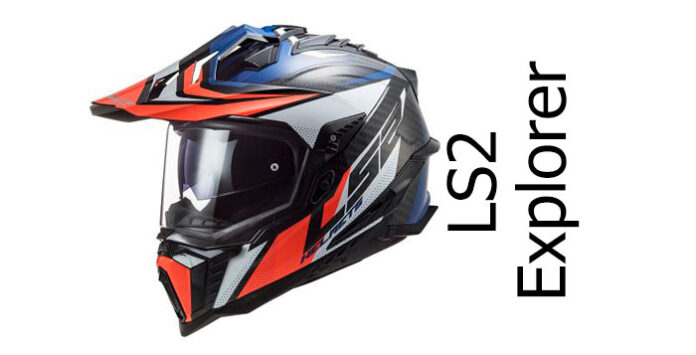
LS2 MX701 Explorer adventure motorcycle helmet review.

ls2-explorer-featured

LS2 MX701 Explorer Adventure Helmet: modern, great value & versatile.

LS2 are a funny bunch. Historically, they’re mostly known for pushing out a large number of lower priced helmets. But nowadays, their helmets are really upping the ante and they’re creating some well designed, high spec lids that are – in theory at least – giving the big boys a proper run for their money.

carbon fibre ls2 explorer adventure helmet bottom view
Rear view of the LS2 Explorer carbon ‘black’ helmet

And leaving me, for one, a little confused about who they are and what they offer.

And that’s from someone who’s daily helmet is a carbon LS2 Arrow (which I’m finding to be a seriously fantastic helmet btw!)

The LS2 MX701 Explorer is a great case in point. It’s launched in two flavors – an HPFC shelled version (that’s fiberglass to you and me) and a carbon fiber version. They both look great and they’re both covered in all the goodies you’ll be looking for in an adventure helmet.

So, it does leave me wondering if there’s much point in paying any more for a helmet from one of the big brands when you can get so much value for money buying an LS2.

So, let’s take a look over the Explorer. If you’re in the market for a new dual-sport/adventure helmet, then here’s what the LS2 Explorer offers – as ever including the views and thoughts of actual owners – and check out our suggested alternatives at the bottom for some fully reviewed and fantastic alternatives.

Looking to buy an LS2 Explorer?

Please click below to visit the LS2 Explorer helmets pages at two of our recommended stores and Amazon – both checked for great online ratings. And if you buy from any store, we get a small sum from the sale at no extra cost to you – a massive THANKS! (it’s how we finance the site).

JPCyclesShop for helmets at Amazon

Overall/Summary

LS2 say the Explorer has been created from the ground up to be the best adventure helmet around. And while it’s probably not, it’s a great value, modern looking lid that certainly delivers a lot of features the the money.

If you’re doing a bit of adventuring, you might find it’s not the coolest helmet (though it’s OK for less demanding on-road work).

And if you do intend to do most of your miles on the street, you can rip off the peak to help with the aero if you like (slapping it back on if you hit the dirt).

That sheild’s nice and wide and comes with a Pinlock in the box to help keep vision clear. It’s also optically correct and backed up with a drop down sun visor which all works well.

Fluo orange Alter graphic Explorer

Every adventure helmet should have an EQRS liner these days – like the Explorer – and it needs to be comfortable and light. Check the comfort once you buy it as there can be niggles (see comfort section below), but it’s a pretty light helmet whether you buy the carbon fiber or fiberglass version so you should be OK there.

Yes, there’s a question mark about how great the protection will be when push comes to shove (it hasn’t been independently tested by Snell). But like many LS2 helmets, there’s certainly no question mark over the value the Explorer offers. It’s rare to find a carbon fiber helmet at such a low price point – and especially one that ticks all the adventure helmet boxes.

Most owners love the Explorer for good value for money and for its modern design. Many (not all) find the build quality excellent too – plus it has all the features most of us are looking for in an ADV helmet.

Overall then, if you’re in the market for a new dual-sport helmet and like getting value for your money, the LS2 Explorer might be worth a try. It’s probably not the best adventure helmet out there, but it’s a good helmet. See the bottom of the page for some alternatives – or check out all our Adventure helmet reviews.

Shell & Safety

(more about helmet safety)

Both the fiberglass and carbon versions of the Explorer are made in 3 shell sizes to optimize fit and looks – and safety.

ls2 explorer frontier carbon motorcycle helmet side view
Carbon fiber Frontier Explorer

The carbon version is slightly lighter – it’s been weighed to around 3.3lbs (1.5Kg) in size M – whereas the fiberglass version will be around 3oz heavier. That’s not a lot of difference but in terms of safety, every ounce of weight saving helps as it’ll reduce the amount of interia generated by the weight of the helmet during an impact.

It’ll also mean it’s that little bit more comfortable and easy to live with day to day.

Other safety features include an emergency quick release liner (see EQRS), Pinlock Max Vision insert included to keep your shield fog-free, metal micrometric fastner which are really easy to use and good solid fasteners, and a shield with very good peripheral vision.

There’s also an integral drop down sun visor for when the sun’s in danger of obscuring your vision.

They’re all great safety features to have… but what about the helmet shell itself?

Well, all Explorers are DOT (ECE 22.05 certified if you buy one in Europe) so should give a decent amount of impact protection, but beyond that it’s hard to say as it’s not been Snell tested yet.

ls2 explorer extend adv motorcycle helmet front view
Front view of the LS2 Explorer Extend graphic

It does have a multi-density EPS to help it absorb different levels of energy – which is good to see. But looking back at SHARP helmet test data which tests ECE certified lids, LS2 helmets have scored just over 3 stars for safety over the years (out of a maximum 5) though that’s mostly for their cheaper polycarbonate helmets.

There haven’t been any carbon LS2 helmets tested so far, but there have been two fiberglass helmets tested to date and both have scored 4 stars. Whether that’s indicative of how well the LS2 explorer scores if it was to be tested remains to be seen.

Helmet Noise

(more about helmet noise)

Despite having a ton of vent holes in the shell and that large peak up top, it seems that LS2’s done an excellent job sound deadening the Explorer.

Yes, we found a few owners who said it was a loud helmet (as you always do with something as subjective as helmet noise), but most owners reckon it’s a really quiet helmet – probably one of the quietest adventure helmets out there.

So, if you need an ADV helmet but want a quiet ride, the LS2 Explorer’s definitely worth checking out (and maybe check out our quietest helmets page too).

Ventilation

(more about helmet ventilation)

The Explorer has a wide range of vents that should give it excellent ventilation. It’s what LS2 calls their dynamic flow-through ventilation which basically means a load of vents, all open/closeable and with a bit of a sucking action going on around the exhaust vents at the back of the helmet (from the aero) to help increase airflow.

ls2 explorer extend matt military green helmet rear view
You can see most of the rear exhaust vents on this Extend graphic Explorer

The Explorer has a nice, large motocross-stylee chin bar vent, a pair of crown vents, pair of side vents and a smattering of large and small rear exhausts. And all are closeable for when things get cold or wet.

Those top and side vents take air through the helmet and circulate it around the head through channels in the polystyrene liner – pushing it out of the rear exhausts aftewards.

The system’s design checks all the boxes but there’s mixed reviews on how well it actually performs. Some folks riding in very hot places reckon it’s great – others say it could do with more cooling around the head. Overall, it’s probably around average for ventilation – so that means if your road riding it’ll probably be mostly OK, but if you’re getting a workout doing a bit of proper adventuring, then you might find it’sa bit on the warm side.

Face Shield (more about shields)

The face shield system on the Explorer ticks all the boxes too.

It’s a quick release shield (shields on dual sports helmets aren’t always quick change) and it’s nice and wide meaning better all round vision. LS2 say it’s made to be optically correct too and, like all polycarb shields, it’ll give excellent UV protection – somewhere over 95% at least.


A couple of useful links…

– All our Adventure Helmet reviews –
– Visit our Smart Filters to find the right lid –


One piece of great news is that, for a competitively priced helmet, it also comes with a Pinlock Max Vision anti-fog insert in the box which should mean you never have to suffer from a badly fogging shield. Hurray.

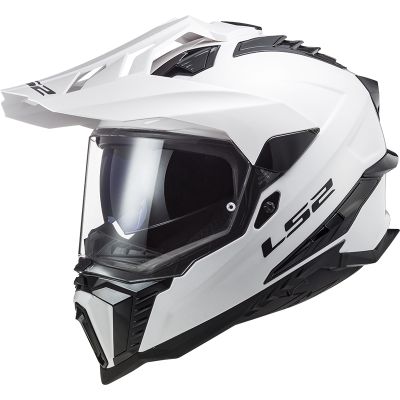
ls2 explorer solid white adventure motorcycle helmet side view
Solid white Explorer

Finally, the shield has a lock on it. Locks can be a little fiddly to unlock and the shield lock on the Explorer is a little on the small size.

However, it stands proud of the shell and we didn’t find anyone complaining about it, so it seems like this one’s OK.

In fact we didn’t really find any negative comments about the visor system – just positives. The Pinlock works well in all but the most extreme conditions and that wide field of view is universally praised. OK it could offer a better downwards view of the clocks but that’s an issue with most ADV helmets and their chunky chin bars.

Sun Visor and Peak

(more about sun visors)

There’s also a polycarb internal sun visor on the LS2 Explorer. It’s operated with a slider on the bottom edge of the shell – that’s the position favored by most riders as it’s really easy to find and operate.

Having the slider there can limit the available space for a 3rd party intercom, though in the case of the Explorer, it’s set back far enough to not cause too many problems (*but see bluetooth section below).

The sun visor’s well liked with the only occasional negative comments being that it could drop a little lower and it’s a bit of a bugger to refit if you ever pull it out.

carbon fibre ls2 explorer adventure helmet top view
Another view of the carbon black Explorer – showing vented peak and sun visor down

Like many adventure helmets, the peak can be removed to convert the helmet into a more road-focused lid. It’s also slightly up/down adjustable by loosening the screw at the top of the helmet – which can help with aero or shielding from the sun a little (a few owners commented there’s more adjustment on the peak on the Explorer than most other adventure helmets).

Many of the most recent adventure helmets have a vented peak to help with its aero characteristics and it’s good to see LS2 following suit. Most owners reckon the peak’s aero is good though there are some who complain of vibration and noise so it seems like it’s very bike and rider dependent.

Comfort and Sizing

(more about comfort and sizing)

The main thing to note about the LS2 Explorer is that it’s designed for riders with longer oval heads. So, if you’ve got a rounder or medium oval head, you may find that it presses on the sides a little.

ls2 explorer extend adv motorcycle helmet side view
Another Extend graphic fiberglass Explorer

That’s just something worth bearing in mind if you buy one (and make sure you buy from a store who’ll swap it out with no quibbles if it doesn’t fit right).

In fact, quite a few Explorer owners reckon that they found pressure points inside their helmets – so it’s definitely one to wear inside the house for a good while if you think it might be a bit tight – BEFORE you commit to ride in it (after which you won’t be able to return it).

Also, several owners said it tends to size a bit on the small side – so if you’re between sizes, it sounds like you should definitely go for the larger size.

The liner is hypoallergenic and fully removable and washable.

It’s also EQRS or emergency quick release, meaning there’s a pair of tabs on the bottom that are designed to be pulled and quickly release the cheek pads to help paramedics more easily remove your helmet.

Hopefully, you’ll never need it but – especially in an adventure helmet – it’s worth having there just in case.

The liner isn’t anything particularly fancy, but the word is it’s of decent quality, comfortable and wicks sweat away OK.

Both the fiberglass and carbon versions are available in fitment sizes XS-XXXL.

Looks & Graphics

The LS2 Explorer very much looks the part when it comes to a modern dual-sport helmet. There’s a wide range of graphics available too – and several solids if you’re more of a purist.

ls2 explorer alter hi viz yellow motorbike helmet rear view
There’s a couple of high viz options too…

If the carbon fiber version’s grabbed your interest (and why not at this price!) then you can of course find a plan ‘carbon black’ version that shows off the carbon fiber weave. But there’s also a couple of carbons that offer a lick of color in the Frontier, Extend and Focus carbon graphic helmets.

In fiberglass, there’s just two solids – a matte black and a gloss white, along with the Camo-X and Alter graphics (in 3 colorways).

As always, to find the latest graphics and deals, please click the links below that’ll drop you right onto their LS2 Explorer helmet pages.

Best places to buy an LS2 Explorer?

Please click below to visit the LS2 Explorer helmets pages at two of our recommended stores and Amazon – both checked for great online ratings. And if you buy from any store, we get a small sum from the sale at no extra cost to you – a massive THANKS! (it’s how we finance the site).

JPCyclesShop for helmets at Amazon

LS2 Explorer Video

Here’s a 4m look around the Explorer from an LS2 representative.

Other stuff – fasteners, bluetooth, warranty

The Explorer comes with a metal micrometric fastener. I’m a great fan of how easy micrometrics are to use, and if they’re regularly adjusted, they’re as safe as any fastener out there.

ls2 explorer matt black adv motorcycle helmet underneath
The fiberglass matt black Explorer from below

As for a bluetooth communicator – it’s designed to fit the LS2 Linkin Ride Pal, so that’s probably the one to go for if you’re looking for a more integrated solution. It also means there is space for speakers in there too if you’re wanting to fit your own headset.

Word is they’re not the deepest speaker pockets but if you have slim speakers you should be OK. We’ve heard from owners of Cardo Packtalk Bolds and Sena SMH5s who said theirs fitted fine.

The main issue with fitting your own 3rd party bluetooth to the Explorer is that the sides aren’t flat so it can be tricky to fit your controller with a sticky mount. And the sun visor slider can interfere with fitting a clamp mount too – so it can take a bit of trial and error to get it fitting right. Still, I guess that’s often the case with fitting 3rd party bluetooth kits to helmets.

Not all LS2 helmets come with a 5 year warranty, but the good news is that both versions of the Explorer do – as usual, covering manufacturing defects only.

[xyz-ihs snippet=”Link-to-guides-page”]

Good Alternatives to the LS2 Explorer?

Click the link to find all the dual sport/adventure helmets we’ve covered so far. Adventure bikes are really popular these days, which means helmet makers have been keen to get adventure helmets out there, so there’s a lot of choice.

ls2-pioneer-solid-white-dirt-bike-adventure-helmet-side-view-
LS2 Pioneer

LS2’s own Blaze is highly rated and cheap too. It’s got EQRS and a sun visor and it’s half the price of the Explorer if you don’t mind wearing a polycarb lid.

arai xd4 Tour X4 hi viz neon yellow crash helmet side view
Arai XD4

Towards the top of the pile is the fiberglass adventure helmet from Arai, the XD4. It’s a well liked helmet that has three configs, turning it from a road to an adv to a dirt helmet. It’s also Snell certified for safety in the US (DOT version).

Same goes for Shoei’s Hornet X2 – it’s also a fiberglass helmet that’s comfortable, well built and with a well designed peak.

Shoei Hornet-X2 ADV solid white crash helmet
Shoei Hornet X2

[xyz-ihs snippet=”Adventure-helmets”]

Looking to buy an LS2 Explorer?

Please click below to visit the LS2 Explorer helmets pages at two of our recommended stores and Amazon – both checked for great online ratings. And if you buy from any store, we get a small sum from the sale at no extra cost to you – a massive THANKS! (it’s how we finance the site).

JPCyclesShop for helmets at Amazon

Star Ratings

HJC i71 Polycarbonate full face helmet.

HJC i71: HJC’s latest mid-price full face polycarbonate all-rounder.

hjc i71 motorcycle helmet pearl white top down view
Gloss white i71

HJC certainly don’t stand still. They rattle through new models faster than Leo DiCaprio. And the i71 is their latest full face polycarb offering, presumably replacing the HJC i70 – their last mid price full face polycarbonate helmet.

Both helmets have pretty well the same specs (sun shield, Pinlock, D-ring fastener) and while the Euro i71 does have the latest ECE 22.06 certification (so should theoretically offer slightly improved protection levels) the US version is still plain DOT certified. That’s because HJC does alter helmets slightly between markets so they’re not dual ECE and DOT – with the Euro i71 having a micrometric fastener not a d-ring).

Plus, the i71 is ready to accept HJC’s latest generation of bluetooth headset – that’s the Sena developed SMART 50B and 21B headsets.

So if you’re thinking of buying one, read on for more of what you can expect from the HJC i71…

Looking to buy an HJC i71?

Please click below to visit the HJC i71 helmets pages at our recommended store or Amazon. And if you buy from either store, we get a small sum from the sale at no extra cost to you – a massive THANKS! (it’s how we finance the site).

Shop for helmets at Amazon

The bottom line is that the HJC i71 should be a good all-rounder helmet – suitable for commuting or touring and most rides inbetween.

hjc i71 sera motorcycle helmet top front view
Sera graphic i71. Note all helmets are delivered with a clear shield, not tinted.

HJC reckon they’ve improved ventilation by reworking the top vent and enlarging the mouth vent to let more air in. Looking at the helmet, there’s only a single rear exhaust vent that’s quite high up so my guess would be you’ll probably not feel much cooling all over, more just around the top of your head.

The shield system looks good though. It’s quick release (open shield, pull a tab and the shield pops off – quick push back on to refit) and when you fully close it, it has an auto-lock to keep it in place. That’s fine as long as the unlock is easy – and with the i71, there’s a new ‘press to unlock’ mechanism that looks really simple.

And of course, the good news is that the i71 comes with a Pinlock anti-fog insert in the box which not many helmets do but is a must if you ride where it’s cold, rainy or humid.

[xyz-ihs snippet=”Top-10s-thumbnails”]

The sun visor’s operated by a slider on the bottom left edge of the helmet. It’s actually underneath the panel where the comms unit can be installed so it’s tucked right out of the way. The sun shield’s anti-fog treated which is good, and it’s actually slightly adjustable for depth of drop and how far the bottom pushes away from your face (up to 10mm) by using a little switch under that comms panel.

HJC says it adjusts according to your morphology. What that really means if you’ve a big honker, then it’ll help stop the sun visor pressing against it – maybe – a bit.

hjc i71 motorcycle helmet metal gloss black side view
Gloss black HJC i71

Still, it’s good to see HJC innovating and you never know, it might come in useful.

In UK/Eu i71s come with a micrometric fastener – and as usual that’s a double-d ring in the US. Not entirely sure why we always get double d rings instead of ratchet fasteners but I guess somebody somewhere has done some market research to show they’re preferred?

As mentioned, the i71 has a polycarbonate shell. That’s fine for great protection, but it does mean the helmet might be slightly heavier (than composite or carbon helmets). It’s not Snell tested though – time was tht HJC used to get all their lids tested by Snell but I guess they just have so many helmets these days, they decided it wasn’t worth the $$$s.

Interestingly, the Eu version has passed the latest mandatory stafety standard test in Europe – that’s the ECE 22.06 test – so head over to our UK/Eu site if you want to know where to buy one of those helmets instead (though if you get pulled by the cops, it’ll not be legal in mandatory helmet states).

And if you’re looking to fit a bluetooth kit to your helmet, the HJC i71 is designed to fit HJC’s own latest gen SMART 50B and 21B headsets. They’ve been designed alongside motorcycle bluetooth specialists Sena, so they should be decent. And if you do buy one of these kits to make a fully integrated headset, there’s speaker pockets inside the helmet and a panel on the left that you can snap the controller into – and a pocket for the battery at the rear.

hjc i71 Simo motorcycle helmet rear view
Rear of the Simo graphic i71

And while the speaker pockets mean you should be OK using your own 3rd party bluetooth kit on the i71, mounting a controller might be a bit tricker because the place you’d usually mount it is already taken by HJC’s pop-off panel. Not ideal.

Overall though, the HJC i71 looks like it should be a good all-rounder and good value for money. It’s got most of the features you’ll probably be looking for in a modern sports touring lid. And while it’s got just a plain ole polycarb shell, HJC do know how to make a decent performing helmet – and usually ones that don’t break the bank.

Looking to buy an HJC i71?

Please click below to visit the HJC i71 helmets pages at our recommended store or Amazon. And if you buy from either store, we get a small sum from the sale at no extra cost to you – a massive THANKS! (it’s how we finance the site).

Shop for helmets at Amazon

[xyz-ihs snippet=”Tag-cloud-1″]

Fly Racing Formula range of Carbon, Composite and Polycarb dirt helmets.

Fly-Racing-Formula-featured

Fly Racing Formula dirt motorcycle helmet review.

Fly Racing was known for their range of lower price helmets – that is, until they launched the Formula range of Motocross helmets.

fly racing formula dirt helmet solid white
Solid white full carbon fiber Formula

The first Formula helmet they launched was the top of the range full carbon version, followed by the CC Carbon Composite Formula, then finally the CP Polycarbonate Forumula helmet.

And looking at the specs of each helmet, it’s great to see that Fly Racing are serious about making a helmet that really protects.

Dirt helmets tend to be at the forefront of protective helmet tech – arguably even more so than track helmets – probably because riders are subject to a wider range of accident types and are just plain more likely to have a spill. So (some) manufacturers take protection very seriously.

And it’s great to see Fly Racing being one of them. Multi-density liners – check. Multiple shock absorbing materials – check. Slip plane liners – check (kinda). Higher spec helmet shells and dual ECE/DOT rating – check.

So here’s the lowdown on what you can expect from the Fly Racing Formula if you’re in the market for a new off-road helmet.

  • Fly Racing’s dirt bike helmet range
  • Full carbon, composite or polycarb shells
  • Snell M2015 approved (carbon version)
  • ECE and DOT certified
  • Crash Labs tested: 4 stars safety, 3 stars comfort
  • Youth version available
  • Rheon, EPS and EPP liners
  • Sizes XS-XXL
  • Prices around:
    • Carbon $650-$700
    • Composite $450-$540
    • Polycarbonate $220-$260

Looking to buy a Fly Racing Formula?

Please click below to visit the Fly Racing Formula helmets pages at one of our recommended stores and Amazon. And if you buy from either store, we get a small sum from the sale at no extra cost to you – a massive THANKS! (it’s how we finance the site).

Shop for helmets at Amazon

Overall/Summary

Whichever Fly Racing Formula helmet you choose, owners seem broadly impressed with their helmets. They offer amazing venting, they’re very comfortable, pretty light, have solid build quality, and they work well as dirt helmets. Owners generally really like them.

But which one to choose (see further down for key differences)?

Fly Racing Formula CP motocross helmet
This one’s the matte black CP Polycarbonate Formula helmet. Scroll down to see the difference between it and the matte black CC composite fiber version.

You can buy three polycarbonate Formula helmets for the price of one carbon fibre helmet, and they do share most of their tech. And don’t be put off by a polycarbonate shell as they can be great performing helmets. Overall, the polycarbonate helmet is cheaper, looks more or less the same as the more expensive lids and they’re only a few ounces heavier; so if price is a big factor, we’d say go for the polycarb.

As you’d expect, it’s the full carbon fibre helmet that’s lightest – and with its carbon weave it looks a bit special too. And because it’s been Snell certified and independently tested by the Aussie Crash Labs, it’s always nice to know it offers lab-proven levels of protection (see safety section further down).

If you’re undecided between the two, the carbon composite CC Formula helmet probably offers very similar levels of protection and performance to the full carbon helmet while only being about one ounce heavier. And while you might not be able to show off that carbon weave to your buddies, you will be saving yourself a couple hundred bucks in the process.

Overall, the Fly Racing Formula is a great helmet and very much up there with the big brands in terms of performance and quality. Well worth buying.

Fly Racing Formula – different models

Full Carbon Formula

The carbon fibre Formula helmet has a 12k carbon shell. 12k refers to the number of carbon fiber filaments in each ‘tow’ or group of fibres. It’s a cheaper type of carbon fabric but it also has greater tensile strength, which is probably why Fly Racing say it has superior penetration resistance. It also makes for a lighter helmet, with the full carbon Formula helmet weighing around 3lbs (1.35Kg) which is light weight.

Fly Racing Formula CC Dirt motorcycle helmet
Here you go… Formula CC helmet. Most of the differences between it and the CP seem to be the design of some vents.

CC Carbon Composite Formula

The Fly Racing CC is pretty much the same helmet as the Carbon helmet, just its shell is made from a composite of carbon fibre, Kevlar and fiberglass. And while it’s a good bit cheaper than the full carbon and looks the same, it’s only about an ounce heavier.

CP Polycarbon Formula

There’s a few small cosmetic differences between the CP and the other two Formula helmets – mainly in the placing of the vents – but the main difference is the fact the helmet shell is polycarbonate plastic. And of course that makes it a little bit heavier, weighing around 3.2lbs (1.45Kg).

Safety

(more about helmet safety)

Fly Racing have taken an innovative approach with the Formulas. All three have an expanded polystyrene shock absorbing liner, and all three have a slightly funky take on the concept that Fly Racing calls Conehead. That means it has separate panels slotted together using cone shaped EPS ‘spikes’ which Fly Racing reckon give them a more progressive impact protection.

They also use a double-density liner, again designed to give more effective lower and higher speed impact protection.

fly racing formula conehead construction
Cutaway showing the conehead EPS construction

On top of that, they add little ‘rosettes’ of rheon which is an energy absorbing polymer, again designed to offer progressive impact absorption as well as a certain amount of slip-plane protection – so letting the helmet slide independently of the head during an impact.

Of course, all these features sound great, but the key thing is – do they work?

Obviously, the only real way to find out in any meangful way – apart from buying one and launching yourself off your motorcycle – is to lab test it. The good news is that the carbon version of the Formula has been Snell certified and the Australian Crash programme also tested the full carbon version and scored it 4/5 stars for protection. To put that into perspective, only one helmet so far has scored 5/5, so it’s a decent score.

Actually, looking at their published test info, it looks like the oblique/rotation protection ain’t that great (which is maybe where it dropped that extra star?) – with it scoring 7.7/15 for ‘Ability to minimize the rotation of the helmet in a crash’ and 5.8/15 for ‘Oblique impact energy management’.

And of course, that’s just for the carbon fibre Formula helmet. If we had to guess, we’d say the composite version would probably score something similar but as for the polycarbonate version (that doesn’t have the ‘conehead’ EPS) it’s difficult to say.

Other than this test score, it seems all models are built in three shell sizes – which is good for optimizing fit and safety – and they all have double-d ring fasteners. And as long as you’re careful fastening them up each time, double d rings are about as reliable as they come.

Fly Racing Youth Formula carbon prime helmet side view
There’s also a range of Youth helmets. This one’s the carbon Prime.

There’s also a collarbone-friendly bottom edge, shaped to reduce impact on the clavicle if the helmet’s pushed downwards – and that bottom profile’s filled with a small amount of EPS to cushion the blow further.

Similarly, Fly Racing has lined the chin bar with EPP (expanded polypropylene) to offer some impact attenuation there – which is always great to see and just goes to show the attention to detail they’ve gone to in order to maximize impact protection.

All in all, the Fly Racing Formula should give good protection; but looking at that test data, just maybe not as much rotation protection as we’d like.

[xyz-ihs snippet=”Top-10s-with-header-and-horiz-lines”]

Helmet Noise

(more about helmet noise)

Helmet noise arguably isn’t as important for a dirt helmet as a street helmet. Sure, if you’re riding fast and loud competitively you’re not going to want to deafen yourself day-in day-out, but for most of us being able to hear the engine and your riding partners will probably mean you don’t mind a bit of noise getting into your helmet.

And with so many ventilation holes covering the helmet (see below) each is a pathway for noise too.

For a dirt helmet, opinions we’ve found say it’s about average – so you shouldn’t have any real problems with noise if you buy a Fly Racing Formula. And if you do find it too loud, the solution’s always the same – buy some decent ear plugs and you should be fine wearing most helmets, including the Formula.

Ventilation

(more about helmet ventilation)

fly racing formula dirt helmet solid white rear view
Rear view showing 7 exhaust vents

Whichever model of Formula helmet you go for, ventilation should be more than enough.

They all have generous venting in both the chin bar and forehead, taking air through the shell, around channels in the EPS liner and into the helmet. The comfort liner has a stack of air holes in it and riders across the board reckon there’s a ton of airflow.

Once in the helmet, warm and moist air vents out the back of the helmet through seven rear exhausts, giving a very open and free flowing movement of air through the helmet.

We found heaps of Formula owners who rated it highly for ventilation and the Crash Labs testers agree, scoring it 20/20 for ventilation.

Visor/Peak/Goggles

(more about visors)

The visor on all versions of the Formula is light weight plastic and designed to break away under impact (the full carbon Formula comes with a spare in the box).

They’re all slightly up/down adjustable and they’re all aero sculpted to reduce lift at speed as well as direct airflow into that top forehead vent.

Word is that the viewport is large enough to take pretty well any type of goggles you want. We heard from riders fitting 100% Accuri OTG goggles without a problem, so if you’re a glasses wearer and need larger goggles, you should be good to go.


A couple of useful links…

Helmet’s that’ll fit a bluetooth headset
Snell motorcycle helmets


Comfort and Sizing

(more about comfort and sizing)

Comfort’s another major tick in the box according to pretty well every Formula owner we found.

Fly Racing Formula full carbon motocross helmet
Full carbon Black Formula helmet

All Formulas are medium oval fitment internally and we heard from quite a few owners saying how they found it to be the most comfortable dirt helmet they’ve ever used. While one or two owners found their helmets tight at first, they also reckon they do break in quickly. The internal shape seems to be very forgiving and the liner soft, comfortable, antimicrobial and moisture wicking.

And while there isn’t any adjustment internally, if things aren’t quite right there are a range of different cheekpad sizes available from Fly Racing if you need to tailor the fit further.

On the whole, sizing seems to be about right for most owners – so use our Fitment Guide to measure your head and order the correct size through one of our recommended stores.

While most owners we found rate it as an exceptionally comfortable helmet, it’s worth noting that Crash Labs (who also test each helmet for comfort) scored it a middling 3/5 stars.

Looks & Graphics

Fly Racing Formula CP Stant Red helmet
Fly Racing Formula CP Slant

There’s a huge range of graphics and colorways available for all three Formula helmets (four if you count the Youth versions). If you’re after a solid, then the CC and CP both do matte black solids and there’s a solid white carbon helmet available. If you’re after a solid black carbon Formula, the blacks are basically either a gloss or matte clearcoat over the carbon (see Carbon Black above).

Other than that, the carbons all tend to show off that carbon fibre weave and while we’ve dotted some of the graphics up and down the page, you should click the links below to check out the full ranges at our recommended stores below – click and you’ll drop straight onto their Fly Racing Formula helmets pages.

Best places to buy a Fly Racing Formula Helmet?

Please click below to visit the Fly Racing Formula helmets pages at one of our recommended stores and Amazon. And if you buy from either store, we get a small sum from the sale at no extra cost to you – a massive THANKS! (it’s how we finance the site).

Shop for helmets at Amazon

Fly Racing Formula Helmet Video

Top video is a 9m30s video looking at the Formula Carbon and the bottom one a 7m video covering the Formula CP – both from Rocky Mountain.

Other stuff – build quality, warranty

Fly Racing Formula CC Centrum motorcycle helmet
Composite fibre Formula CC Centrum

One comment we found time and time again is that Fly Racing Formula helmets are well built with good paint, quality materials and a solid feel (except perhaps the visor that’s designed to break off).

Hopefully that rings true for the lifetime of the helmet because Fly Racing helmets only come with a one year warranty.

[xyz-ihs snippet=”Link-to-guides-page”]

Good Alternatives to a Fly Racing Formula Helmet?

6D ATR-2

You can find all our dirt helmet reviews here, but here’s a small selection of our some other motocross helmets that we think you should check out.

One of the main competititors to the top-end Fly Racing Formulas is the 6D ATR-2. That’s another motocross helmet that focuses on max protection by using MIPs and dual density liners. It’s a great helmet too that most owners love.

shoei vfx evo glaive motocross helmet side view
Shoei VFX-EVO

Another great top-end dirt lid is the Shoei VFX-Evo. That’s been Snell M2020 certified too – it’s got MEDS rotation protection, EQRS and it comes in four shell sizes. It’ll fit a bluetooth headset too.

HJC CS-MX II

If you’re more focusing on value for money, the HJC CS-MX II is highly rated by owners and it’s super cheap – half the price of the base spec Formula even. It covers all the basics – though it hasn’t been rated for crash protection yet.

Looking to buy a Fly Racing Formula?

Please click below to visit the Fly Racing Formula helmets pages at one of our recommended stores and Amazon. And if you buy from either store, we get a small sum from the sale at no extra cost to you – a massive THANKS! (it’s how we finance the site).

Shop for helmets at Amazon

Star Ratings

Nolan’s N80-8; full face polycarb all-rounder helmet.

nolan-n80-8-featured

The Nolan N80-8 is the successor to the Nolan N87 – a well liked, well specced polycarb all rounder full face helmet that was pretty much the staple of the Nolan range.

And while the N80-8 has a similar look and vibe, it’s actually a substantially redesigned lid.

nolan n80-8 50th mandrake white black red helmet front view
Nolan N80-8 in Mandrake graphics

It’s still got a polycarbonate shell though, and it’s got pretty well all the same features as the N87 – which is a good thing. And it’s still on the market at a competive price point: under the $300 mark – or maybe a smidge over if you go for graphics rather than solid.

If you’re after a good value all-rounder then, and aren’t put off by the fact it’s a plastic helmet rather than fiber or carbon (which you shouldn’t be because the outgoing N87 scored an excellent 4/5 stars for safety when SHARP tested an ECE version), then read on as we pick apart the N80-8 to see what it offers.

  • All rounder full face helmet
  • Polycarbonate shell
  • DOT certified (US helmet)
  • EQRS
  • ESS (optional)
  • Sun shield
  • Pinlock included
  • 2 shell sizes
  • Fitment sizes XXS-XXXL
  • 3.3lbs (1.5Kg): about avg for a full face
  • Expect to pay $270-$340

Looking to buy a Nolan N80-8?

Please click below to visit the Nolan N80-8 helmets pages at one of our our recommended stores and Amazon. And if you buy from either store, we get a small sum from the sale at no extra cost to you – a massive THANKS! (it’s how we finance the site).

Shop for helmets at Amazon

Safety

(more about helmet safety)

OK, we love it when a helmet’s been SHARP tested because it makes sussing out whether it’s really protective very easy.

Unfortunately, the Nolan N80-8 hasn’t been SHARPed yet; though the old N87 – that had a similar spec – scored a thoroughly decent four stars out of five.

nolan n80-8 flat matt black motorcycle helmet rear view
Flat black version of the N80-8

The N80-8 on the US market is DOT certified – latest ECE 22.06 certified if you buy in Europe. Having said that, we contacted Nolan USA and they confirmed they’re the same helmet.

And of course, the Nolan brand has always had a great history of making some of the most protective helmets you can buy.

They’ve never actually made it to the top of our ‘best protecting helmet brands‘ list but, at the time of writing, they’re at a very respectable mid-table and none of their tested helmets has ever scored less than four stars out of five when SHARP’s tested it – which is obviously an amazing achievement!

Testing and certification aside, the N80-8 has a raft of features that you’d look out for when trying to buy a well protecting helmet.

It’s a polycarbonate shelled helmet that’s available in two shell sizes. That number ain’t particularly great as it means it’ll probably not be overly-well optimized for your head. Generally, you’d prefer a helmet to be made in 3 or more sizes for a better optimized fit.

The smallest of the N80-8 shells fits head sizes XXS-M and the largest, sizes L-XXXL, meaning Nolan has to either pad-out or under-pad most helmets a little to make them work for different sized heads – and that probably ain’t ideal for looks, fitment or protection.

You might notice the word ‘Lexan’ on the side of the N80-8?

nolan n80-8 staple black yellow crash helmet side view
This one’s the Staple graphic Nolan N80-8. Notice sun shield slider, nicely placed along the bottom edge

Nolan – and a few other helmet makers – shout a bit about it being Lexan polycarbonate, in relation to either the shell or shield. But what is it?

Well, Lexan is simply a trade name for the polycarbonate made by Sabic, a state-owned Saudi chemical company. So I’m not entirely sure why they shout about it!

As far as my research shows, it’s a pretty standard material with no special characteristics over and above regular non-branded polycarbonates, so maybe it’s just the helmet makers trying to make it look better than it actually is by slapping the name on the helmet and their marketing materials? If anyone out there knows better, then please put it in the comments and we’ll share it with the world.

What the Nolan N80-8 does have in terms of safety-related equipment is: quick release cheek pads (EQRS), a wide shield fitted with a Pinlock antifog (Pinlock incuded in the price), a sun visor, metal micrometric 2 fastener and the option to fit an emergency stop light (ESS) on the back of the helmet.

All those things are good for safety as well as making for a more user-friendly helmet.

Given Nolan’s track record, we’d very much expect the Nolan N80-8 to score 4 stars for safety were SHARP to test it, so we’d expect it to give overrall very good levels of protection.

Ventilation

(more about helmet ventilation)

Like the old N87, the Nolan N80-8 has Nolan’s AirBooster technology. I wouldn’t get too excited though as it’s just a fairly regular type of ventilation system with a fancy name.

nolan-n80-8-Starscream-black-red-motorcycle-helmet-rear-view
Rear exhausts and top vent button visible on this Nolan N80-8 Starscream

Essentially, air enters the helmet through that large crown vent, circulates around the head through channels in the polystyrene EPS liner before exiting via the pair of exhaust vents at the top and bottom rear of the helmet.

Nolan has put some decent sized holes and a mesh panel in the comfort liner though, which is important to let the air get through to your head.

That top vent can be closed off if it gets too chilly too, using a small but pretty glove-friendly slider on the top. Likewise, the chin bar vent can be opened or closed, this time that whole central panel slides up or down (making it very easy to use in gloves) and takes air into the chin area and rear of the shield to help with demisting.

It’s all a tried and tested system of venting that you’ll find on most helmets these days and, if it’s anything like the system on the N87, should be well up to the job. Couple it with the (included) Pinlock on the back of your shield too and fogging should be kept well under control.

Shield

(more about shields)

The main shield on the N80-8 is designed to be nice and wide for good peripheral vision. There’s a single opening tab at the centre/bottom, which is good because it means you can open the shield with either hand, and it’s a quick release shield for easy removal when you want to swap it out or clean it.


A couple of useful links…

All our mid price helmets
Pinlock-ready helmets


It should come with a Pinlock anti-fog insert in the box too – but double check when buying as Nolan say it’s ‘sector dependent’ which I’m guessing means depending on the country. In the US it should be in the box.

nolan n80-8 classic slate grey motorbike helmet side view
Shield’s wide, quick-change and comes with a Pinlock. All good there then.

Nolan’s Pinlock pins are slightly adjustable for tension by adjusting the actual pins on the shield, so if you’ve ever had a problem fitting one before (personally, I haven’t) it might be of interest as you can fit the Pinlock and then tighten it in-situ.

Sun Visor (more about sun visors)

There’s a handy drop-down sun shield fitted to the Nolan N80-8. It’s operated by a slider on the bottom left of the helmet and it’s spring loaded too. Spring loading means you can slide the sun visor down and when you want to put it back up again, you just press a button and because it’s spring-loading, it’ll auto-retract.

Spring loaded sun visors are great at first but the spring can tire over time, meaning you end up with the bottom edge of the sun visor in your view. It’s not a massive problem if it happens but it’s maybe something to be aware of if you’re thinking about buying one.

Like the main shield, the sun shield’s made of polycarbonate. Again, Nolan’s keen to point out that it’s a Lexan sun shield (and…?) but one useful point to note is that they say it gives UV 400 protection which is the highest you can get.

Of course all polycarbonate shields give pretty thorough UV protection (always over 95%) but not all manufacturers test it and advertise the exact levels of protection theirs offer so cheers for that Nolan – always good to know.

Comfort and Sizing

(more about comfort and sizing)

The Nolan N80-8 has Nolan’s Clima Comfort liner which is a fairly standard sort of liner but now is eco friendlier, made from 100% recovered fibers ‘sourced from the post consumer recovery of nylon’. Consider the planet saved 🙂

nolan n80-8 50th anniversary motorcycle helmet top view
Top view of the 50th Anniversary graphic Nolan N80-8 (front is bottom of the picture)

Still, every little helps and I’m sure it’s something we’re gonna see more of in the future.

Clima Comfort liners also have a panel of mesh and ventilation holes to let air get to your head more easily.

Nolan internals are usually well thought out and comfortable places to put your melon. For the N80-8, that means you’ve got a fully removable and washable lining, this time with reversable cheek pads.

The reversable part means, if you wear glasses, you can pull the cheek pads out, pull off the cover, remove a strip of padding, shove them back in the reverse way round and you’ve got glasses grooves in there to make fitting and wearing your glasses more comfortable.

Those cheek pads are also EQRS or emergency quick release compatible, so you can tug on the tabs at the bottom of the helmet and they should slide out, helping paramedics and the like get your helmet off more easily.

Hopefully you’ll never need them but you might as well have them in your helmet these days as there’s really no downside.

There’s also a slight bit of adjustability to the fitment of the liner – something Nolan call LPC or liner positioning control – where you can adjust a plastic strip to tighten the liner up a bit if you find the fitments not right. It’s not strictly there to make the helmet tighter or looser on the head but to adjust the way the helmet sits when it’s on. So, if you find the top of the shield too low, for example, you could tighten up the LPC to raise it up a bit.

It’s a handy system and gives that little bit more control that some riders might find useful.

All in all, inside the helmet’s got more or less everything you’d want to find in a modern full face helmet, so all good here.

Looks & Graphics

nolan n80-8 astute grey red motorbike helmet front view
Astute grey N80-8. In fact most graphics seem to be variants of black or grey with a hint of color.

Most of the graphics that come on the N80-8 are dark with a flash of color. There’s the Ally, the Thunderbolt, Powerglide, Astute and Staple that do this – a few with a touch of hi viz on there, if you’re looking to get noticed a bit.

Slightly more flambouyant are the Mandrake and Starscream graphics. And if you want a plain helmet, called Classic in Nolan’s line-up, you can choose from gloss white, black or grey, or matt black or grey.

As always, you can see any new graphics or colorways that become available by clicking on the links below that’ll take you straight to their Nolan N80-8 pages.

Best places to buy a Nolan N80-8?

Please click below to visit the Nolan N80-8 helmets pages at one of our recommended stores and Amazon. And if you buy from either store, we get a small sum from the sale at no extra cost to you – a massive THANKS! (it’s how we finance the site).

Shop for helmets at Amazon

Nolan N80-8 Video

Here’s Sportsbikeshop UK’s 7m look around the N80-8.

Other stuff – fasteners, bluetooth, warranty

The N80-8 has a metal micrometric 2 fastener. Micrometrics are particularly easy to use (compared to the old double-d rings) and safe as houses. Just make sure you do it up tightly and double check the strap adjustment from time to time as the ratchet bar will only adjust to a certain extent before you have to adjust the strap.

If you’re looking to fit a bluetooth headset, the N80-8 is designed to integrate with a Nolan N-com system (B902L, B902R and B601R systems). Nolan’s bluetooth kits aren’t usually quite as ‘integrated‘ as some other manufacturer’s integrations, but there’s speaker pockets, wiring grooves and fitting packs available for the helmets to make a nice neat job.

Even though the N80-8’s a relatively inexpensive helmet, it’s backed by Nolan’s 5 year manufacturing warranty which is about as good as they get.

Overall/Summary

The Nolan N80-8 looks to be a fitting successor the the N87, which was one of Nolan’s top selling helmets.

nolan-n80-8-n-com-powerglide-black-gold-crash-helmet-side-view
Powerglide graphic N80-8 in profile.

Why? Well, it’s available at a sensible middle of the road price point and it packs a lot of punch for the money.

It’s got a nice, modern design too, though that’s down to opinion. What’s not is the fact that it’s got a useful shield system that’s wider than average for improved peripheral vision and backed with an (included) Pinlock antifog. That in turn is backed by a drop down sun visor which will always come in handy.

It should have decent ventilation with both vents being glove friendly. And it’s all held on the head using a metal micrometric ratchet strap. Dead easy to use and saves us having to fiddle around with d-rings which can be a pain.

OK, it’s a plastic helmet, but Nolan’s reputation for safety is excellent and we reckon it’ll provide very good protection in an accident, based on their history of every helmet so far scoring 4/5 stars when tested by SHARP.

All in all then, you get a lot of helmet for not very much outlay with the Nolan N80-8 and is well worth a look if you’re looking for a relatively inexpensive but fully-featured full face helmet.

[xyz-ihs snippet=”Link-to-guides-page”]

Good Alternatives to the Nolan N80-8?

Here’s a selection of helmets you might want to check out if you’re looking for a mid-priced full face helmet that’ll work well AND provide great protection.

scorpion exo-st1400 carbon side view
Scorpion ST1400

The Scorpion Exo ST1400 is Scorpion’s top flight sports touring helmet. It comes in composite or carbon versions, it’s SHARP 4 star safety rated (ECE helmet) and it’s great value for a great looking, hi-tech lid.

arai profile v bend motorcycle helmet hi viz side view
Arai Profile V

Or how about the Arai Regent X? Yes, it’s more expensive than the Nolan or the Scorpion, but you get that extra hand-built Arai cachet – and it’s a great full face, designed to be easier to get on and off and scoring a Snell certification for safety.

AGV-K3-SV-motorcycle-crash-helmet-gloss-white
AGV K3 SV

Finally, if you want the brand name but only want to pay similar money to the Nolan, how about the AGV K3 SV (or SVS or whatever they’re calling the latest version!). The K3 has great ventliation, sun shield, and Pinlock in the box. Well worth a look.

[xyz-ihs snippet=”Alternatives—full-face-helmets”]

Looking to buy a Nolan N80-8?

Please click below to visit the Nolan N80-8 helmets pages at one of our our recommended stores and Amazon. And if you buy from either store, we get a small sum from the sale at no extra cost to you – a massive THANKS! (it’s how we finance the site).

Shop for helmets at Amazon

Arai VX-Pro4: Great quality, Snell certified motocross helmet. Bit heavy though?

arai-vx-pro4-featured

Arai VX-Pro4 enduro motocross dirt motorcycle helmet review.

The VX-Pro4 is Arai’s top of the range dirt helmet which Arai says has been designed using feedback from its sponsored riders in the worlds of motocross and enduro.

arai MX-V block dirt helmet side view
The Block graphic’s available in colored version too

The improvements Arai says they’ve made over their outgoing helmet is they’ve extended the length of the peak to give better protection, improved ventilation and moved the chin vent gubbins to the outside of the helmet to give more space inside the chin bar.

The Arai VX-Pro4 has a fiberglass based composite fibre shell using a range of special fibers and construction techniques that Arai is keen to point out have been developed and honed across the decades and their helmets are made by hand in their Japanese factory.

And the good news is that the VX-Pro4 has been Snell 2020 certified meaning you should be able to put your trust in it shoud the worst happen out on the trail.

That’s always a great starting point. But there’s a ton more you want from your motocross helmet in terms of functionality and to make it easy to live with and useable on a day to day basis.

So here’s the lowdown on what the Arai VX-Pro4 offers and what owners/riders think of their helmets.

Looking to buy an Arai VX-Pro4 ?

Please click below to visit the Arai VX-Pro4 helmets pages at our recommended stores – all checked for great online ratings. And if you buy from any store, we get a small sum from the sale at no extra cost to you – a massive THANKS! (it’s how we finance the site).

Shop for helmets at AmazonBTO Sports

Overall/Summary

The Arai VX-Pro4 is a high quality and well-liked motocross helmet. It’s been developed alongside pro motocross and enduro riders and performs well in many of the areas that serious dirt riders need: protection’s Snell certified, ventilation is good and comfort’s excellent.

And so is the quality of the helmet; materials, fit and finish are all first rate and a testament to the hand-built and hand-QA’d nature of Arai helmets.

arai MX-V stanton dirt helmet rear view
Stanton graphic VX-Pro4

Of course, when you’re taking your motorcycle off road, you need to know your helmet will protect you well. The VX-Pro4 is Snell certified and has EQRS cheek pads – though it does lack some of the latest features such as a slip plane liner (like MIPS) to protect against helmet rotation and a collarbone-friendly design. It’s a heavier helmet too, tho owners don’t seem to notice it.

Overall, folks who run an Arai VX-Pro4 seem to love it for the quality as well as functionality and they’re willing to pay a premium price for it. There are some excellent alternatives around (see section at the bottom of the page) but if you’ve got the budget and like what it offers, we’re sure you’ll be happy with an Arai VX-Pro4.

Safety

(more about helmet safety)

There’s a good few things to note about the protection offered by the Arai VX-Pro4.

First up is that Snell M2020 safety rating. That’s always a good thing to see in any helmet and should mean it’s going to offer decent protection if you suddenly find yourself faceplanting the dirt.

The helmet shell on the VX-Pro4 is a fiberglass/composite shell that’s hand-formed by Arai – hence the heftier price tags of Arai helmets.

Arai adhere to a philosophy of making rounder helmet shells as they say that helps the helmet stop digging into and rotating – damaging the rider in the process. It’s what Arai calls their R75 shape which sounds good on paper though I’ve never seen any actual science behind this claim (lord knows I’ve looked) so I personally take it with a pinch of salt. Still, I guess a rounder helmet shape won’t hurt so there’s probably no harm in it either.

Having said it’s a rounder shape, there is of course a big ole chin guard sticking out front of the VX-Pro4, though Arai do say they try to keep it shorter than most for just that reason; and with the VX-Pro4 they moved some of the filter/grill mechanism outside the helmet to help give a bit more room inside the chin bar while the external part can break off in an accident.


Take a look at our Best Motorcycle Helmet Top 10s to find your next helmet…

top-10-full-face-motorcycle-helmetstop-10-full-face-motorcycle-helmetstop-10-budget-motorcycle-helmetssportsbike-and-track-motorcycle-helmets-top-10top-10-flipup-modular-helmets-featuredtop-10-safest-motorbike-helmetssafest-motorcycle-helmet-brands-top-10


In fact, all those external bits and pieces – the peak, exhaust vents and chin bar inlet – are designed to break off under impact and reduce the likelihood of rotating the helmet and damaging the rider. And if you do break anything, you can buy them all as replacements if you need to.

arai VX-Pro4 white dirt helmet side view
Solid white version.

There’s no MIPs style rotation protection system inside the VX-Pro4 (but again, I’ve yet to see any independently verified data to show MIPs actually helps reduce injuries either!) and there’s no collarbone-protecting bottom edge like you see in many other dirt helmets these days.

But there are EQRS quick release cheek pads in there which are always good to see, especially on dirt helmets. And the helmet’s secured in place using a tried and tested double-d ring fastener which is standard fitment on pro-level helmets these days.

Lengthening that peak to give the rider more protection from roost is undoubtedly a good improvement too, as long as it doesn’t bring its own problems with aero etc. (see below)

All in all then, Arai does have a good reputation for making protective helmets. And because it’s been tested and certified by Snell, you should be able to trust it’ll give the protection you need.

Helmet Noise

(more about helmet noise)

Motocross helmets do tend to be noisier than regular street full face helmets. Let’s face it, riders in dirt helmets don’t tend to be riding as fast as street riders so why would they be? Plus, dirt bike riders have more of a workout than most riders which means they sweat more so need more ventilation, and more vents mean more noise.

 frost black helmet rear view
And frost black VX-Pro4

And that’s the case with the Arai VX-Pro4; it’s got lots of ventilation holes along with that large eyeport for goggles which makes for lots of ways for noise to get into the helmet. Plus one or two owners reckon that peak can make a bit of a noise as well, depending on how your motorcycle affects the aero, and your riding speed.

It’s not really any noisier than most motocross helmets, just that it’s not quiet either. It shouldn’t be a problem if you’re usually riding off-road, it just might be a pain if you do most of your riding on the highway – in which case you might prefer a convertible adventure helmet or consider pushing in some decent ear plugs to quieten things down.

Ventilation

(more about helmet ventilation)

Good ventilation’s important on a motocross helmet. And the good news is that owners seem to reckon the Arai VX-Pro4 vents pretty well.

In the chin bar, there’s a triple vent which ventilates the mouth area, and it’s covered in a stainless steel mesh which covers a removable/washable foam filter. That vent can be opened/closed using a slider inside the chin bar and the whole slider can be removed to get access to the filter to clean it out.


A couple of useful links…

All our Top 10 best helmet reviews
Helmets with integrated bluetooth systems


Up top, there are a pair of forehead vents – again closeable – that take air through the shell to circulate around the head and exit the helmet via a pair of top-rear and side vents. Arai has shaped the aero on the peak to direct air through to those forehead vents and they also say the rear exhausts are shaped to pull air through the helmet and improve ventilation.

arai VXPro4 chin bar grill closeup
Close up of that ‘external’ chin bar vent covered with stainless mesh

The consensus among riders seems to be that it vents well, just not quite as well as some of the latest competition (such as the Bell Moto 10 or the 6D ATR-2).

Goggles and Visor

The eyeport on the Arai VX-Pro4 is slightly smaller than some comparable helmets, with several owners saying that you might have to remove your goggles’ nose guard to get them to fit. We didn’t come across anyone saying they actually failed to get their goggles in there, plus it seems to be broadly agreed that there’s good all-round visibility in the VX-Pro4, but some owners agreed that the eyeport is smaller than normal…

Unlike the visor that’s been extended in length for the VX-Pro4 to give more shade and better protection from rocks and dirt. Because it’s larger, they’ve had to tweak the aero some to try and make sure it doesn’t pull your head around in the wind. If you look up, it will catch air but as long as you’re not going silly fast, owners seem to rate it.

arai VXPro4 top of helmet
Top view showing ‘break off’ ventilation covers and peak.

There is a slight adjustment available if you want to raise or lower the visor – loosen a single screw and it tilts a little. And Arai has sensibly coated the underneath in dark paint to keep glare to a minimum on lighter colors.

Like all the other external plastic bits, it’s designed to break off in an impact rather than cause head rotation. If you do break one, you can buy a replacement and don’t have to junk the helmet (though they do cost around $80).

If you are looking to wear goggles with your VX-Pro4, the sides and rear of the helmet have been designed to keep the strap in place so you should be OK on that front.

Comfort and Sizing

(more about comfort and sizing)

Arai VX-Pro4s are available in sizes XS-XXL. And according to owners, they fit about true to size – so no need to go up or down a size when ordering one.

arai VX-Pro4 resolute dirt helmet side view
Resolute graphic Arai VX-Pro4

Inside you’ll find the usual high quality Arai liner: it’s a ‘dry-cool’ liner which is designed to quickly wick moisture away from the rider. And like most other Arai liners, it’s very adjustable to help you tailor the fit as closely as possible to your head. There are peel away panels to help increase/decrease the cheek pad thickness and there are a range of replacement panels if you ever find it’s not quite right.

The comfort liner is fully removeable and washable and there are EQRS cheek pads in there to help get things out even more quickly.

We found lots of VX-Pro4 owners talk about how plush the liner feels and how hugely comfortable their helmets are so if comfort’s particularly important to you – and it generally is for most of us – then you should be fine with the VX-Pro4, as long as you’re a medium oval to neutral fitment.

Looks & Graphics

Arai helmets tend to be pretty conservative in their looks. The VX-Pro4 dirt helmet is slightly different though. Its overall form is dominated by the usual Arai R75 rounder headshape, but because it’s a dirt helmet with a roost guard and longer chin bar together with lots of snap off air vent covers, it hides that rounder shell shape well. Most are then smothered in the usual range of replica graphics and it looks pretty much as funky as the wildest dirt helmets out there.

Graphics include the Block, Slash, Resolute, Stars and Stripes, Stanton and Scoop. And if you’re after a solid there’s a Pearl Black, Frost Black and Plain White.

To find any more, please click the links below that’ll drop you straight onto the Arai VX-Pro4 pages at some of our recommended stores.

Looking to buy an Arai VX-Pro4 ?

Please click below to visit the Arai VX-Pro4 helmets pages at our recommended stores. And if you buy from any store, we get a small sum from the sale at no extra cost to you – a massive THANKS! (it’s how we finance the site).

Shop for helmets at AmazonBTO Sports

Arai VX-Pro4 Video

Here’s a useful 13m look around the (now discontinued) Slash graphic Arai VX-Pro4.

Other stuff – fasteners, bluetooth, weight, build quality, glasses, aero, warranty

Fasteners

Like most motorcycle helmets used in sport, the Arai VX-Pro4 comes with a double-d ring fastener.

Bluetooth Headset

If you like to listen to music or chat while riding, the good news is that there is room for some slim speakers inside the Arai VX-Pro4. OK, there aren’t any specific speaker pockets, but if your speakers are slim enough, according to some owners there is room to get them inside without too much struggle, though you might be able to feel them against your ears.

We heard from one Arai VX-Pro4 owner who said they fitted a Cardo Packtalk Slim in their helmet without a problem and it worked well for them.

arai MX-V stanton dirt helmet rear view
Stanton graphic

Weight

Probably one of the main drawbacks with the Arai VX-Pro4 is weight. Arai helmets have always tended towards the weightier side of the scales and the VX-Pro4 is no exception. It weighs in around 3.6lbs (1.65Kg) which is on the heavier side for a motocross helmet.

Having said that, while some riders seem to have been put off buying a VX-Pro4 because of it, several owners said you don’t really notice the weight while riding; and others also reckon that weight gives them confidence that its well constructed.

Build Quality

In fact, it’s that build quality that’s one of the biggest reasons for Arai helmet ownership – and it’s the same for the VX-Pro4. It’s a hand made helmet and the materials, fit, paint and finish seem to make for happy owners with stacks of them saying how great it is on the VX-Pro4.

arai VX-pro4 stars and stripes dark motocross helmet side view
Stars and Stripes dark

Glasses

If you’re a glasses wearer, you should be fine with the VX-Pro4 too. While there’s no specific glasses grooves in there, several owners we came across say theirs fit comfortably into place with one saying how refreshing it was to find their glasses sat in just the right natural position rather than being squeezed into place and forced to sit at an angle.

Aero

It might be quite a rounded shape, but Arai has worked on the aero on the VX-Pro4 in a number of ways. While that visor has been lengthened, they’ve sculpted it to reduce lift and let air pass through it as well as channel some air towards the front air vents. To the rear, the vent cowls create a small pocket of reduced air pressure to help draw warm air out of the helmet and improve ventilation.

And while that peak/visor will catch the air if you look upwards, at anything below highway speeds, owners say it works well and doesn’t buffet around.

Warranty

Like all Arai helmets, there’s a 5 year warranty against manufacturing defects (7 years from date of manufacture as found inside the helmet).

[xyz-ihs snippet=”Link-to-guides-page”]

Good Alternatives to the Arai VX-Pro4?

bell moto 10 spherical mips dirt helmet pro circuit front view
Bell Moto-10

Bell helmets have a great track record in making dirt helmets. The old Moto9 was good and the Moto-10 is arguably even better. It’s around the same price as the Arai, it’s heavyish (though slightly lighter than the Arai) but it’s great venting with a larger eyeport, carbon fiber shell and latest Snell certification.

shoei vfx evo josh grant motocross crash helmet side view
Shoei VFX-EVO

The Shoei VFX-Evo is an accomplished helmet. With its MEDS rotation protection system, Snell rating, great ventilation and highly rated comfort, it’s also slightly cheaper than the VX-Pro4 too.

6D ATR-2 Strike motocross helmet side view
6D ATR-2

6D helmets are known for their slip-plane liners too – and their ATR-2 is no exception. It’s been developed alongside pro racers too and is known for it’s comfort and all-round performance.

Arai XD-4

Finally, if you need a lid that’ll work well on the highway as well as the dirt, you might want to check out the Arai XD-4. It’s an adventure helmet that converts between a road and dirt configuration so you can have the best of both worlds. It’s Snell, DOT and ECE too and a highly rated helmet.

Looking to buy an Arai VX-Pro4 ?

Please click below to visit the Arai VX-Pro4 helmets pages at our recommended stores – all checked for great online ratings. And if you buy from any store, we get a small sum from the sale at no extra cost to you – a massive THANKS! (it’s how we finance the site).

Shop for helmets at AmazonBTO Sports

Star Ratings