BillysGear link
Home Blog Page 23

Airoh Twist offroad crash helmet

Airoh-Twist-crash-helmet

Airoh Twist – a thermoplastic offroad helmet with adjustable peak

Italian helmet manufacturer, Airoh, has just announced the launch of their Twist offroad helmet. It’s designed to be a light weight thermoplastic helmet at a low price point – a tad over $100 at launch. It should have all the usual features you’d expect of a motocross helmet – including removable and washable lining and double-d ring chin strap. Nice extra features are the adjustable peak, a wider than average aperture designed to fit a wide range of goggles, and a removable dust filter to help keep ventilation to an optimum during off road riding.

Airoh-Twist-black-front
Airoh Twist in black. Click to enlarge.

It’s currently available in a range of ten color schemes and designs.

While the Twist does look funky and is genuinely light at just under 2.65lbs/1.2Kg, Airoh’s that have been SHARP tested to date have scored an average of just over 3/5 stars, so we’re not sure if the Twist is going to fair any better (though granted it’s been quite a while since any Airoh was last tested).

  • 2.65lbs/1.2Kg (light weight)
  • Thermoplastic shelled
  • Adjustable peak
  • Removable and washable liner/filter
  • Sizes XS – XXL
  • Expect to pay around $200ish

Here’s Airoh’s release video for the Twist.

[xyz-ihs snippet=”Airoh-FCM”]

[xyz-ihs snippet=”Link-to-guides-page”]

Schuberth S2 Review: Crash Helmets for Sale

Schuberth-S2

Schuberth S2 Motorcycle helmet review

Note: The Schuberth S2 is now discontinued, so you might want to check out some of our Top 10 Helmets lists to find your next helmet instead?

top-10-full-face-motorcycle-helmetstop-10-flipup-modular-helmetssportsbike-and-track-motorcycle-helmets-top-10top-10-safest-motorcycle-helmetstop-10-budget-motorcycle-helmetsall-helmet-types-top-10safest-motorcycle-helmet-brands-top-10

Summary: A well specified helmet with lots of good design features from the same folks who produce helmets for the Ferrari F1 team. Full faced, integral sun visor, great ventilation, Pinlock anti-fog visor give you all the features the modern mile-muncher needs – but then at this price, so it should have!

  • Not Snell Tested
  • DOT certified
  • SHARP 3 Star safety tested (out of 5)
  • 3.2Lbs (1.45Kg)
  • Integral sun visor
  • Integral Bluetooth antennas
  • Pinlock anti fog visor insert
  • Typical price range: $290-£350

Read the info on Schuberth’s latest ‘flagship’ full face crash helmet and it looks like a marketing department copywriter has been sick on it! They seem to have decided that what the launch of a new helmet really needs is half a dozen new acronyms to bamboozle their customers. They reason that see enough technical-sounding abbreviations and we’ll roll over, think they’ve got all bases covered and shell out the required $350-$400 without any more ado.

Schuberth s2 crash helmet exterior
Schuberth S2 in moody black and white.

We all know that might work (a bit) for a cheap helmet. But if you’re serious about safety and the performance of your helmet (and us bikers are a pretty savvy lot and love nothing better than getting down and dirty with techno-speak) then this won’t wash. So let’s take a look at the Schuberth and see if there’s any substance behind their claims.

OK, on with the review. The Schuberth S2 is aimed at being the ultimate all-rounder. They reckon it’s great for touring riders, city riding and sporty riding. They also say it’s got incredible ventilation, a versatile face shield, excellent mixture of shock absorption and toughness, integrated bluetooth antenna(s!) and is one of the lightest and lowest-noise helmets on the market. Some claims.

The shell itself is available in two sizes (some of the other premium manufacturers produce their class-leading helmets in four different shell sizes) which isn’t necessarily a problem but possibly points to a bit of corner-cutting. It’s created using their S.T.R.O.N.G fiber technology (as acronyms go, that’s gotta be a poor one!). Couldn’t find out what it actually stands for but I think what they meant to say is that it’s made of fiberglass. OK fiberglass that’s vacuum compressed and multilayered – but come on guys – it’s just fiberglass isn’t it?!

Schuberth-S2-crash helmets shell-construction
That’ll be clever, multilayered fiberglass then?

As to how safe the helmet is – well, It’s DOT certified and ECE approved (for sale in Europe) but hasn’t been Snell certified. In the UK, it only scored 3 stars on the SHARP helmet safety test. Schuberth helmets do have a good reputation – that said, for safety, we’d only really recommend four or five star SHARP tested helmets. The internal foam is multi-density which is a good sign as all the top brands tend to offer multi-density foam because it gives the best shock absorption for the head during an impact. But it did only score 3 stars which is a bit disappointing.

The shell’s got a couple of integrated antennas built in for bluetooth – which is the first I’ve heard of it from all the crash helmets on the market at the moment – for use with Schuberth’s own intercom system. They’ve developed the SRCS-2 system  specifically for the S2. Not sure if it’s any good as yet but it’s been designed to be pretty much ‘plug and play’ so probably worth checking out if you need inter-helmet comms.

There’s a few interesting features to the aero design of the helmet. It’s got an integral rear spoiler built into it and it’s also got a skirt around the bottom. These are designed to reduce buffeting at speed and wind noise. Schuberth make a big thing of the lack of noise, quoting figures of 85db at 65mph and harping on about wind tunnel testing. In action, people do say that it’s pretty stable and resistant to buffeting however there’s a mixed bag of reports on how quiet it is – some say it’s really quiet and others really noisy. Riders with naked bikes seem to reckon it’s more designed for fared bikes as on nakeds, the aerodynamics don’t work as well. Bottom line is that it’s about average and your perception will depend on how quiet your previous helmet was and the bike you ride. Either way, it’s advisable to wear ear plugs if you’re going any distance.

Onto the face shield. It’s got everything. It comes with a Pinlock antifog insert attached and ready to rock. It’s also got an integral sun visor (0perated by an easy-to-use lever) though some folks reckon it doesn’t really come down low enough. It’s got a firm action to it, a locking mechanism to keep it firmly shut and a city mode (basically, slightly cracked open). It’s also got something rather grandly called ‘Turbulators’ which are a row of little diamond shapes across the top of the shield which are supposed to reduce whistling/noise from the top edge of the shield. I don’t know about you but I’m always fuming at the noise caused by air on the top of my visor when it’s cracked open. Thank God for Schuberth solving that one 😉

Here’s another of those acronyms again – the AROS or anti roll of system – which is Schuberth’s name for making the chin strap a bit more secure by adding an extra anchor point (a bit like many cycle helmets).  Might be a case of over-engineering or solving another problem that doesn’t exist – although in the aftermath of Simoncelli, they might have thought it’d be a popular mod. Reports are that it’s OK though one or two people find it a little uncomfortable on the back of the neck. Worth testing while wearing your other gear – especially your jacket – to make sure it doesn’t interfere with the collar.

Onto ventilation. It’s got the usual chin and forehead vents along with a couple of rear exhausts. Reports are that ventilation is all good – easy to operate flaps, lots of venting that can be adjusted pretty easily with gloved hands and good blast across the shield (should it be needed for demisting). It’s worth noting that the chin vents have permanent holes in there which always given a breeze across the face. Riders say you quickly get used to it but worth being aware of if you do a lot of winter riding!

Schuberth-S2-Ventilation
Blue arrows go in, red arrows go out. Ventilation works well though!

So there you have it. Based on the SHARP testing score, it should offer only reasonable protection in a crash but it does offer good levels of other performance. It’s widely reported as comfortable and practical and the shield and ventilation systems are some of the better ones we’ve seen.

For a look at other crash helmets, check our helmet reviews section. And if you’ve used any of the helmets we’re looking at, we’d love to hear what you think of them – by commenting below. Thanks! Billy.

[xyz-ihs snippet=”Schuberth-Cat-link”]

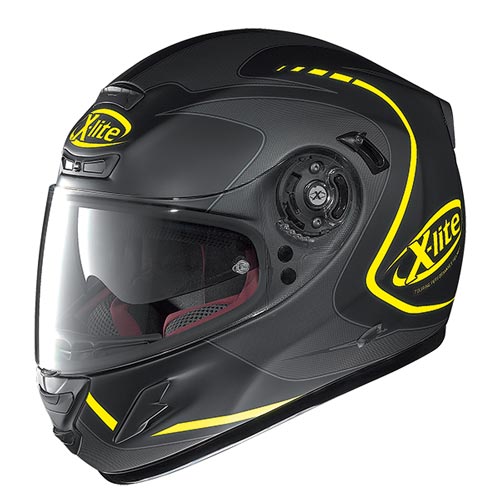
A look at the X-Lite X-702 GT touring crash helmet

x-lite-x-702GT-disc-featuredv

X-Lite X-702 GT – a composite-shelled touring helmet

Note: the X-Lite X-702 is now discontinued in the US. For some great alternatives, please skip to our Top 10 full face motorcycle helmets page.

X-Lite manufacture some of the safest helmets in the world. Most of their helmets are created out of composites – and the X-702 GT is no exception being made out of a composite of Kevlar, carbon fiber and fiberglass – with the aim of making the safest helmets possible. And if you look at X-Lite’s SHARP safety rating scores, they’re doing a very good job too with their lowest score being 4 out of 5!

The X-Lite X-702 is X-Lite’s composite touring helmet. It was tested by SHARP where it scored a maximum 5/5 stars which is as safe as they come.

But is it any good to live with and does it perform as a touring helmet?

Overall

X-Lite’s reputation for good quality, good value and safe helmets continues with the X-702 GT. It’s a touring helmet that’s quiet, comfortable with good ventilation and a UV drop down sun visor – and which is SHARP 5 star rated for safety. And there’s no real downsides – it’s even great value for a composite helmet and has an ACU Gold sticker if you want to take it on the track. Overall – very much worth a look.

  • NOT available in the US
  • Not Snell certified
  • SHARP 5 Star rated – maximum safety
  • Sizes XXS to XXXL!
  • Weight 3Lbs/1.4Kg (lighter than average)
  • Composite fiber shell
  • Quiet, comfortable and great ventilation
  • Double d ring fastener
  • Typically priced between $320-$480

Safety

We’ve already mentioned the X-702 GT scored a maximum 5/5 in the SHARP helmet safety test. What’s more, it’s manufactured in four shell sizes, adding to safety as well as helping the fitting and look of the helmet when you’re wearing it. The number of shell sizes manufactured might also be seen as a measure of a brand’s attention to detail and commitment to safety and fit – only the most reputable brands produce their helmets in four shell sizes so X-Lite joins a select few in producing the X-702 GT in four shells.

x-lite-X-702GT-front-back-side
Front, back and side view of the X-Lite X-702 GT in silver

Of course, safety is about more than just the helmet shell. Features such as an easy to use sun visor, aerodynamics/buffeting, reflective inserts to improve visibility, wide shield aperture to increase peripheral vision – they all arguably contribute to safety, and the X-Lite X-702 GT has them all.

x-lite-X-702GT-Cosy-N-com-crash-helmet
Futuristic-looking Cosy paint

Helmet Noise

Owners broadly reckon the X-702 GT is a pretty quiet helmet. And with X-Lite’s focus on quality aerodynamics to reduce buffeting and improved airflow, that’s probably not too surprising. Plus, given that the 702 GT is a touring-focused helmet, making a quiet helmet was probably reasonably high up on their list of design priorities.

Of course, most folks who’re in the market for a serious touring helmet will probably use either ear plugs or have a communicator to help with the noise suppression, but to keep your ride as quiet as possible, it’s good to see the X-702 GT gets the basics of noise insulation right.

x-lite-X-702GT-Chased-N-com-crash-helmet
White black red Chased design showing lowered sun visor

Ventilation

The X-702 GT has an useful array of vents and exhausts. It has two chin vents in the chin guard; one to direct flow onto the visor and another towards the rider’s mouth. It also has a couple of side vents which act as additional ventilation to the lower half of the face in one position, or an exhaust for the front vents. There’s also a couple of forehead vents matched to a couple of exhaust vents to the rear.

Users say it’s a good system that’s easy to use and delivers plenty of cooling in hot weather and enough ventilation to the visor during colder weather to keep the visor fog free (when used with the included Pinlock insert). So all good here.

x-lite-X-702GT-Fightex-N-com-crash-helmet
Cool looking Fightex version of the X-702 GT

Shield

There’s a drop-down sun visor with ‘fog resistant coating’ operated from a slider to the left of the shield. The main clear shield comes with an included Pinlock anti fog insert, has a central easy-to-use tab for raising/lowering the shield and a good positive ratchet mechanism which owners say is well designed. It’s also got the increasingly commonplace quick release mechanism.

One feature that’s not so common on a touring helmet is the wide shield aperture. These are more common with racing helmets but are just as useful on the road so it’s good to see X-Lite learning from their racing division and bringing it over to their touring range.

Comfort

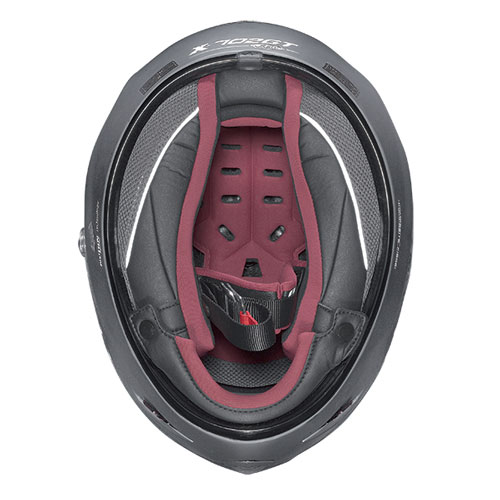
No problems reported here. The interior is removable and washable (as usual) but is also made from what X-Lite say is a thermally-regulating padding that’s breathable too. There’s also 3 grades of cheek pads available to help owners tailor the fit, which is a nice touch and should mean, if you buy a 702 GT and you’re not too sure if the fit’s quite right, you could experiment with replacement cheek pads to get the fit bang on.

There’s also glasses grooves in the inside to help glasses wearers get a comfortable fit by preventing stems from digging into the side of the face. Nice all round.

x-lite-X-702GT-bottom
Showing quality interior and double-d ring fastener

The blurb from X-Lite on internal padding boasts another bunch of features and materials brought over from their racing team; but whatever its heritage and claims – owners say it’s effective and that the X-702 GT is a very comfortable helmet.

Looks & Graphics

At the time of reviewing, X-Lite had a range of 8 different designs, though you’ll also be able to find several more older designs if you click the links through to our recommended retailer below.

As usual, we’ve tried to give a sample of most of the current range on this page, although the designs usually come in three or four different color combinations too. You can find an updated list of the latest designs on the X-Lite website.

x-lite-X-702GT-Scorey-N-com-crash-helmet
X-Lite X-702 GT in Scorey green and white colors

Many of the X-702 GT’s designs are very cool urban or sci-fi inspired designs, such as the Fightex, Racy, Cosy or Scorey (right) – designs that wouldn’t look out of place in a videogame. There are the usual plain blacks/whites (the Start range) but there’s also the subdued but still very modern Dynamic, Active and Chased designs. All models are suffixed with N-Com to denote they’re ready to work with X-Lite’s N-com communication system – in the X-702 GTs case the N-Com BX4.

Video

We couldn’t find an English language X-702 GT review video, but we did find one taken at the X-Lite factory showing them making their helmets – amongst them an X-702 and the BX-4 communicator – that you might find interesting. There’s also a video showing how to fit the N-Com communicator which might come in useful if you buy an X-702 GT. Happy viewing!

[xyz-ihs snippet=”Link-to-guides-page”]

x-lite-X-702GT-Active-N-com-crash-helmet
‘Active’ graphics version

Alternatives

There are three other helmets you might want to take a look at that have similar characteristics to the X-Lite.

Firstly, there’s AGVs K5, another composite-shelled sports-touring helmet that scored 4 stars for safety and also comes with a sun visor. It’s a little cheaper than the X-Lite too. There’s also the AGV GT Veloce which is similar-looking to the K5 and at the sportier end of the sports-tourer category. It’s 5 star safety rated and also composite-shelled (in this case fiberglass, aramid and carbon fibers) and though the GT Veloce is a little more expensive than the X702 GT, it’s an excellent helmet (though let down slightly by being quite noisy).

Finally, there’s the Nolan N86. This is lower priced than all the above and made of polycarbonate – though it also has a sun visor and scored four stars in the SHARP safety test – and it comes with an included Pinlock anti fog insert in the box.

[xyz-ihs snippet=”Xlite-Cat-link”]

Star Ratings

Scorpion EXO-R410 Review

scorpion-exo-r410-discon-featured

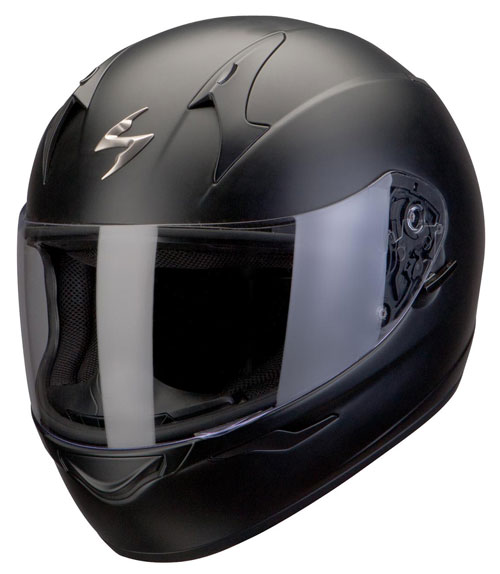
Scorpion EXO-R410 – the perfect budget crash helmet?

The new Scorpion EXO-R410 Air is a keenly-priced polycarbonate helmet that’s all about good performance without many bells and whistles. It aims to do the basics well without the fluff of fancy composite materials or drop down sun visors that many of its competitors seem intent on cramming in to their latest releases. But if it’s doing without the fancy stuff, it’s got to excel in the basics to make it worth buying.

Overall/Summary

The EXO-R410 largely delivers on its promise. It’s Snell certified (sizes XS-XXL) and scores a hefty 4/5 stars in the SHARP safety test and backs that up with decent build quality, some quality internals that make it a good fit and comfortable place to shove your head – as well as some of the best ventilation around.

It’s let down only slightly by the lack of noise suppression, which may be the result of such effective vents letting in more than just air. Overall, well worth a look and as long as you ensure it fits well, the Scorpion EXO-R410 should be a reliable and safe buy. Comes with a 3 year guarantee too.

Note: this helmet is now discontinued, replaced by the Scorpion Exo T510.

  • Snell 2015 certified
  • SHARP 4 star safety rating (out of 5)
  • 3.4lbs/1.55Kg (about average weight)
  • Polycarbonate shell
  • Great ventilation
  • Comfortable – with air pump system
  • Not so great for noise suppression
  • Quick-release, optically-correct shield
  • Prices typically range from $100-$140
scorpion-exo-410-Air-Slicer-red-helmet
Scorpion Exo 410 Air Slicer in red

Safety and construction

The Scorpion EXO-R410 is a polycarbonate-shelled full face helmet. It scored a creditable 4 stars (out of 5) in the SHARP crash helmet safety test, which is a very solid performance and should mean the helmet will protect you in all but the most extreme circumstances.

The EXO-R410 is manufactured in two shell sizes – with sizes XS-M being covered by the smaller shell size and sizes L-XXL using the larger shell.  The fewer shell sizes used, the more chance you have  of the helmet looking either too large or small on your head (especially if you’re at one extreme of the fitment range).

There’s also an argument the more shell sizes produced, the more likely you are to have a helmet that has the optimal amount of shock-absorbing expanded polystyrene to crash helmet shell size – and that should make for a safer helmet. Given the EXO-R410 is only made in two shell sizes (many helmets are made in three or even four shell sizes) this could potentially compromise safety.

scorpion-exo-410-rad-bleu
Rad Bleu color scheme

One big tick in the EXO-R410’s safety box is that there’s also EPS (expanded polystyrene) shock absorbing lining on the inside of the chin bar – which is pretty rare and something that more helmet manufacturers should consider. In an accident, chin bars can flex and having something to absorb the shock there is important too so good attention to detail there Scorpion!

There’s also Scorpion’s built-in emergency quick-release system, allowing emergency services to remove the cheek pads quickly and easily and make the removal of the helmet that much more straight forward. Hopefully it’s a feature you’ll never need to try – but it’s there should you need it.

Sizing

The Scorpion EXO-R410 is available in sizes XS to XXL and by all accounts, sizing is very accurate. Like the rest of the Scorpion Air range, it also has Scorpions own inflatable cheek guards that you can inflate to improve fitting if you find it’s a bit loose. It can be effective in tightening up the fitting and stopping any helmet wobble – though not many owners report being regular users.

Helmet Noise

As you’ll see below, one of the EXO-R410’s best features is it’s ventilation. However that comes at a cost. It’s a moderately noisy helmet – arguably because it has such great ventilation means that its noise insulating properties are compromised. It’s OK to use if you use ear plugs – which most of us do. But it is a little noisier than average.

scorpion-exo-410-Air-Altus-rear-view
Rear view of the Air Altus showing exhaust vents

Ventilation

This is one of the Scorpion EXO-R410’s strong points. It has a chin vent and double forehead vents and owners reckon both are very easy to use. They’re also unanimous in saying all vents let in a vast amount of air, particularly from the forehead vents, taking air over the head and out of the rear exhaust vents. These are probably aided by the wind-tunnel developed aerodynamics which pushes air towards the intakes and helps pull the air out of the rear.

To see other helmets with excellent ventilation, see our helmets with great ventilation section.

Shield

scorpion-exo-410-Air-quick-release-visor
Scorpion Exo 410 Air quick release mechanism

The shield that’s shipped with the EXO-R410 is optically correct and is secured by Scorpions’ own quick release shield system – called the Ellip Tech system. It’s very similar to Shoei’s quick release system in that you pull a tab down to release the shield at each side. Scorpion say it takes about 10 seconds to release the shield – which seems about right. Owners like it and say it’s a step up from Scorpions’ last system which suffered from teething problems.

The ratchet on the shield is positive to use with the only niggle being that the ‘cracked open’ setting is too large – it keeps the shield open about an inch whereas most of us like it to be about a centimeter to keep the wind out and the inside of the shield fog free.

On that note, the shield comes with Scorpion’s EverClear no-fog visor which owners think works pretty well except in the most demanding circumstances where it’s really cold/wet or where you’re stationery with no air flow.

Comfort

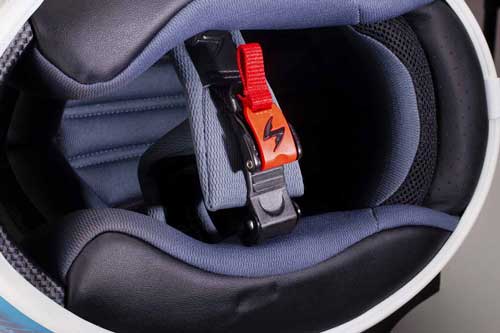
Inside view showing micrometric strap

The EXO-R410’s interior is removable and washable and made from a sweat-wicking material. Users say it’s very comfortable and there’s no reports of any problems with the interiors – as long as the fitment’s correct in the first place. The interior has also been designed specifically with glasses wearers in mind so should accommodate most glasses’ stems without digging into the side of the head.

Looks & Graphics

scorpion-exo-410-Air-Orchid-crash-helmet
Exo 410 Air Orchid design

You’ll find the current range of helmet graphics on this page (those available at the time of reviewing) but please click the links below to see the latest graphics available at our recommended partner retailers.

Like most helmets, the EXO-R410 is available in gloss white/black and matt black solid versions. But they also produce a range of sporty graphics as well as a couple of way out designs for folks wanting to project a more, well, mental image! The Hell Hound (see below) is covered in snarling cartoon dogs and the Underworld is covered in subtle skull graphics – if 50 skulls painted on a helmet can be described as subtle! There’s also the Orchid (right) which is probably aimed at the ladies and the Rad which looks like it’s covered in snake skin – albeit electric pink, blue or green snake skin.

Sporty graphics are the Sprinter, Slicer and Altus. We’ve done our best to cover the page in a sample of each for you to check out.

Video

Here’s Revzilla showing you round the R410.

scorpion-exo-410-air-matt-black
Moody matt black solid Scorpion Exo Air 410

Other stuff – fasteners, communicators, glasses, buffeting

The Scorpion EXO-R410 comes with a double-d as standard (easy to fasten and nice and simple) – and good if you’re planning to go onto the track.

The few owners who have fitted communicators to the EXO-R410 say there’s plenty of room to fit it with generous spaces for speakers.

A final point is that, probably because of its wind tunnel testing and design, the EXO-R410 is particularly good for buffeting when on the move. Several owners reckon that its noticeably easier to look over the shoulder or do life-savers in the R410 with little wind-resistance or wobbling because of air flow. That’s great to see in a helmet with such a low price point as it’s usually associated with pricer helmets like Schuberth.

[xyz-ihs snippet=”Link-to-guides-page”]

scorpion-exo-410-hell-hound
Crazy 410 Air Hell Hound paint. Click to enlarge.

Alternatives

HJC’s FG-15 is another 4 star helmet with excellent ventilation and is great value at a lower price point than the Scorpion. Alternatively, if you want a budget lid from one of the better known manufacturers, you might want to try the K3 SV from AGV. It’s SHARP 4 star rated like the R410, and has a built-in drop down sun visor. It’s slightly more expensive than the Scorpion though.

[xyz-ihs snippet=”Scorpion-Cat-link”]

Schuberth SR1 crash helmet review

schuberth-SR1-replaced-SR2-featured
Schuberth SR1 is now replaced by the SR2

Schuberth has a history of producing car racing helmets for the likes of Michael Schumacher and Sebastien Vettel. But they’re not so well known when it comes to making racing motorcycle helmets. Well, they decided to change all that with the release of the fiberglass/carbon Schuberth SR1; a full face helmet designed for the track – or road riders who think they’re on the track!

Creating the ultimate track helmet is probably the most difficult challenge in motorbike helmet design and there’s some really big names who throw a lot of development money and technology at the problem to create a safe, aerodynamic and light helmet – names like AGV, Shoei and Arai. So is the SR1 full face helmet up to the job?

  • SHARP 4 star safety rated (out of 5)
  • Composite fiberglass/carbon shell
  • Designed for sports and track riders
  • Outstanding ventilation
  • 3.2lbs (lighter than average)
  • Sizes XS – XXL (*Important – see size section)
  • Typical price range: $720-950 depending on retailer/model
  • Note: Now replaced by the SR2 so deals to be found at our recommended retailer (below)

Overall

For those of you in a rush, here’s what we think of the SR1 – but read on for more detail.

The SR1 is almost universally liked by sports riders and is an outstanding racing helmet. It’s lighter than the average full face, fits nice and tightly – which is just what a racer needs – is pretty quiet and scores well for safety. It’s built very well too with top quality finishing and materials and the design has some really nice touches that racers and road riders alike will like (see below). It’s an expensive helmet, though not as expensive as some of its race-bred competition. If your pockets are deep enough and you spend a good deal of time riding in a racing crouch, then the Schuberth SR1 is highly recommended and well worth a look.

Schuberth-SR1-Blade-Red-side-view
Schuberth SR1 in Blade Red design. Click to enlarge.

Safety

The Schuberth SR1 is both DOT/ECE approved, but has also been tested by crash helmet safety scheme SHARP and given 4/5 stars, which is very good. The shell of the SR1 is made from fiberglass and carbon fiber making for a strong yet light helmet that more than one owners has said makes you forget it’s there. So they’ve got the basics of producing a safe and usable helmet covered.

The SR1 is manufactured in 3 shell sizes which is also good for safety (here’s why) and it’s also got a locking visor, which is more important for track rather than road riders as it means their visor won’t crack open when they pop out into the slipstream under braking.

There’s the usual multi-density EPS (or expanded polystrene) shock absorbing liner you find in most crash helmets, but one other interesting safety feature is that there’s a couple of hidden straps built into the chin strap which are designed

Schuberth-SR1-aros-system
Schematic of the Schuberth AROS system

to hold the chin strap in place during an accident and stop the helmet pivoting off the head from behind. Apparently it’s not as uncommon as we think to have a helmet come off the head during an accident on the road as well as the track – according to research, around 5% of deaths may be attributed to this happening (Simoncelli’s wasn’t that much of a freak accident!) – so Schubert’s AROS anti roll off system sounds like a good idea.

Helmet Noise

Of course, the SR1 is a track-focused helmet so noise suppression probably wasn’t at the top of Schuberth’s list of priorities when designing it. Most track riders (and road riders for that matter) will be wearing ear plugs anyhow and they do a great job of cutting noise. So racing helmet designers don’t really have to make much effort in reducing noise levels.

That said, many owners report being staggered at how quiet the SR1 is. Of course, noise levels are subjective and many were commenting off the back of wearing another track-focused lid like an AGV PistaGP or  Arai RX-7 GP; but more often than not, an owner would say the SR1 is much quieter. One even commented that it was like being sat in a car with the windows up. Now, it has to be said that was a one-off comment, but for a balls-out sportsbike lid, the broad consensus is that it’s quiet, which means that compared to a standard road helmet, it’ll be about average. But that’s still pretty good and testament to Schuberth’s wind-tunnel design and attention to detail.

Cutaways for improved hearing
Side cutaways for improved hearing

And it might explain why Schuberth have actually put a couple of holes into the sides of the helmet to help the rider’s hearing.

It sounds odd but if you look at the side of the lid, what first looks like a typical exhaust air vent is actually an opening that’s there to help the rider hear. There’s an optional piece of padding that covers the inside of the hole, but that can be removed to help the helmeted rider hear better – whether that’s pulling into the pit and hearing an engineer or hearing competitors coming up behind – or, I guess, other traffic on the road.

Other reviewers have said it’s a great feature, though I’ve yet to hear any riders say it’s particularly useful. I can only think that some of Schuberth’s test riders (including Michael Schumacher when he was riding in the German Superbike series) suggested it’d be useful. If it’s of use to you, then great (and we’d like to hear), otherwise, it’s at the very least a demonstration of the attention to detail and design thought Schuberth’s designers have put into the SR1.

schuberth_sr1-stealth_orange_side-view
Schuberth SR1 Stealth orange side view showing the rear spoiler

Aero

The SR1 is a racing helmet. That means it needs to cope with high speeds and lots of wind and buffeting. Like many Schuberth’s, the SR1 has been extensively wind tunnel tested and in this case, it’s resulted in a stable helmet that, according to owners, copes very well with cross-winds and doesn’t produce lift. Depending on your size, bike and riding position, there’s also an adjustable rear spoiler that can be used to marginally increase downforce when racing.

[xyz-ihs snippet=”Schuberth-multi-retailer-quick-link”]

Size

The SR1 comes in the usual XS – XXL sizes. But beware, Schuberth sizes are one down from your normal helmet, so a Schuberth XL will be your average size L. Also note that because it’s a racing helmet, it’s designed to fit more snugly than your typical helmet – racers demand helmets that don’t want to twist or lift whatever you throw at them, so they’re tight to get on and will touch/press the head in more places than your regular helmet. That said, like any helmet it needs to be comfortable so no really tight spots, and bear in mind the helmet will settle over time so what was tight when new will slacken off a bit over the first week or two. Check our fitting guide to see how to check you’ve got the right helmet.

Schuberth-SR1-proactive_ventilation
Diagram showing the ventilation routes. It all works very well

If you do buy an SR1 and struggle to get it on, we’ll reiterate, they are tighter than average to get on (that’s normal), with some riders recommending you remove the neck roll to make it easier.

Ventilation

Ventilation is a particular strong point for the SR1. There’s a couple of obvious vents in the chin guard that take air around the side of the guard and to the side of the head. These chin vents are controlled by a switch underneath the chin guard that opens or closes the vent or allows slight openings in between.

There’s also a large central toggle switch the chin guard which simply toggles open/closed and feeds air up the inside of the visor and face. That’s really easy to use, even with gloves and does a great job of bringing air to defog the visor and cool the face.

The final vents are on the top of the forehead – two angled vents with small (and slightly fiddly) sliders behind them that brings air over the top of the head and out to the exhaust vent behind the spoiler to the rear.

Schuberth-SR1-chin-vents
Lower helmet vent and toggle panel for shield ventilation

Owners and reviewers alike can’t say enough about the venting of the SR1, especially when the helmet’s so quiet at the same time (the two are often mutually exclusive). Schuberth have obviously put in the hours and a good deal of careful thought to give unimpeded airflow and that really translates into outstanding ventilation. Owners in hot places often remark it’s the coolest helmet they’ve owned and folks in wet/cold places say it’s great for demisting.

Shield

The Schuberth SR1 comes fitted with a class 1, optically-correct quick release shield. Class one visors are as clear and optically correct as you can make a shield and if you’ve never tried one before you’re in for a treat. The shield opens in six positions and has a simple slide-to-lock mechanism that serves to either keep the shield open a crack to aid with defogging, or will keep the shield closed and locked for when you’re riding fast.

schuberth-SR1_Blade_Blue-crash-helmet-
SR1 in Blade blue colors

The shield aperture is a fairly standard width, but is slightly higher than most helmets to allow improved forward vision when in a tuck position. And while one owner commented that there’s still too much of the top of the opening visible when really tucked in and behind the fairing, it’s certainly better than most helmets.

Schuberth have a fairly novel quick-release shield mechanism on the SR1. It takes a bit of getting used to but once you’ve got the knack, you’ll find it easy to use. With the shield closed, you simultaneously push in the button on each side of the shield pivot and open the shield fully for the shield to pop off. To refit, you push the shield in at each pivot point and close the shield. Unusual but effective – and quick.

Comfort

As we mentioned, it’s a racing helmet so it’ll be more snug than usual; racers want a helmet that’s firmly stuck to the head and isn’t going to wobble about whatever they do. And while the SR1 does all that and more, once you get the right fitting helmet, owners say it’s an outstandingly comfortable helmet. Schuberth use high quality materials for the interior, including an antiallergenic and antimicrobial foam, and a material called Coolmax which is a moisture wicking material.

Again, owners say it’s a very nice place to be and the liner is well thought out and works well. Another example of Schuberth’s attention to detail is the use of a different more pressure-absorbant material to the upper cheek guard where the stems of glasses might go. They have more give in them to allow glasses to slot in easier and not dig into the side of the rider’s head. Very nice touch Schuberth.

Schuberth-SR1-Blade-blue-rear-view
Rear view of the Schuberth SR1 Blade blue

Another nice touch is that, in order for the helmet to sit more comfortably against the racing suit/hump, there’s a cut-away in the rear of the helmet shell to accommodate it and help with both aero and rider comfort.

The inside padding is fully removable and washable, with studs used to secure the liner in place.

Looks & Graphics

The graphics on the SR1 are reasonably understated with all at the time of writing being mostly black with subtle graphics. They have two graphics/designs – the SR1 Blade and SR1 Stealth with three color variants of each. You can see most of them on this page – the Blade is available in red, blue and silver and the Stealth in red, blue and orange.

Video

Here’s Schuberth’s own ‘how we make em’ video giving you an idea how it’s made through the use of a very entertaining 1980’s corporate video voiceover 🙂

schuberth-SR1_Blade_red-crash-helmet-
SR1 Blade Red

Other stuff – fasteners, audio, weight, glasses, buffeting, spoiler,  etc.

The Schuberth SR1 comes with a double-d ring fastener.. It’s actually only marginally lighter than the average full face helmet, with the XL weighing in at around 3.2lbs/1.45Kg – though owners generally report it feels very light, which i guess is the important thing!

[xyz-ihs snippet=”Link-to-guides-page”]

[xyz-ihs snippet=”Schuberth-generic-multi-retailers”]

Alternatives

At a similar price point to the SR1 is Shark’s Race-R Pro Carbon, a fully carbon fiber 5 star SHARP rated helmet that’s slightly lighter than the Schuberth and performs just as well on the track. There’s also the Arai RX-7 GP, a 4 star rated composite helmet that is also track-focused and performs in pretty well every respect a racer needs.

[xyz-ihs snippet=”Schuberth-Cat-link”]

Star Ratings

Billys Crash Helmets’ definitive guide to choosing a safe motorcycle crash helmet

definitive-guide-to-crash-helmet-safety

Billys Crash Helmets’ definitive guide to choosing a safe motorcycle crash helmet

How do you buy your helmet? Looks? To match your bike/leathers? A brand you trust? Price?

Probably a combination of some/all the above?

Buying a helmet can be tricky because there’s not much information out there – and quite a lot of misinformation.

And if you ask for advice on a forum or down your local rideout club, there’ll always be some wise owl comes up with the phrase “If you’ve got a cheap head, buy a cheap helmet.” Hmm. We’ve found lots of great/safe helmets that don’t break the bank.

So we wanted to get down to the nitty-gritty, using only real data uncovered by testing on real crash helmets bought off the shelf from real shops from a range of manufacturers. We also wanted to have a look at the different construction materials to find out which is best in terms of safety and lightness and find out who makes the best helmets.

We wanted to cut out the hearsay and opinion and look at the cold hard facts. That way, when you’re looking for your next helmet, you’ll know where to start.

Sounds easy. But where to get the data?

Well, other than publishing data on how they test and certifying helmets that pass one of their four different testing regimes (M2000, M2005, M2010 & M2015) which are kinda mostly the same but not directly comparable – the Snell test doesn’t publish a great deal of information. All we can really draw from their testing is that their certified helmets ‘identifies those helmet models providing and maintaining the highest levels of head protection.’ Which implies that all which are certified are safe up to a certain level but beyond that, we’re in the dark.

So we need to look elsewhere for ‘relative’ information about how protective helmets are, one against another; and ideally one that’s real-world relevant.

Well, for all its alleged deficiencies, SHARP, the UK Government crash helmet testing facility (Safety Helmet Assessment and Ratings Program) is probably the best attempt to produce a standardized way of testing helmet effectiveness in a way that at least tries to replicate some of the conditions found in the real world. Of course, that’s easier said than done in a lab, but it does base its testing on the best real-world accident research and its methodology on ‘the best bits of current standards around the world’. Whether you agree or disagree with its methodology, at the very least it provides a way we can compare the performance of different helmets against each other. That alone has got to be useful.

And given that SHARP publishes its data on the interweb so we can make an informed decision when buying a helmet, we felt that a little data-mining was in order to answer a few questions:

• Cheap versus expensive helmets. Is it right that the more you pay, the better the helmet?
• Which brands produce the safest helmets?
• Which materials make the safest helmets?
• Who makes the safest carbon/composite/fiberglass/thermoplastic helmet?
• Which are safer: full-face or flip-up crash helmets?
• Are chin guards on modular helmets safe or should I buy a full face?
• Which are the best performing full face helmets?
• Which are the best performing modular helmets?
• Which are the lightest helmets – full face or modular?
• Which full face helmets are the lightest?

So, after a couple of days spend trawling data, filling in spreadsheets and running formulas, here’s what we deduced.

Background

SHARP test helmets and score them 1-5 stars with 5 stars being the safest. Only 50 out of 320 tested helmets have scored 5 stars (at the point we published this article), so 5 star helmets are pretty rare beasts. The most popular rating is four stars with 133 scoring four and the remaining 137 scored between 1-3 stars, with failing on the side impact test being the most common reason to drop stars (side-of-head impacts are actually as common as front impacts in most accidents).

One other thing to note is that SHARP doesn’t test open face helmets as, common sense tells, they’re never going to protect you as well as a helmet that covers your face. Fair enough.

The safest brands?

We continually update our safest brands page as new data is released, and we only include manufacturers with a statistically-significant number of tests under their belt. But the top three overall are Bell, Caberg and AGV. Every single Bell full face helmet tested by SHARP has scored five stars so they’re going to be a difficult act to beat. To see how your helmet fares, check our top helmet brands page.

Which materials make the safest helmets?

Crash helmet shells are made from lots of different materials these days but it can be pretty unclear quite what your helmet’s made from if you read the manufacturer’s bumf. See the section on Dull Stuff at the bottom for a more detailed explanation on how we broke the materials down – but in a nutshell, we’ve four different types of materials that makers claim to use; thermoplastics (including polycarbonate), fiberglass, composites and carbon (or carbon kevlar mix). Yep there’s overlap there – fiberglass is a composite for example, but again these are the terms the manufacturers use so we’ll stick with them.

Carbon or carbon/kevlar helmets score higher marks than other constructions. Next best is composite, then fiberglass then thermoplastic – though those final three are pretty close together with just an 8% difference in overall safety performance between them. The leap from composite to carbon shell means your helmet will be an average of 9.3% safer. Again, that’s not a massive difference especially when you bring in price differences – but that’s for later.

If you asked most people, they’d probably say that carbon helmets will offer more protection – and they’d be right. But then the differences are pretty small with less a 17.3% overall difference between thermoplastic and carbon helmets. And don’t forget there’ll be some real cheap lids among the plastic ones as they’re the cheapest to make.

Who makes the safest carbon/composite/fiberglass/thermoplastic helmet?

OK we’ve mentioned the best brands overall, but what about by helmet type. In other words, if you’re in the market for a particular type of helmet construction, where should you look first?

Carbon/Carbon Kevlar
Surprisingly, Marushin came out joint-top with Bell helmets. That’s surprising because Marushin tend to produce helmets towards the cheaper end of the market, but both manufacturers scored five stars for their carbon lids. However, both also only had two helmets tested so it’s not the biggest of samples. On the other hand Shark had seven carbon helmets tested and scored an average of 4.6 stars with none scoring lower than four. So we’d say if you’re looking for a carbon helmet and want a decent range of designs to choose from, Shark are probably the brand to check out first.

Composite
Most non-plastic helmets are composite materials of course, but some manufacturers only describe their helmets in this very vague term. In reality, it might not matter that you don’t know what the composite material is made of as long as it does its job; it could be constructed from old car tyres and wood glue, but as long as it lasts long enough and protects your head in an accident then that’s arguably all that matters.

Here, AGV is the king of composites with three helmets scoring a maximum five stars, closely followed by Bell (again!) scoring 4.7 then Shark (4.4) then X-Lite on (4.3).

Fibreglass
AGV did best again – with 7 helmets scoring an average of 4.3 stars which is a great performance. Next was Shoei‘s first entrance into the study scoring four stars across 8 helmets. Note that as we’re coming down from Carbon to Composite to Fibreglass, the average scores are dropping – although we’d say that four stars out of five still represents a very good score and a safe helmet.

Thermoplastic/polycarbonate
Across 109 polycarbonate helmets, the average SHARP star rating was 3.33 out of 5. Which isn’t bad because there’s some real humdingers in there scoring one star and dragging the average right down. However when you look at individual manufacturers, then of the 6 Caberg Polycarbonate helmets tested, they scored a staggering average of 4.8 out of 5. Both Grex and Nolan (both part of the Nolan Group) scored an average of 4 stars along with Shark. That’s an average score remember – Lazer was doing well with a couple of thermoplastic helmets that scored 5 stars but their overall score was pulled down by one helmet that scored just 2/5 stars.

So there you have it. As expected, carbon fiber-based crash helmets are safer than helmets constructed with other materials. But as pointed out above, though carbon helmets broadly perform best, followed by composite, fiberglass then thermoplastic, there are helmets within each category that score maximum points so the answer’s not entirely clear-cut.

Full-face or Flip-up (also called modular or system – we’ll use the terms interchangeably here)?
Since their introduction, the popularity of flip-up helmets has been on the rise. They’re handy if you like the idea of riding with an open face from time to time. Or like to chat to folks without removing your lid. Or to show your face. Or indeed to have a quick smoke or coffee without de-lidding. But how safe are they – and how much heavier than the equivalent full face?

Which is safer – a full-face or flip-up crash helmet?

Across all the SHARP test data, 133 full face helmets scored and average of 3.55 stars, against 65 modular helmets scoring 3.33. Meaning your average full face helmet is a tad safer – 4.4% safer if you want to be precise. Which isn’t a great deal, especially when you take into account the massive variance in performance of individual helmets anyway. However, that’s not all the story (look away now if you’ve just bought yourself an expensive system helmet!)

Are the chin guards on modular helmets safe – or should I buy a full face helmet?

The issue is with the chin guard which has a reasonably high chance of springing open in response to an impact. SHARP notes the percentage of times the chin guard remained fully locked for each flip-up helmet test. We’ve done the number-twiddling and the average works out at 77% – meaning on average 23% of the time your chin guard might come open, leaving your face open to injury. The technical expression for this is – eeeek!

Of course, there’s a wide variation in how helmets perform in this regard – the best performers stayed locked in every test, while the worst performing managed to stay locked just 17% of the time!

Which are the best performing full face helmets?

Bell helmets scored highest with straight five out of fives right across the board with all seven of their full face lids. Marushin, surprisingly, came second scoring an average of 4.8 stars. You might have trouble finding either of these brands though and some of the helmets are discontinued, in which case try third place Caberg with an average score of 4.6.

For details of which individual full face models are worth looking at, check out our top 5 full face helmets list.

Which are the best performing modular helmets?

Looking at SHARP star ratings alone, Caberg wins, scoring 4.7 stars out of 5 across 6 tested helmet models. Second were AGV who scored 4.4 stars across two helmets, followed by and Grex, Nolan and Lazer all scoring four. However, if we look at brands where the chin guards stayed closed, then the winners are different. Nolan Group manufacturers (that’s Nolan, Grex, G-Mac and X-Lite) win out with Nolan having a 100% of their flip-up helmets staying shut throughout all tests (four different models tested). Grex too scored 100% with both their helmets. Caberg stayed closed a decent 89% of the time (6 helmets tested) with Lazer on 85% (4 helmets tested) – all comfortably higher than the flip-up average of 77%.

In essence then, full face helmets are generally a little safer than modulars but some modulars are just as safe. Clear as mud and, as always, the devil’s in the detail because all helmets are definitely not created equal. Where possible, we’ll report the % of times a flip-up’s chin guard stays closed on our reviews and, as you’d expect, those which score highly here will score higher marks than those that pop open.

Which are the lightest helmets – full face or modular?

Another complaint that’s sometimes thrown at modulars is that they’re a bit heavier than full face crash helmets. How much heavier? Well, the average weight for a full face helmet (across all tested helmet shell constructions and materials) is 3.25lbs/1.48Kg. For flip-ups, it’s 3.7lbs/1.69Kg – a 7oz/210 gramme difference – which is about the same weight as your average orange (I’ve just checked!)

Which is arguably not a massive difference or deal-breaker for most of us?

Of course if you had an orange strapped to your helmet, you’d feel some difference, especially if that orange was placed to one side – which can be the sensation you get when you open up a modular’s chin guard because the weight of the guard shifts and which can make the helmet feel a bit unwieldy.

However, we did find one modular that weighed as little as 2.9lbs/1.3Kg showing there are some very light flip-ups if you look (though it didn’t do so well in safety ratings).

In general, when a modular scored well in terms of safety and the chin guard staying locked, it did weigh roughly the average weight figure of all modular of around 3.75lbs/1.7Kg, possibly showing it needs a certain amount of solid (i.e. weighty) components to keep it safe. So yes, we’d agree that like-for-like, a flip-up helmet is heavier than a full face.

So which full face helmets are the lightest?

Here’s the average weights sorted by different helmet shell materials:

Carbon 3lbs/1.36Kg
Composite 3.2lbs/1.46Kg
Fibreglass 3.3lbs/1.49Kg
Thermoplastic 3.46lbs/1.57Kg

That’s an average difference of, yes a medium sized orange again (or 7.4oz/210 grammes if you want to get technical). Not a massive amount when you consider the possible cost differences (don’t worry, that bit’s coming soon!). So yes, carbon helmets tend to be the lightest but again, it’s a law of diminishing returns and if you’re looking to balance all the factors, safety, lightness, price (as well as some others that SHARP doesn’t cover but we do in our reviews, such as comfort, build quality, quietness etc. etc. – check our tag cloud somewhere to the right to see helmets that perform best for these criteria) which most of us are when buying a helmet, then things aren’t so clear-cut.

Are more expensive helmets better than cheap helmets?

As usual, the answer is yes and no.

If you look at it that carbon helmets generally perform better than thermoplastic helmets and carbon helmets generally cost more than thermoplastic helmets, then you could say it’s a ‘yes’.

And in fact when you look at the data, almost all carbon helmets produced by the better known brands do perform extremely well (four stars or higher) with just one or two exceptions. But the story is much cloudier when you get into composite and fiberglass helmets.

Here, there’s such a range of safety scores that it’s impossible to make such sweeping generalizations and you really need to look at each individual helmet or look at the average scores across brands, as we’ve done above. There’s also a huge range of prices – from your entry-level $49.99 thermoplastic helmet to your top of the range composites around $999.

The cheapest SHARP 5 star rated helmets can be had for around $60 by the way, so you could easily argue that no, the best helmets are the cheap ones if you were so inclined.

If you want the figures, and these are based on the recommended retail prices of the helmets at the time SHARP bought them, then here they are. Obviously, SHARP is a UK initiative so prices have been converted from £GBP to $US at a conversion of 1.4. Prices are averaged across all manufacturers and helmet types:

Carbon $450 (£318)
Composite $376 (£266)
Fibreglass $290 (£205)
Thermoplastic $147 (£104)

Conclusions

There are some general rules of thumb that you might be able to apply when you’re looking for your next safest/lightest/best value helmet.

  1. Carbon fiber helmets are generally the lightest, safest helmets out there. But they’re also the most expensive. You’re probably best looking at Shark carbon helmets first (the Bells and Marushins mentioned above and tested by SHARP are mostly now discontinued)
  2. If you’re on a tight budget, a thermoplastic (polycarbonate) shelled helmet is fine. There are some really safe and reasonably light ones about. Check out AGV first.
  3. Some expensive helmets are poor. Some cheap helmets are excellent. Expensive doesn’t necessarily mean good.
  4. If you want a really safe modular helmet, you need to be careful. They do exist, but shop wisely and probably check out Nolan, Grex, Caberg and Lazer first.
  5. If you want a helping hand finding the safest and best helmets, visit https://billyscrashhelmets.com. But then you knew that one 🙂

Dull stuff. Assumptions, data, statistics and other stuff you really don’t want to know about!

As anyone who knows the remotest things about statistics will tell you, 56.25% of statistics are made up and the rest use incomplete and conflicting data sets. Probably. Or should that be probability?

While SHARP data looks pretty good – in fact about as good as it gets for motorcycle crash helmet data – for our purposes it is slightly flawed (as indeed might be some of our analytical approaches).

Firstly, some of the data’s old (SHARP began publishing data in 2010) and relates to helmets that are no longer available. Which, if we’re looking to find out information to guide us with purchases of new helmets (which we are) might be misleading. And of course past performance will never truly reflect future performance; however we do take into account safety trends uncovered by the most recent helmet tests in some of our reviews where safety data isn’t available.

So for this article, the analysis we’ve done does take into account that a manufacturer’s products might be improving and scoring higher more recently. So where we’ve scored a brand overall higher than another, we will take into account recent helmet safety ratings. But if we’re looking at overall data on, say, composite helmets by a manufacturer, then we look across all helmets tested over time.

Next, the materials definitions are open to interpretation. SHARP use the material names given to them by the manufacturer, but each might well call it something different. Hence some that call a material polycarbonate, others will call it thermoplastic. Same for fiberglass or composite. So we’ve lumped some together where it seemed appropriate and left others alone where it didn’t. Which means we merged data on thermoplastic and polycarbonate and carbon and carbon Kevlar into one category name, but left composite and fiberglass alone (fiberglass is a composite but the term composite could include lots of other construction materials too).

There’s flaws in doing this of course, but then you could argue if a manufacturer calls it a composite helmet and you buy it as a composite helmet and refer to it as one, then the analysis still stands.

Thanks for reading – and please share to help get the info out there!

Useful links

Safest helmets
Best full face
Best flip-ups
Carbon fiber helmet reviews
Fibreglass helmet reviews
Composite fiber helmet reviews
Polycarb helmet reviews
Cheapest helmets reviewed


A look at the Lazer Kite full face helmet

lazer-kite-disc-deals-featured

The Lazer Kite is a pretty unusual but stunning looking crash helmet. Not only does it look the part, but it scored a very commendable four stars in the SHARP crash helmet safety test (hasn’t been Snell certified) – so you know it’s going to perform when it matters. Aimed at sporty riders (though not an out-and-out track helmet) and available in fiberglass and carbon fiber versions, let’s see if it’s all show and no go (click the links to the right to skip to sections or scroll to the bottom to see summary and star ratings).

  • SHARP 4 star safety rated (good)
  • Weight 3.3lbs/1.5Kg (fiberglass version – average)
  • Double-D ring fastener
  • Carbon fiber and fiberglass versions
  • Mid-to-expensive priced helmet (version dependent)
  • Great for ventilation and comfort
  • Prices range from $350-$500

Safety

The Lazer Kite is manufactured in two shell sizes and available in fitment sizes XS to XXL, with MS and ML also available for intermediate medium fittings. It comes in two shell materials – either a full carbon fiber or composite fiberglass versions. The fiberglass version was tested by SHARP helmet testing and scored a creditable 4/5 stars – meaning if you buy one, you can be confident it’ll perform well in an accident.

Lazer-Kite-Carbon-crash-helmet-front-view
Front view of the Lazer Kite plain carbon fiber

It wasn’t tested by SHARP, but we’d expect the carbon fiber version to score about the same. In fact of all the Lazer helmets tested by SHARP, all except one has scored four or five stars (out of five) so Lazers are generally very solidly performing helmets in terms of safety.

You can find more detailed information on the construction of the latest generation of Lazer crash helmets here, but in a nutshell, they claim to use the finest materials to ensure both their carbon composite and fiberglass helmet shells are both the lightest they can be and most effective at dissipating energy. With their excellent results in the SHARP tests, there’s probably no reason to doubt the effectiveness claims and there is some evidence that Lazers are amongst the lightest helmets – with the carbon fiber Lazer Monaco weighing just 3lbs/1.35Kg making it certainly amongst the lightest flip-up helmets on the market – even though the Kite is about average weight for a full face helmet at 3.3lbs/1.5Kg

Other safety related stuff: the helmet is secured with a double-d ring on the strap. They’re safe and easy to use and will mean you can take it on a track day.

Helmet Noise

The Lazer is about average for noise suppression. There’s lots of factors apart from the helmet design that that make for a noisy or quiet helmet (speed, riding position, style of bike etc. etc.) but owners broadly indicate the Kite’s around about average.

lazer_kite_mustang_black-white_crash-helmet-rear-view
Rear exhaust vents on the Kite Mustang black/white

Ventilation

The Kite has four chin and forehead/crown vents together with three rear exhaust vents. All the front vents are closeable – the chin vents are closed using a finger switch on the inside of the chin guard, much like many AGVs, and the top vents are flaps that open to stick up into the air flow and close to be almost flush with the top of the lid. From these top vents, the air is channeled in grooves cut into the polystyrene EPS liner and through the comfort liner and onto the scalp. Owners reckon it all works well (probably helped by the so-called ‘venturi effect’ where the incoming air is squeezed through tighter channels to speed it up and give more effective ventilation) and keeps you cool on long days’ riding; and that closing the vents really does stop air getting in – which not all helmets manage. So all good on the ventilation.

[xyz-ihs snippet=”Lazer-multi-retailer-quick-link”]

Shield

The main shield is optically correct and is Pinlock anti-fog ready (it may come with a Pinlock in the box – check with the retailer before you buy). The Kite doesn’t come with a sun visor, but there is the option of fitting Lazer’s very clever Lumino Polychromatic shield. This is an active shield that adjusts according to light conditions – from 90% clear to 20% clear in 15 seconds. They’re not cheap, but owners who do a lot of riding in sunny climates or into rising/setting suns love them.

lazer-kite-lumino-photochromic-visor
Lazer’s Lumino active photochromic shield will fit the Kite

The main shield seal is very good, using what Lazer calls its perfect fit system. Lazer claim that it’s very difficult to get a tight seal with composite or carbon fiber helmets because, unlike injection moulded helmets, tolerances can vary. To combat this, their visor base unit is flexible to mold to the contours of each helmet.

lazer_kite_mustang_red-white_crash-helmet-side-view
Kite Mustang red from the side. Great piece of design.

There’s a very effective shield quick removal system on the Kite too. This allows you to remove and refit each side of the shield in just a couple of seconds.

Comfort

No problems have been reported here. As always, make sure you have a helmet that fits right in the first place, with no pressure points and with a nice secure fitment all round. If you do that, you should be happy with comfort levels of the Kite. It has the usual fully removable internal comfort liner, that’s anti-microbial and washable. It also has replaceable cheek pads that you can swap out to tighten up the fit if required. Again, that’s standard across most helmets these days, but it can be a useful.

Looks & Graphics

lazer_kite-flow-pure-crash-helmet
Lazer Kite Flow Pure

The Kite’s a good looking helmet with lines similar to the angular designs of some of the latest Lambos. The most popular color scheme apart from the plain black/white/silver (which is a relative term because you’ll not see many Lazer Kites around!) is the Kite Mustang you can see at the top of the page – which come in either plain black or red with a couple of stripes over the top and down the front. Of course, the plain carbon shows off the fibers nicely and is one of the reasons many of us buy a carbon helmet (so you might as well show it off). There’s also the striking Kite Flow Pure (right) and the angular paint of the Karat (below).

Video

Here’s Lazer’s completely over the top Kite marketing video with nicely subtle background music (guys it’s a helmet, not a biblical epic!)

[xyz-ihs snippet=”Link-to-guides-page”]

Overall

Lazer-Kite-Karat-integral-crash-helmet
Lazer Kite Karat

The Lazer Kite is a very competent crash helmet. It’s a no-gimmicks full face helmet with great ventilation and safety credentials that will do everything you ask of it. It’s comfortable, has a good shield mechanism and while it’s not the quietest helmet on the market, should give years of reliable service. Well recommended.

[xyz-ihs snippet=”Lazer-generic-multi-retailers”]

Alternatives

There’s no shortage of great alternatives if you’re looking for a full face helmet. First off you should check our top 5 full face helmets list or maybe our top 5 flip ups as there’s some great modulars these days that are real contenders to replace full-face helmets. You might want to consider a Nolan N86 – another four star SHARP crash helmet, this time with an integral sun visor and a slightly lower price tag (color scheme dependent). Or how about the AGV GT-Veloce, a SHARP 5 star helmet with a wide shield and costing broadly the same as the Kite. Read the review as there are a few niggles to make sure you could live with them.

[xyz-ihs snippet=”Lazer-Cat-link”]

X-Lite X-1003 flip-up/modular crash helmet review

x-lite-x-1003-disc-featured

The X-Lite X-1003 is X-Lite’s composite-shelled flip-up touring helmet. We’re particularly interested in the X-1003 because on a recent review of SHARP crash helmet test data, all the chin guards on all the modular helmets produced by three divisions of the Nolan Group (X-Lite, Nolan and Grex) stayed closed through 100% of the test impacts. Which is, scarily, very rare (one manufacturer’s flip up scored an alarming 17%!). So if it performs well in other areas, the X-1003 could be one of the best bets yet for a flip-up lid.

  • Not on sale in the US?
  • Composite shell
  • Integrated sun visor
  • Dual homologated
  • SHARP star safety rating 4 out of 5
  • Not Snell certified
  • 3.5Lbs/1.6 Kg
  • Sizes XXS – XXXL
  • Prices typically between $350-$450

Update: the X-Lite X-1003 has now been discontinued. For a great alternative, check out our Top 10 Modular Helmets page.

*Safety

Although it hasn’t been Snell certified, as of September 2015, the X-1003 was tested by the SHARP helmet safety scheme and, as we anticipated, it scored 4/5 stars – meaning it’s been independently shown that it should do a good job of protecting you in most accidents (it’s also worth noting that X-Lite are our 5th safest crash helmet maker, with Grex and Nolan also in the top 10).

X-Lite-X-1003-hi-vis-fluo-orange-n-com-crash-helmet
X-Lite X-1003 in fluo orange, chin guard up showing drop down sun visor

Couple all that with the fact that, typically, the chin guard of Nolan Group flip-up helmets generally don’t come open under impact and we’d say that you’re probably getting one of the safest flip-ups on the market. Even though the SHARP test reported that the chin guard of the X1003 stayed locked during 97% of test impacts, we’d say that’s a very good score which you can have confidence in: even the five star rated Caberg Tourmax and Duke only managed 87%.

X-lite use a dual action system to open the helmet – meaning you have to press a couple of buttons to open the chin guard – which may account for some of this high score.

One other thing to note here is that the X-1003 has been dual-homologated in Europe (called P/J homologation in Euro-speak) meaning that in Europe it’s been approved for use with the chin guard down as well as up. Many system helmets are only approved for use as an open face helmet in the EU so that’s arguably another tick in the safety box.

The X-1003 shell is made from composite fibers. Composite lids usually offer a good compromise between weight and safety, and aren’t as costly as carbon/carbon composite helmets. In this case, the X1003 is about average weight for a flip-up helmet so there’s arguably not a whole heap of benefit, except for perhaps longevity. X-Lite don’t say what the composite is made up of (paper, fluff and glue is a composite!) but the fact that X-Lite helmets come with a 5 year warranty probably means they’re confident their lids will last.

X-Lite-X-1003-hi-vis-fluo-yellow-n-com-crash-helmet
Fluo yellow high vis X-1003

The X-Lite X-1003 is produced in 3 helmet shell sizes (a good thing – read why here) and comes in a massive range of fitting sizes, all the way from XXS – XXXL!

Helmet Noise

Modular helmets are usually noisier than full face, and the X1003 is about par for the course for a modular. Nothing massively to worry about here –  it’s moderately noisy – though if you’re after a quiet helmet, check our quietest helmets section. And, as always, stick some ear plugs in and you’ll be fine.

Ventilation

X-Lite-X-1003-elegance-n-com-silver-crash-helmet-front-view
Front view showing chin and top vents

X-Lite use what they call their Touring Ventilation System in the X-1003, but in all honesty it’s a fairly bog standard vent system; however owners reckon it works well. There’s a chin vent and a couple of vents on the top of the helmet. Both are toggle panels that are really easy to open/close with gloves, with the chin vent shoving air behind the visor and the top vents pushing it onto the scalp – with the rear exhaust vent there to remove the stale air. So all good with the venting.

Shield

The X-1003 has a main clear shield and integral drop down sun visor.

The main shield closes with a central tab and has a couple of ratchet points. Notable features are that it’s been designed with a very wide aperture for good peripheral vision and is Pinlock ultra wide anti fog insert-ready (though it doesn’t usually come with one in the box, unlike many helmets).

The sun visor is operated by a slider to the left hand side. It works well, with the only slightly negative comments being that it could be a tad darker; but then that’s a moan that’s common about the sun visors from many manufacturers, not just X-Lite. The issue is that there are legal limits on how dark a tinted visor can be in many countries, so the hands of helmet manufacturers are legally-tied.

Chin Guard

X-Lite-X-1003-elegance-n-com-gloss-black-crash-helmet-open
Chin guard fully opened and sun visor down on gloss black X-1003

The Chin guard opens by pressing a couple of buttons (X-Lite’s dual-action system) below the front vent, with thumb and finger together. Once open, it’s possible to lock the chin guard into place using a little slider to the left – useful if you like to ride with an open face for long periods without the worry that you chin guard/visor could slam down at any moment.

As noted above, X-Lite, along with several other Nolan Group company members, are one of the few helmet manufacturers whose flip-up helmets haven’t (so far) flipped-up on their own during SHARP crash helmet testing. So we’re hopeful that the X-1003 carries on that tradition.

Comfort

The interior lining of the X-1003 is antibacterial and removable/washable. Owners rate comfort levels highly, with no problems reported even after long hours in the saddle (that is, as long as you get the right fitment in the first place).

X-Lite-X-1003-elegance-n-com-silver-crash-helmet-bottom-view
Interior view of a silver X-1003 Elegance. Click to enlarge

One strong point for glasses-wearers is that the X-1003 has both a glasses groove and adjustable cheek padding to help you get the fitment just right and avoid having the arms of your glasses pushing into the side of your face. That’s a cracking feature and owners like it so top marks there X-Lite.

Looks & Graphics

There’s not a massive range of graphics available – maybe X-Lite think touring types are a bit conservative. There’s the usual blacks and whites and silvers, and there’s a choice of high vis yellow/orange and the rather classy tourers to choose from. Most are shown up and down the page.

X-1003-tourer-n-com-crash-helmet
The best looking of the lot? X-Lite X-1003 in classy Tourer graphics

Other stuff

The X-1003 is about average weight for a flip-up helmet, coming in about 3.5Lbs/1.6Kg. It comes with a micrometric fastener and a 5 year guarantee which is good. It’s designed to work with X-Lite’s own X-Series BX4 plus communication system. There’s precious little information out there about how well it works with other 3rd party communicators, so if that’s important to you, I’d say it’s worth checking out in a shop before you buy (or buy from a retailer with a no-quibbles returns policy).

[xyz-ihs snippet=”Link-to-guides-page”]

Overall

The X-Lite X-1003 is a reasonably priced, composite-shelled modular helmet that performs well in every area. It’s packed with useful features, well made, is SHARP 4 Star safe and dual-homologated for use as both an open face and full face helmet. And if you’re after exclusivity, you’ll be hard pressed to see another X-1003 owner around. It comes with a 5 year X-Lite warranty too. It’s a highly recommended crash helmet that owners like.

[xyz-ihs snippet=”Xlite-Cat-link”]

Star Ratings

Shoei J-Cruise: freedom of an open face helmet, comfort of a full face.

shoei-j-cruise-disc-try-the-featured

Shoei J-Cruise: open face 3/4 helmet full review.

The Shoei J-Cruise is a 3/4 size open face helmet.

It’s Shoei’s attempt to make a helmet that appeals to those who want an open face helmet but also want a bit more performance – improved head protection and improved weather protection than the average open face.

So Shoei produced the J-Cruise. It’s mostly aimed at high mileage riders and people who use their bikes every day such as commuter riders. People who want all the bells and whistles you usually get from a full face helmet but like the freedom and great ventilation you get from an open face helmet.

It’s been around for a few years now, so the internet’s full of people telling it like it is to live with the J-Cruise. As always, to save you the time, we’ve hunted down all those opinions and reviews to bring you this full review of the Shoei J-Cruise helmet.

Note: the original Shoei J-Cruise is now discontinued, replaced by Shoei J-Cruise II.

[xyz-ihs snippet=”Top-shoei-text-1″][xyz-ihs snippet=”Top-text-2″][xyz-ihs snippet=”Rz-shoei-pic-sml”][xyz-ihs snippet=”2W-shoei-pic-sml”][xyz-ihs snippet=”BTO-shoei-pic-sml”][xyz-ihs snippet=”Az-shoei-pic-sml”]

Safety

(more about helmet safety)

OK, the J-Cruise is an open face helmet, so you know it’s inherently not as safe as a full face helmet, right?

Shoei J-Cruise Corso orange open face motorbike helmet side view
The J-Cruise Corso design – this one in orange and white.

If you’re looking for the safest helmet, go for a well fitting Snell or SHARP 5 Star rated full face, not an open face helmet. Nuff said.

But if you really want an open face helmet, then the J-Cruise seems to be about as good as it gets. Here’s why.

Because it’s a 3/4 helmet, you get pretty well all the coverage of a full face except the front bit of the chin bar.

Which, yes, is kinda important when you’re looking at crash protection. But the Shoei J-Cruise uses the same helmet tech as many of Shoei’s full face helmets – that’s an advanced composite fiber shell Shoei calls AIM or advanced integrated matrix – backed by their multi-density polystyrene shock absorbing liner.

That’s the same helmet tech as they use on the GT Air II and on the Snell and SHARP 5 star safety rated Shoei RF-SR. So they must be doing something right, right?

Plus Shoei makes the J-Cruise in four helmet shell sizes covering fitment sizes XS-XXL. Not only will that mean you get a very well optimized and compact helmet for your head/body size, but it helps optimize for fitment, comfort and that means for safety too. Good work Shoei.

Shoei J-Cruise Reborn red open face motorbike helmet side view
Shoei J-Cruise in Reborn graphics (so far, a US only color scheme)

Of course the J-Cruise has been built to meet the same DOT safety standards that all helmets on sale in the US must have.

But above that, it’s not been independently safety tested by Snell.

But if we look over to previous SHARP data for AIM shelled helmets, that shows they score somewhere between 3 & 5 stars – and that’s the kind of safety range we’d expect from the shell of the J-Cruise, were it to be tested.

Of course, the best helmets have features that help you avoid testing its safety rating in the first place.

The J-Cruise has a Pinlock-ready, optically correct and very wide face shield to give you great vision of hazards in the first place; and there’s a drop down sun visor to keep things visible even when the sun’s low and strong.

So, except for the fact that your face is exposed like all open face helmets (meaning overall we have to give it a one star rating for safety), we expect the Shoei J-Cruise to give decent levels of protection – as long as you hit the sides and back of the helmet only, and not the front!

Helmet Noise

(more about helmet noise)

Interestingly, the vast majority of J-Cruise owners were happy with how lovely and quiet their J-Cruise helmets are!

Shoei J-Cruise Corso anthracite grey motorcycle helmet rear view
Rear view of the anthracite grey J-Cruise

OK, Shoei know a thing or two about making well-built, well padded and insulated motorcycle helmets. But it’s an open face for God’s sake, how can it be a really quiet helmet??

Well, I guess part of it is because lots of J-Cruise owners are regular users of open face helmets, and it’s just that the J-Cruise is quieter than most of those. So relatively, it feels quiet.

I guess if that’s the case and you come to a J-Cruise from a life wearing half helmets, then you might not find it quite as mega quiet as open face riders do.

Also, most J-Cruise helmet wearers tend to ride faired bikes, so that’s going to protect you from the wind rush and buffeting you find on nakeds and sportsbikes – and hence make the J-Cruise feel quieter.

But it’s probably more than just a perception thing. Shoei used wind-tunnel testing to help make the J-Cruise as aerodynamic and noise-attenuating as possible. Plus there’s decent padding inside the helmet including thick (removable) ear pads that all contributes to making an impressively sound insulating helmet.

So – apart from the usual footnotes about helmet noise being entirely personal and subjective – we’ll class the J-Cruise as a really quiet helmet (because that’s what most owners say).

Just don’t expect to go ton-up on your Z1000 and expect to agree!

Ventilation

(more about helmet ventilation)

Ventilation is another area where the Shoei J-Cruise excels. In fact we didn’t find a bad word said about it anywhere.

Shoei-J-Cruise-solid-white-airflow-diagram
Single top vent with three rear exhausts. Simple but effective.

Of course, it’s an open helmet so you’d expect that massive space below the face shield to let air in (though it doesn’t so much – read shield section below).

And, if you need to, you can always raise the shield and let the air flood in.

But lots of open face helmets still don’t vent so well around the scalp because they’re solid with no ventilation inlets.

The J-Cruise on the other hand is designed more like a full face helmet. OK, there’s no chin vent for obvious reasons but that top vent allows air into the helmet shell, to circulate round the head then escape via either of the two rear exhausts or via a vent at the collar.

The inlet vent and both exhausts can be shut off using the large sliders, but if you’re riding somewhere hot, you’ll welcome what Shoei engineers have done because – according to J-Cruise owners – ventilation is great.

grey Shoei J-Cruise Corso black open face motorbike helmet top view
Top vent panel – easy to slide and really effective

Open all vents fully up and the word from owners is that it lets in lots of air and keeps your head really cool. It’s good in rain too – though if it’s a prolonged downpour, you probably need to close things off.

But you’ll find ventilation excellent in the J-Cruise and, even in the height of summer, most riders report there’s enough air flow to keep your head cool.

Shield

(more about face shields)

The shield on the Shoei J-Cruise is a bit of a work of art.

Not only does it look kinda cool (OK, eye of the beholder and all that!) but it’s functionally very clever too.

The basics: it’s a super large shield that give a really good view of the road ahead as well as excellent peripheral vision. That sheer size of the view is one of the main reasons owners like the J-Cruise because, compared to a full face, the sense of freedom is fantastic.

It doesn’t come with a Pinlock in the box (shame) but it is Pinlock Evo ready, so you can buy a Pinlock anti-fog insert for $30ish and that’ll keep the covered area of the shield fog free in all conditions. A highly recommended buy is a Pinlock.

The shield is quick release to help with cleaning, and it’s a friction based shield meaning it doesn’t work on a ratchet, rather it smoothly moves from fully open to fully closed.

Shoei J-Cruise solid wine red open face crash helmet side view
Shoei J-Cruise in wine red showing off that large Pinlock ready face shield

And if you do fully close it, it can lock in place using a small peg bottom left of the helmet to locate into a hole in the shield.

That’s kind of an old school way of locking the shield in place but it works, it’s simple, and it’s easy to unlock by pushing the shield slightly to the left when opening it to disengage the lock.

A few people find that a bit fiddly, but most find it OK.

Notice that unusual lip at the bottom of the shield? That’s actually a clever piece of design that’s there to reduce turbulence, noise and air ingress behind the shield.

And apparently it works really well too because several owners say it almost feels like a full face when you drop the shield down – because it keeps a ton of air and noise out when you do.

And the shield seal’s great too because quite a few owners reported doing some serious miles in the rain and the shield kept it all out.

And finally on the shield, Shoei says it keeps 99% of UV rays out. That’s great – though remember that all polycarbonate shields keep at least 95%+ of UV out, depending on the exact type of polycarbonate.

A couple of links you might find useful…

– Click to see all our open face helmet reviews –
– Here you’ll find every sports touring helmet we’ve looked at –

Sun Visor

(more about sun visors)

Sun visors are a fantastic addition to any helmet.

Shoei J-Cruise plain brilliant yellow open face crash helmet side view
Sun visor fully lowered on this Brilliant Yellow J-Cruise

Not only does it give another 95%+ UV protection (in addition to the 99% given by the main visor) but they make riding in sun much more comfortable – and safer.

The sun visor on the Shoei J-Cruise is operated by the slider behind the left hand shield pivot (a great place to put it) and is entirely analogue.

That means, you slide it half way and the sun visor drops half way, with no detents.

If you want it back up, slide it back up (no spring loading or ‘retract’ button here).

Most owners love how it works, thought there’s the occasional person saying they found it tricky to find the slider and another wishing it came down a bit lower.

But they’re common issues with pretty much every sun visor so don’t let that put you off. Overall, owners of a J-Cruise love having their sun visor and find it works just great.

Comfort and Sizing

(more about comfort and sizing)

Fitment of the J-Cruise is suitable for medium oval headshapes – that’s most of us in the West (but click the link above if you want more information about that).

Shoei J-Cruise motorcycle helmet interior view
Micrometric fastener (europe only version) and Shoei’s Max Dry comfort lining

The comfort lining is fully removable and washable like pretty well all helmets from budget helmets upwards. But in the J-Cruise’s case it’s made from more premium materials.

Shoei calls their comfort system Max-Dry, which essentially means it’s a moisture wicking material. But it is made from particularly comfortable materials.

The only fly in the ointment with the J-Cruise is that many owners say they felt it was very tight when they bought it. A few even returned it for a size larger… but not so hasty.

It seems most owners who thought it was tight and who carried on wearing it found their helmets broke in really quickly and became a great fit very quickly.

Others discovered that it was mainly the cheek pads that were too big (or maybe their cheeks had mysteriously grown in size over the years 🙂 ) so replacing the cheek pads with narrower pads (or trimming them down a bit) resulted in a much more comfortable helmet.

And if you’re a glasses wearer, a few owners said the J-Cruise is great for glasses and it’s really easy to put your glasses on – though you will need to put the helmet on first – and remove your glasses before taking it off.

Looks & Graphics

J-Cruise graphics – like lots of other Shoei helmets graphics – are pretty conservative. OK there’s lots of solid colors available – including a couple of hi-viz – but aside from that there’s only the Corso graphics (which are mostly solids but with a stripe) to spice things up a bit.

Shoei J-Cruise Corso black open face motorbike helmet rear view
From the rear: the J-Cruise corso with twin rear exhaust vents.

In some countries (including the US) you can get the Reborn flame helmet too – in either red or grey.

I think we’ve just about displayed all the designs you’ll find up and down the page. So if you’re interested in buying one – or checking out the latest prices – I’d love you to click through to our recommended stores below. Cheers.

[xyz-ihs snippet=”Top-shoei-text-1″][xyz-ihs snippet=”Top-text-2″][xyz-ihs snippet=”Rz-shoei-pic-big”][xyz-ihs snippet=”2W-shoei-pic-big”][xyz-ihs snippet=”BTO-shoei-pic-big”][xyz-ihs snippet=”Az-shoei-pic-big”][xyz-ihs snippet=”Bott-shoei-text”]

Shoei J-Cruise Helmet Video

Here’s Shoei’s own 2m promo video featuring lots of swooping around on cruisers to a generic, royalty-free Coldplay style guitar track. Kinda shows you the main features tho.

Other stuff – fasteners, audio, weight, glasses, aero, buffeting, build quality, warranty

In the US, the J-Cruise comes with a double-d ring fastener (in Europe it’s a micrometric fastener).

If you’re looking to fit a bluetooth system, the Shoei is definitely designed to accommodate one. There’s a couple of sizeable speaker cutouts inside the helmet and of course, a stack of room for a boom mic.

It’s a relatively weighty helmet, even compared to a full face helmet which average around 3.3lbs (1.5Kgs)- and it’s certainly heavier than most open face helmets at around 3.5lbs (1.6Kg). Having said that, most riders don’t have a problem with a helmet at that weight and a few even said it feels pretty light weight.

Aero performance is generally said to be great. Shoei went to great lengths to wind tunnel test the J-Cruise and that slight sculpting to the helmet shell as well as the aero lip on the bottom of the visor seems to have done the job. In fact a few owners said there’s really no buffeting – but then I guess that also depends on their type of bike and the speed they tend to ride.

Build quality is one area picked out by many owners as being excellent. It’s something Shoei’s known for though, so no surprise there.

Finally, all Shoei helmets come with a five year warranty – or seven years from date of manufacture – which is about as good as it gets.

Overall/Summary

The J-Cruise is a really impressive helmet. It’s got that excellent Shoei build quality backed by their 5 year guarantee. Owners find it amazingly comfortable, well ventilated and has lots of bells and whistles that make it a great helmet to live with – including excellent aero and face shield system (with drop down sun visor) in particular.

Yep, open face helmets give less protection than full face helmets. But if you accept that and want a high performance open face helmet with a shield system that gives you fantastic weather protection, then you really ought to give the Shoei J-Cruise a go.

[xyz-ihs snippet=”Top-shoei-text-1″][xyz-ihs snippet=”Top-text-2″][xyz-ihs snippet=”Rz-shoei-pic-sml”][xyz-ihs snippet=”2W-shoei-pic-sml”][xyz-ihs snippet=”BTO-shoei-pic-sml”][xyz-ihs snippet=”Az-shoei-pic-sml”]

Good Alternatives to the Shoei J-Cruise?

The Shoei J-Cruise is a difficult act to beat. But here’s a few alternatives – including modular helmets that offer the best of both worlds – that you might want to to check out too.

The Nolan N44 is a real alternative that’s even more flexible than the Shoei J-Cruise. You can have it in 3/4 config just like the Shoei but you can add the chin bar to give some face protection too. And it’s quite a bit cheaper than the Shoei.

Or how about the Shark Evo One 2 – that’s a modular helmet, but it’s one you can push the chin bar right round to the back of the helmet to give you a proper open faced helmet feeling. It’s SHARP 4 star safety rated and comes with a Pinlock in the box too.

The good ole Roof Boxer V8 does that ‘bar round the back’ trick too – and looks mega cool while it’s doing it. It’s SHARP 4 star safety rated too.

[xyz-ihs snippet=”Open-face-helmets”]

Star Ratings

Review of the HJC FG-17 full face crash helmet

hjc-fg-17-disc-featured

The HJC FG 17 is a popular ‘race-ready’ full face crash helmet aimed at the sports and sports touring market. It has a fiberglass shell and is designed to work well on the track. It’s also selling at a decent price point so if you’re after a good all-round full face lid, it might just be what you’re looking for.

    • Snell certified
    • SHARP 4 star safety rating (out of 5)
    • 3.7Lbs (1.66Kg) weight (average)
    • Double-d ring fastener
    • Sports orientated helmet
    • Average noise levels
    • Low buffeting
    • XS-XXL sizes
    • Typical pricing – $170-$250

Note: the HJC FG-17 has now been discontinued. So please check out our other HJC Helmet reviews – or maybe check out our Top 10 Helmets Reviews Pages to find all our top rated helmets?

Safety

The FG-17 has a fiberglass shell and is manufactured in three shell sizes – with the smaller shell size covering XS/S, the medium shell for M/L and the larger shell for XL/XXL. Using multiple shell sizes is arguably good for both safety and esthetics (how good the helmet looks on your head) so all good there. It’s been both certified by Snell and tested for safety by the SHARP crash helmet safety scheme who awarded it four stars out of five meaning it should offer very good protection in an accident. As we always say, if you’re going to buy a crash helmet, you might as well buy one that’s proven to work well – so you should be confident in the HJC FG-17.

HJC-FG-17-crash-helmet-zodd-green-side-view
HJC FG-17 in Zodd green

Of course, a helmet’s only going to work well if it stays on your head. In line with all other helmets that can be used on the track, the FG17 has a double-d ring fasteners. If you’ve not come across them before, they’re old-style but do the job perfectly well and are pretty easy to use.

It’s also worth mentioning in the safety section that it also comes with a shield locking mechanism which could be useful on the track to stop your visor popping open in an accident. See shield section for more information on this.

Helmet Noise

HJC go on about the FG-17 being wind tunnel designed and tested. And while we’re sure that’s probably the case, it’s probably fair to say their focus was on making the helmet slippery so buffeting’s reduced, rather than protecting the rider from noise. There’s a fairly wide range of opinions on how noisy the FG17 is, usually dependent on which helmets folks have used before and whether they ride a faired or unfaired bike – as well as plain ole differences in perception.

HJC-FG-17-crash-helmet-strike-rear
Rear view of the FG-17 Strike (click to enlarge)

That said, broad opinion points to the FG-17 being about average for helmet noise (so if having a quiet helmet is really important to you, you might want to check out our Quiet Helmets Section).  Noise levels are generally acceptable for most users and if you wear ear plugs things should be very quiet anyhow so it shouldn’t be an issue. But it’s not the quietest helmet by a long shot.

Size

If you’re looking to buy an HJC FG-17, then a few riders have mentioned you might find yourself a size up with the FG – so if you’re usually an XS, you might need an S. This seems to be a fairly common issue with HJCs – owners found a similar problem with the HJC IS-Max II flip-up helmet too. As we cautioned there, just make sure you buy from a retailer with a friendly no-qualms returns policy in case you need to swap it for a size up. Also, one or two folks mentioned that the standard cheek pads squashed their face in a bit too much. There are different sized cheek pads available so that’s not too much of a problem but just worth being aware of if you’ve got a wide face or chubby cheeks.

Comfort

HJC-FG-17-crash-helmet-matt-black-rubbertone
In Matt Black (sometimes called Rubbertone)

Other than the above potential niggles, and once you get the right fitment, then comfort’s good in the FG-17. It has HJCs ‘Silvercool’ interior which is their up-market liner that’s fully removable/washable and antibacterial and moisture-wicking and supposed to reduce odour levels too. Owners don’t report any particular problems and say the FG-17 is a comfortable helmet to wear even on long journeys.

There’s also a glasses groove in the lining – there to allow the arms of your glasses or shades to sit comfortably next to your head and not get squashed into it. However, a few users reckoned that in the case of the FG-17, they don’t always work as intended at first with it being a bit too tight to allow them to easily slot in and seat. This seems to depend on the shape of the arms of the glasses though and things can free up after a little use.

Because of this, we’re not recommending the FG for glasses wearers though.

Ventilation

HJC-FG-17-crash-helmet-force-top-view
FG-17 Force showing top and rear vents

The FG-17 has a chin vent with an up/down toggle switch that’s easy to use. There’s also a couple of top vents which again toggle but which are a bit trickier to find and use. Once open though, owners reckon ventilation’s just fine and HJCs Advanced Channeling Ventilation System (where vents push the air through the shell and EPS shock absorbing liner and run it over the scalp) work well in all weathers. There’s also a couple of rear exhaust vents to let the stale air out.

Shield

There’s a good, clear anti-UV shield on the FG-17, that’s Pinlock-ready, has a nice positive ratchet mechanism and seals well against the elements. In the US, you’ll need to buy the Pinlock Max Vision insert separately though. The FG-17 also has HJCs excellent Rapid Fire quick release shield system; allowing you to remove the shield by simply pushing down a tab at either side then quickly pressing it back into place to seat it. Really handy for keeping your shield clean of bugs or swapping to a smoked shield in the sun – and owners say the Rapid Fire works well.

HJC-FG-17-crash-helmet-force-red
FG-17 Force showing visor lock front centre

The only possible fly in the ointment seems to be the shield’s central locking mechanism. When you drop the shield down, it clicks and locks into position. It’s not hard to open the shield back up again; it just needs a one-fingered push up on the locking tab to release it then, in the same movement, the shield opens up. It’s designed for racers to keep the shield closed under all circumstances and it’s safer in an accident. However, aside from the occasional owner who’s had problems with the locking mechanism falling off or cracking the shield, some riders find it a bit of a pain. Again, this is down to personal preference of course – it’s very easy to use but whether it would be annoying for you is your call.

Looks & Graphics

At the time of writing, there’s 9 different color schemes available (you can see the latest on the HJC USA website) with the usual gloss/matt black and white versions plus the Force, Strike and Zodd color designs in various color combinations. There’s also a Jorge Lorenzo X-Fuera version shown at the top of the page and in the video below. We’ve put most of the designs available at the time of writing on this page.

Video

Here’s a 4:30 video taking a look around the FG-17. There’s quite a few available to view on YouTube because it’s a pretty popular helmet (but I chose this one because they’ve gone to all that effort and only got 250 views – aaaah).

Other stuff – weight & aero

Fibreglass helmets can be fairly weighty. Despite many owners reporting their FG-17 is lightweight, it’s actually too heavy to go into our Lightweight Helmets Section because our cut off is 1.5Kg and the FG in large shell size weighs in at 1.67Kg. However, that makes it about medium weight for a full face helmet. Also worth noting is that a few owners have said that there’s very little buffeting so that aero-design seems to be working well.

[xyz-ihs snippet=”Link-to-guides-page”]

HJC FG-17 crash helmet gloss blackOverall

The HJC FG-17 is a solid performer. It’s comfortable, has a nice faceshield mechanism (as long as you’re OK with the shield lock) and should give good levels of protection in an accident. It ticks all the right boxes in terms of aero and liner and should offer acceptable levels of noise suppression. It’s not outstanding in any particular region but it is competitively priced so represents good value for money.

Alternatives

There are lots of alternative full face crash helmets. You can check out our Top 5 full-face crash helmets list to see our best rated helmets. But we also recommend you take a look at the HJC IS-17, a SHARP 5 star rated full face helmet that scores very highly for comfort, noise, features and value. There’s also the excellent Shoei NXR, another SHARP four star rated helmet that scores highly across the board and has that outstanding Shoei build quality.

[xyz-ihs snippet=”HJC-link-to-Category-Page”]